Yesterday, I wrote about the extraordinary amount of joy I have been getting from watching the Democratic establishment squirm as DSA-backed and socialist-leaning candidates continue winning primaries around the country. Apparently, the voters were not finished making my point.
William Lawrence has won the Democratic nomination in Michigan’s competitive 7th Congressional District, defeating two more moderate candidates for the opportunity to challenge Republican incumbent Tom Barrett in November. This is not some tiny blue enclave where the Democratic nominee can spend the general election selecting a tie for the victory speech. It is a genuine battleground district—exactly the kind of place where establishment Democrats have repeatedly insisted progressive politics cannot survive.
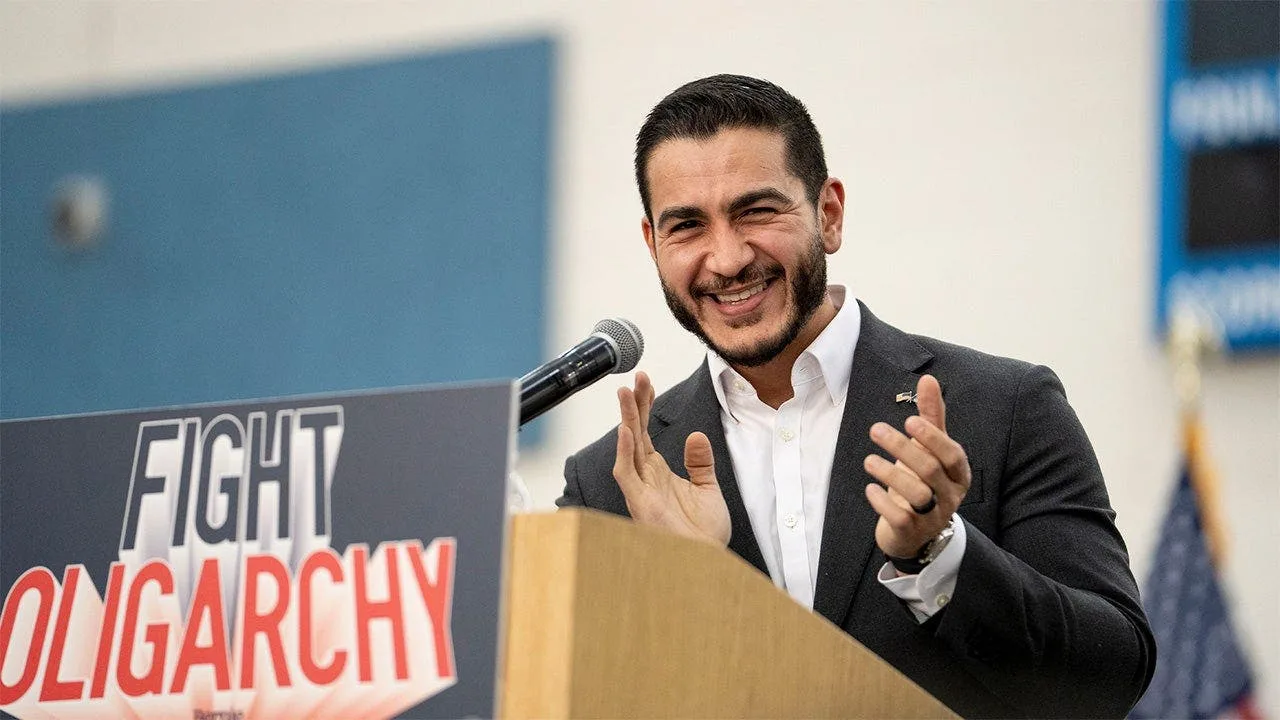
And Abdul El-Sayed has won Michigan’s Democratic Senate primary.
NBC News projected El-Sayed as the winner early this morning after he overcame establishment-backed congresswoman Haley Stevens and the extraordinary corporate and AIPAC-aligned financial operation assembled to stop him. Several other decision desks are still waiting for the remaining count before making their own calls, but I am comfortable proceeding with NBC’s projection and treating El-Sayed as the Democratic nominee for the United States Senate from Michigan.
So let us pause for a moment and appreciate what happened. The candidate whom the Democratic establishment and its wealthiest allies attempted to bury beneath tens of millions of dollars won anyway. You hate to see it. Well, perhaps you hate to see it. I am having a wonderful morning.
The response from national Democratic leadership has thus far been conspicuous in its absence. As of early this morning, I can find no public statement from Hakeem Jeffries congratulating Lawrence, no statement from Chuck Schumer welcoming El-Sayed into the general-election fight, and nothing from the DSCC celebrating the projected Democratic nominee in one of the most important Senate races in the country.
It is early. The silence may not last. But it is already conspicuous.
Lawrence is now the Democratic nominee in a competitive House district that could help determine control of Congress. El-Sayed has been projected the winner of a Senate primary in a state Democrats almost certainly need if they have any intention of retaking the chamber.
One would think the leaders who constantly remind us that democracy itself is on the ballot might find a moment to welcome them aboard. Instead: crickets.
Local Democrats have already begun talking about unity. The national establishment—the people who demand that progressives immediately fall into line behind every moderate nominee—appears to be carefully locating the correct wording for its enthusiasm. Perhaps the statement is trapped beneath a sofa cushion. Perhaps James Carville is sitting on it.
For me, these victories carry meaning beyond any individual candidate. I have been waiting for something resembling a real American left for most of my adult life. I have considered myself a socialist since reading Einstein’s Why Socialism? in the late 1990s, and I have watched the Democratic establishment resist progressive movements for decades.
I saw it clearly during Bernie Sanders’s campaign against Hillary Clinton. The party’s behavior did not feel like a neutral institution managing a spirited disagreement between political philosophies. It felt like an existing hierarchy closing ranks against a movement that threatened its control. The official argument was always electability.
The progressive candidate could not win. The socialist message could not connect. The policies were too radical. The voters were not ready. We needed to be practical. We needed to be realistic. We needed to keep supporting the same candidates, consultants, donors, and strategies that had repeatedly produced alienation and defeat.
Then the supposedly unelectable candidates started winning elections.
After Donald Trump’s first victory in 2016, I told friends and family that his authoritarian movement might eventually create the conditions for a powerful swing in the opposite direction. I hoped the ugliness of Trumpism—the cruelty, nationalism, corruption, and open contempt for democratic restraint—would expose contradictions that could no longer be managed through moderate adjustments and nicer speeches.
I believed that a rising authoritarian right could eventually generate an equally powerful response from the left. I have repeated some version of that prediction for nearly a decade, undoubtedly annoying several people I love in the process. Damn, it feels good to be a gangster.
History, of course, does not operate like a mechanical pendulum. Authoritarianism does not automatically generate its own defeat. Fascism can deepen, normalize itself, and remain in power for generations. The counterforce must be built by people capable of turning fear, anger, and economic suffering into solidarity rather than scapegoating. But something has been accumulating.
For decades, working people have watched their wages stagnate while billionaires multiply. Healthcare, housing, education, childcare, and even ordinary leisure have become extraction industries. Corporate power has swallowed increasing portions of public life while political leaders explain that fundamental change is unrealistic.
Trump recognized the rage this created and aimed it downward—at immigrants, minorities, women, queer people, and whichever invented enemy happened to be useful that afternoon. The emerging left aims it upward.
It says your employer owns too much of your life. Your landlord possesses too much power over your future. Your healthcare should not depend upon remaining profitable to someone else. Your government should not be purchased by corporations, billionaires, or lobbying organizations writing enormous checks to determine which candidates you are allowed to consider viable.
That message is beginning to find a political home.
Lawrence’s victory matters because it occurred in a competitive congressional district rather than a safely progressive bubble. El-Sayed’s victory matters because it occurred statewide, against the preferred candidate of powerful Democratic interests and despite an almost incomprehensible flood of outside money.
These victories do not mean the revolution has arrived. Lawrence still faces a difficult general election. El-Sayed will face an enormous effort to portray him as dangerously radical. Progressive candidates will lose races, make mistakes, fight among themselves, and occasionally say things so ridiculous that every socialist in America will simultaneously stare at the ceiling.
No movement arrives fully formed, perfectly disciplined, and ready for a commemorative postage stamp. But the possibility is here now. A left that was dismissed as permanently marginal is winning nominations. Candidates rejecting corporate money are defeating candidates surrounded by it. Young voters are not merely expressing dissatisfaction; they are organizing, campaigning, streaming, canvassing, donating, and choosing alternatives.
The future I have spent twenty years predicting—and admittedly pestering friends and family about—no longer feels imaginary. It feels possible.
Yesterday, I wrote that a victory the Democratic establishment cannot control may be more threatening to it than a defeat it can explain. This morning, national party leaders have not exactly rushed forward to undermine that argument.
For decades, people like me were told that the left could not win. Now the left is winning, and the people who demanded party unity have become strangely unavailable for comment.