I admit it: I am reveling in the squirming.
Watching the Democratic establishment panic as DSA-backed and socialist-leaning candidates continue winning primaries around the country has brought me an almost embarrassing amount of joy.
Almost.
Republicans appear genuinely frightened by the possibility of a growing American left. That makes sense. Socialists directly oppose nearly everything the modern Republican Party represents: corporate supremacy, privatization, militarism, Christian nationalism, and the sacred right of billionaires to own increasingly large portions of reality.
But the Republican reaction is predictable hostility. The Democratic response has been something closer to existential panic. After years of lecturing voters about unity, coalition-building, protecting democracy, and voting blue no matter who, prominent Democrats are suddenly discovering that their famous “big tent” has a very strict dress code.
Apparently, socialists need not apply.
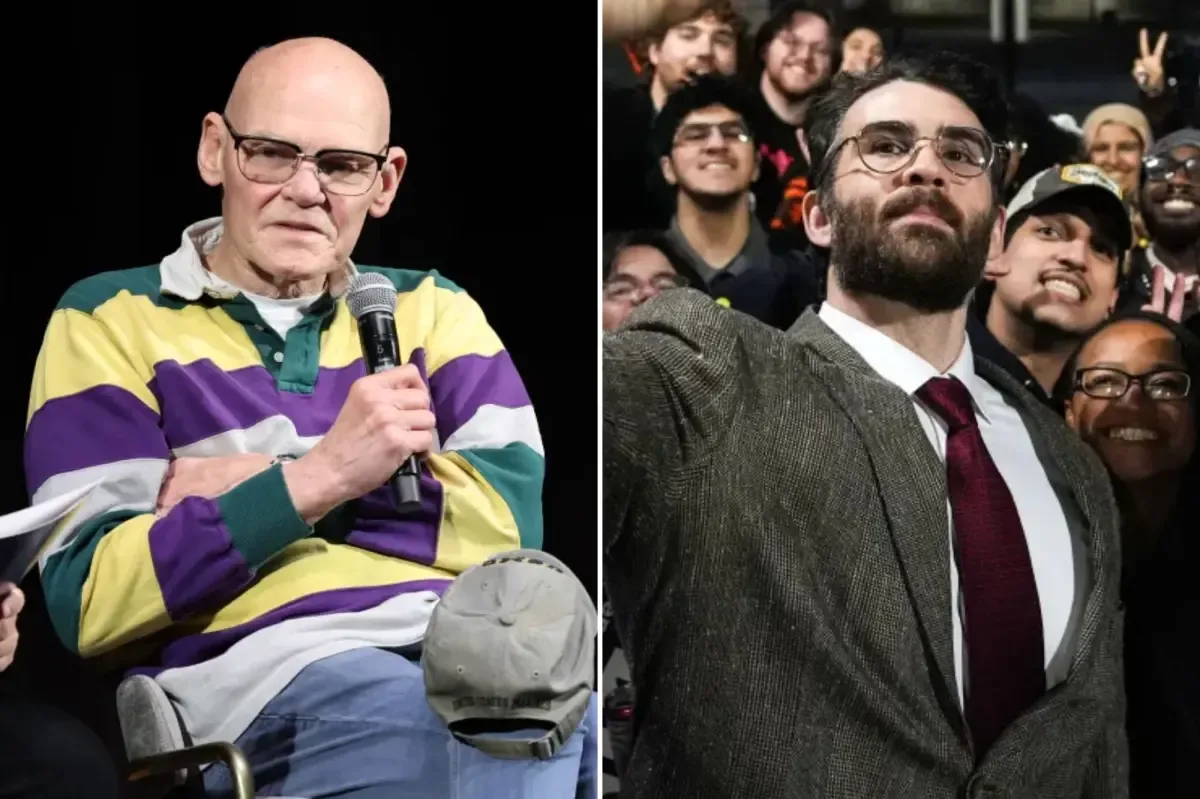
This past week, longtime Democratic strategist James Carville said of political streamer Hasan Piker, “If he becomes a force in the Democratic Party, I’m out of here.”
Well, James, don’t let the door hit your rich, white, privileged butt on the way out.
Carville intended the statement as a warning. To me, it sounded like an offer. More importantly, it was not really an electoral argument. It was a territorial declaration.
He was not merely saying Hasan’s influence might cost Democrats an election. He was saying that a Democratic Party influenced by people like Hasan would no longer feel like his Democratic Party. That tells us nearly everything we need to know.
For people like Carville, the question is not simply whether Democrats can win. The question is whether they can win while remaining under the control of the same consultants, donors, lobbyists, television strategists, and professional moderates who have controlled the party for decades.
A victory they cannot control may be more threatening than a defeat they can explain.
This movement is no longer theoretical. DSA-backed candidates and allied progressives have been winning primaries around the country. In Wisconsin, Francesca Hong has surged to the front of the Democratic gubernatorial primary. These candidates are not being imposed upon voters by some shadowy socialist committee. Democratic primary voters are choosing them.
Yet much of the party establishment has responded not with curiosity or support, but with alarm.
Why would a party that constantly complains about voter apathy resist candidates who are creating enthusiasm? Why would a party worried about losing young voters attack political figures capable of reaching them? Why would a party obsessed with electability recoil when left-wing candidates begin demonstrating that they can, in fact, get elected?
The usual answer is that these candidates are too radical and might frighten moderate voters. That concern cannot be dismissed completely. Winning a Democratic primary is not the same as winning a general election.
But primaries are also how voters tell a party what they want. When the response to a candidate winning is to insist that the candidate cannot win, “electability” begins to resemble a theological belief rather than political analysis.
The establishment does not appear interested in testing whether class-based politics can work. It appears interested in ensuring that nobody is ever allowed to prove it can.
As someone who follows streaming, I have watched Hasan Piker grow from a variety streamer and online political commentator into a genuine force within politics. He clearly articulates many of the policies and positions I share, but his importance extends beyond ideological agreement. Hasan communicates left-wing politics in the cultural language of people who would never willingly watch a Sunday-morning panel show or read a 40-page Democratic policy proposal.
He is funny. He is combative. He understands streaming. He can discuss labor, American imperialism, healthcare, video games, gym culture, and internet drama without suddenly transforming into a laminated pamphlet.
In other words, he understands the media environment in which younger people actually live.
For years, Democrats have worried aloud about young men being pulled into the red-pill manosphere by Joe Rogan, the Kill Tony orbit, and an endless procession of reactionary dolts with microphones. These figures offer alienated men a story explaining their unhappiness. The story is usually wrong, cruel, and designed to redirect economic frustration toward women, immigrants, queer people, or whichever minority is scheduled to ruin Western civilization that week.
Hasan provides a competing explanation.
Maybe you are not miserable because women became too independent. Maybe you are miserable because your employer owns most of your waking life. Maybe you cannot afford a home because housing has been turned into a speculative asset. Maybe your healthcare should not depend on keeping a job you hate. Maybe your loneliness is not the fault of feminism, but the predictable result of an economic system that has monetized community, leisure, identity, and nearly every remaining space where human connection might occur.
That message reaches people.
You would think Democrats would be studying this. You would think they would amplify Hasan’s reach and learn how someone outside the traditional party infrastructure managed to communicate with an audience they have spent years losing.
You would think wrong.
Instead, moderate Democrats—the wolves in sheep’s clothing—are fighting tooth and nail against the very movement that could create a new generation of voters. The party says it wants young people politically engaged. It simply does not want them engaging around socialism, labor power, Palestinian freedom, universal healthcare, or the corrosive influence of corporate money.
It wants youthful energy without youthful demands. It wants new voters supporting old arrangements. It wants the aesthetics of change without any redistribution of power.
The dividing line is not perfect, but a pattern has become difficult to ignore. Many of these insurgent candidates reject corporate PAC money, criticize billionaire control of elections, and openly challenge AIPAC’s enormous influence within Democratic politics.
That is when the opposition becomes especially fierce.
A socialist candidate does not merely propose different healthcare legislation. A socialist asks why healthcare is organized around profit in the first place. A socialist does not merely request better wages. A socialist asks why the people doing the work possess so little power over the workplace. A socialist does not merely complain about campaign spending. A socialist identifies the donor system as a method through which wealth governs democracy.
That is the point at which polite liberalism begins checking for the exits.
Much of the Democratic professional class is comfortable with cultural progress so long as economic hierarchy remains largely undisturbed. Representation can change. Language can change. Advertising can become more inclusive. Corporate boards can become more diverse.
But class politics eventually asks who owns the corporation.
It asks who profits, who works, who pays for the campaign, and what those donors receive in return.
Those questions cannot be answered through better messaging.
This is the conclusion I keep returning to: parts of the Democratic establishment may prefer a controllable defeat to an uncontrollable victory.
A conventional Democrat can lose without threatening the system surrounding the party. The consultants remain employed. The donors remain necessary. The lobbying relationships remain intact. The same strategists return to television to explain that voters were too racist, too sexist, too misinformed, or insufficiently inspired by the latest campaign built in a laboratory beneath Washington, D.C.
Everyone retains a job. Everyone remains important.
But when a socialist wins without corporate money, traditional consultants, or permission from party leadership, something far more dangerous happens.
The victory demonstrates that the gatekeepers may not be necessary.
Republicans fear what socialists might do once in office. Democratic elites fear what socialist victories reveal about Democratic elites.
The squirming is not incidental. The squirming is the evidence.
I have followed politics since childhood, and I have considered myself a socialist since reading Einstein’s Why Socialism? in the late 1990s. For years, I hoped class struggle would eventually become central to Democratic politics. The material conditions were certainly there: stagnant wages, disappearing pensions, medical debt, predatory housing costs, union decline, billionaire domination, and an economy that increasingly treats ordinary human existence as an extraction opportunity.
But the party repeatedly substituted symbolic gestures for structural change.
Now, finally, an identifiable American left is arising. It is imperfect. It will make mistakes. Some candidates will lose. Some personalities will say ridiculous things. No growing political movement arrives fully formed, perfectly disciplined, and ready for a commemorative postage stamp.
But it is alive.
It has energy, ideas, and young people willing to organize, campaign, vote, stream, canvass, donate, and imagine that politics might accomplish something more meaningful than selecting which group of wealthy people gets to explain why nothing fundamental can change.
That is exciting.
The Democratic response has been profoundly disappointing, but also wonderfully clarifying. The establishment is showing us what it values. When forced to choose between an expanding coalition and existing donor relationships, too many Democrats choose the donors. When forced to choose between working-class energy and institutional control, they choose control. When forced to choose between a socialist who might win and a moderate who knows how to behave, they begin lecturing us about electability.
So yes, I am reveling in the squirming.
I am enjoying every Carville meltdown, every panicked editorial, and every declaration that the Democratic Party must be saved from the voters currently showing up and winning its primaries. Because beneath all the outrage is fear.Not fear that the left will destroy the Democratic Party. Fear that the left might finally transform it. And James, should that transformation become too uncomfortable, the door remains exactly where you left it.