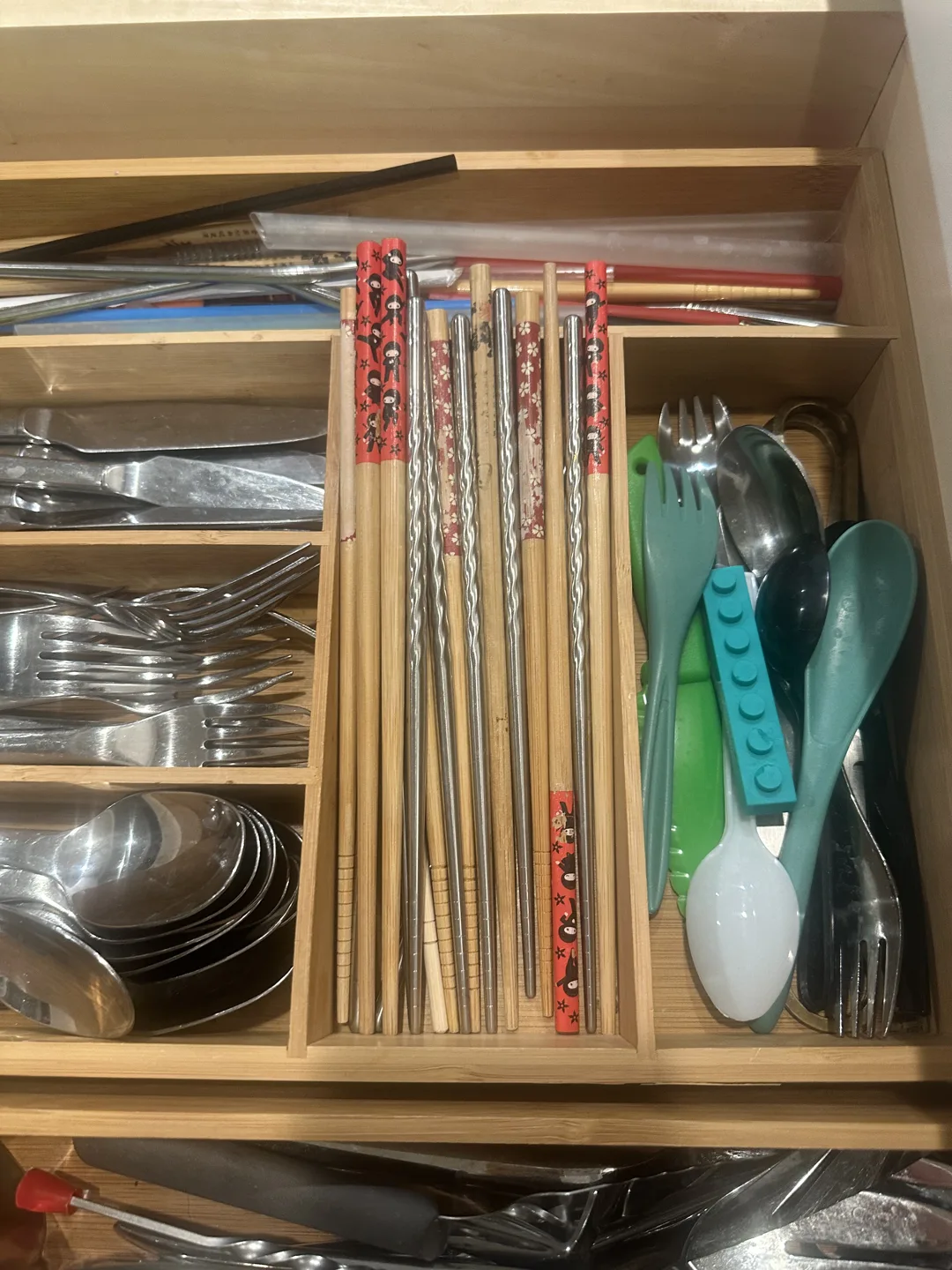
We’ve sent probes beyond our solar system. We’ve built machines that can reason, write, and reflect. We’ve mapped the genome, split the atom, and created entire digital worlds that exist nowhere and everywhere at once.
And yet, when it comes to eating food, the best tool we’ve come up with might be two sticks.
Not optimized titanium. Not AI-assisted utensils. Not some hyper-engineered ergonomic device. Just two pieces of wood, barely shaped, unchanged for centuries.
I wrote an ode to chopsticks some time ago, focusing on their elegance and unfair versatility. That still holds. But this realization goes deeper.
It’s not just that chopsticks are good.
It’s that they may represent a point where improvement stops.
Because what would “better” even mean?
A tool that grips automatically? One that calculates optimal pressure? A device that feeds you directly? At some point, the technology begins to remove the very thing it was meant to enhance.
Chopsticks sit at a strange edge. They extend your hand, but only just enough. They assist, but do not replace. They require skill, but reward attention. They don’t solve the act of eating—they preserve it.
Using them well feels less like operating a tool and more like participating in a process. You don’t dominate the food; you negotiate with it. You don’t automate the act; you inhabit it.
In most domains, we assume progress means increasing complexity. More power, more automation, more distance between effort and outcome. But some experiences break that pattern.
Conversation doesn’t improve when it’s automated. Presence doesn’t deepen when it’s optimized. And eating doesn’t become richer when it’s done for you.
In these spaces, the best technology is the one that disappears.
Two sticks.
That’s where we stopped—not because we couldn’t go further, but because going further would mean losing something essential. The feedback. The nuance. The participation. The humanity of the act itself.
So maybe chopsticks aren’t primitive. Maybe they’re what remains when everything unnecessary has been stripped away. A kind of technological minimalism. An endpoint disguised as a beginning.
Chopsticks deserve a place at every table—not as a novelty, not as a cultural nod, but as a preferred technology. Not because they are traditional, but because they are complete.
There’s something quietly profound about that.
After all our advancement, all our invention, all our reaching outward— We’re still here.
Holding two sticks, learning how to eat.