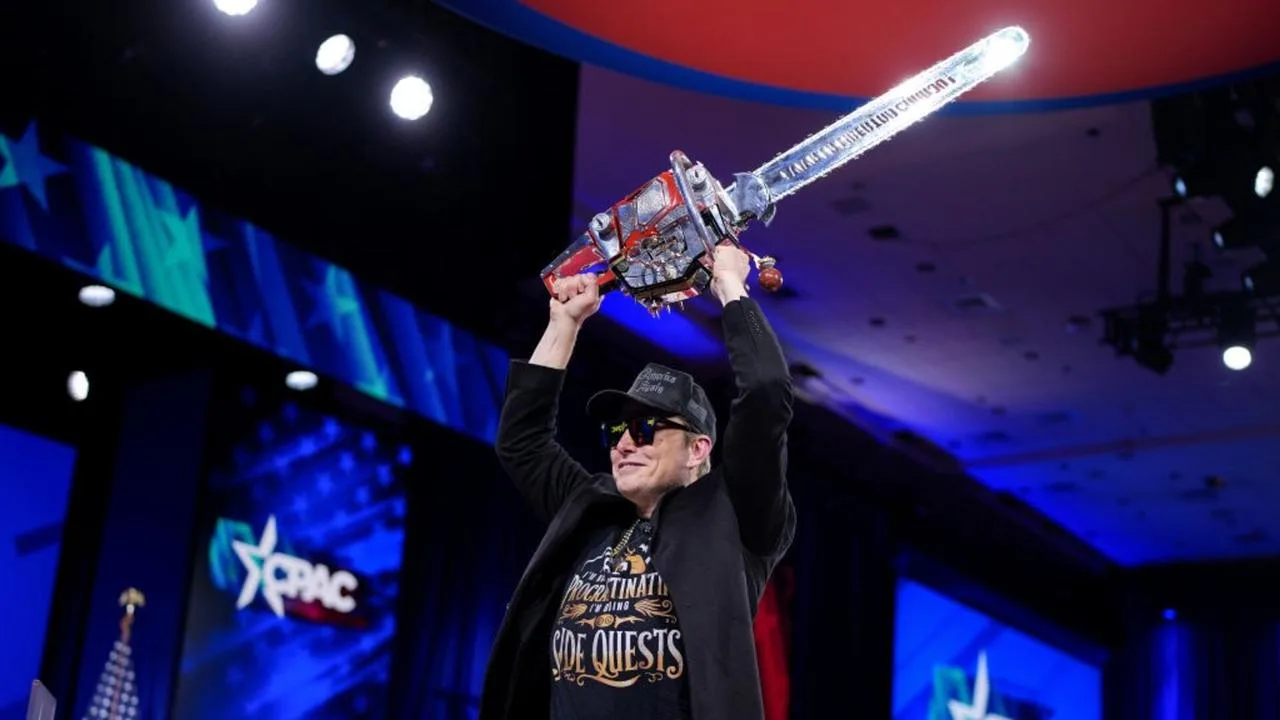
There’s a certain look to someone who’s on a combination of stimulants and dissociatives. The vacant-yet-intense stare, the mood swings from euphoric to paranoid, the rapid, pressured speech that feels like a cross between a TED Talk and a hostage negotiation. If you’ve been in those circles, you know it when you see it.
And I see it in Elon Musk.
That might sound like a wild claim, but it’s one that anyone with experience in addiction—or even just experience around drug users—would recognize immediately. Musk himself has admitted to using ketamine, a dissociative anesthetic with a well-documented ability to create both euphoria and delusions of grandeur. His speech patterns, his erratic behavior on social media, his manic energy—all of it screams stimulant abuse.
But because Musk is rich, it’s not called addiction. It’s called visionary thinking.
The Myth of Musk’s Genius
The common story is that Musk is a self-made visionary, a once-in-a-generation intellect who revolutionized electric cars, space travel, and artificial intelligence.
This is a lie.
Musk was born rich. His father, Errol Musk, owned a stake in an emerald mine in apartheid South Africa. This wealth gave Musk a cushion that allowed him to take financial risks most people can’t afford. When people point to his "rags-to-riches" story, they conveniently skip over the part where he had enough generational wealth to simply buy his way into promising companies.
Musk didn’t found Tesla—he bought in. He didn’t build PayPal—he was part of an early team and got lucky with a buyout. SpaceX, despite its supposed innovation, has relied on billions in government contracts, essentially making it a taxpayer-funded project masquerading as private enterprise.
To be clear, this doesn’t mean Musk has contributed nothing of value. SpaceX has advanced rocket reusability. Tesla helped push electric cars into the mainstream. But here’s the thing—actual innovation takes teams, regulation, and infrastructure. Musk’s true skill isn’t in engineering, but in myth-making.
He is the world’s most successful bullshit artist, a man who can spin a narrative so compelling that investors, the media, and the public keep falling for it—no matter how many times he fails to deliver.
The Drug Connection: What Anyone Who’s Been There Can See
Musk’s behavior isn’t just eccentricity. It’s chemically fueled.
People who have been on ketamine will recognize Musk’s detachment, his bizarre fixation on ideas that feel profound but lack real depth. His interview cadence—the long pauses, the forced deliberation, the awkward tangents—are classic signs of someone riding the edge of a dissociative state.
And when he’s not in that mode, he swings the other way: full-speed stimulant ranting, firing off unhinged tweets at 3 AM, making grandiose claims about technology and civilization like a wired Silicon Valley guru.
This isn’t speculation. Musk has publicly admitted to using ketamine and hinted at microdosing psychedelics. His own employees have expressed concerns over his erratic behavior, as revealed in leaked court documents during his Twitter acquisition. Insiders at Tesla and SpaceX have described his sudden mood swings and paranoia, classic symptoms of stimulant-induced instability. Tech industry sources have long whispered about Musk’s behavior at high-end parties known for rampant drug use.
But again—because Musk is rich, it’s not called addiction. It’s called biohacking.
A broke person behaving like this would be seen as a tweaker. A CEO behaving like this gets worshiped as a genius.
The Systemic Hypocrisy of Wealth and Addiction
This isn’t just about Musk. It’s about how society treats addiction differently depending on wealth and status.
A homeless man tweaking on a street corner is seen as a threat, a failure of the system. He’ll be arrested, institutionalized, or left to die. A Silicon Valley billionaire ranting about AI overlords on a ketamine binge? He gets glowing magazine profiles calling him a genius.
The same substances, the same behaviors—but radically different consequences.
This double standard isn’t an accident. It’s a feature of a system that protects the powerful from the very punishments it inflicts on the powerless. Musk gets media reverence instead of rehab, subsidies instead of jail time, and blind faith instead of scrutiny.
If Musk were born poor, society wouldn’t call him a tech visionary.
It would call him a problem to be contained.
Daddy Issues: The Man-Child Still Seeking Love
Musk’s compulsions—his drug use, his serial relationships, his obsession with altering his appearance—are not just byproducts of wealth.
They are the behaviors of a man still seeking the approval he never received from a narcissistic father.
By Musk’s own accounts, Errol Musk was a domineering and abusive figure. Elon has described his father as a “terrible human being” and a “brilliant engineer who was also a sociopath.” In an interview, Musk claimed that his childhood was “painful and isolated” and that “he [Errol] was so good at making life miserable, you have no idea.”
Psychologists often point to the “prove my worth” syndrome in men who grow up with cold, hypercritical fathers. Many develop an insatiable drive for external validation, using power, wealth, or sexual conquests to fill the emotional void.
No matter how much money he makes, he will always be that isolated, neglected boy trying to prove to the world—and to himself—that he was worth loving.
The Con That Keeps Working
Musk’s entire empire is built on one con after another:
2016: Promised full self-driving Tesla capability within two years. (Never happened.)
2017: Claimed Tesla would have 1 million robotaxis by 2020. (Never happened.)
2013: Announced Hyperloop would revolutionize transportation. (Scrapped by 2022.)
2020: Promised Neuralink human trials "within a year." (First trial happened in 2024, after multiple delays.)
2019: Claimed Starship would send people to Mars by 2024. (Now quietly revised to "sometime in the 2030s.")
And through it all, he keeps distracting the public with his persona—a meme-loving billionaire who "works 120 hours a week," who supposedly sleeps in the Tesla factory, who "just wants to save humanity."
The image is as carefully engineered as one of his SpaceX rockets, designed to obscure the fact that the emperor has no clothes.
The Final Trick: Why No One Calls It Out
Musk survives because the people who fund him—investors, governments, tech insiders—need him to keep the illusion going.
The minute he is widely recognized as the fraud that he is, the valuation of his companies would plummet.
But here’s the brutal truth: Elon Musk is no different than any other overconfident, overhyped hustler high on their own supply. The difference is that his hustle is backed by billions.
And as long as society keeps confusing spectacle for substance, branding for genius, and hype for reality, the next Musk is just around the corner.
Because in the world of tech, the only thing you really need to succeed is confidence, a Twitter account, and a well-timed “trust me, bro.”
If you find value in these explorations and want to step beyond the veil with us, consider becoming a paying subscriber. Soon, we’ll be offering subscriber-only videos, Q&As, and deeper discussions!