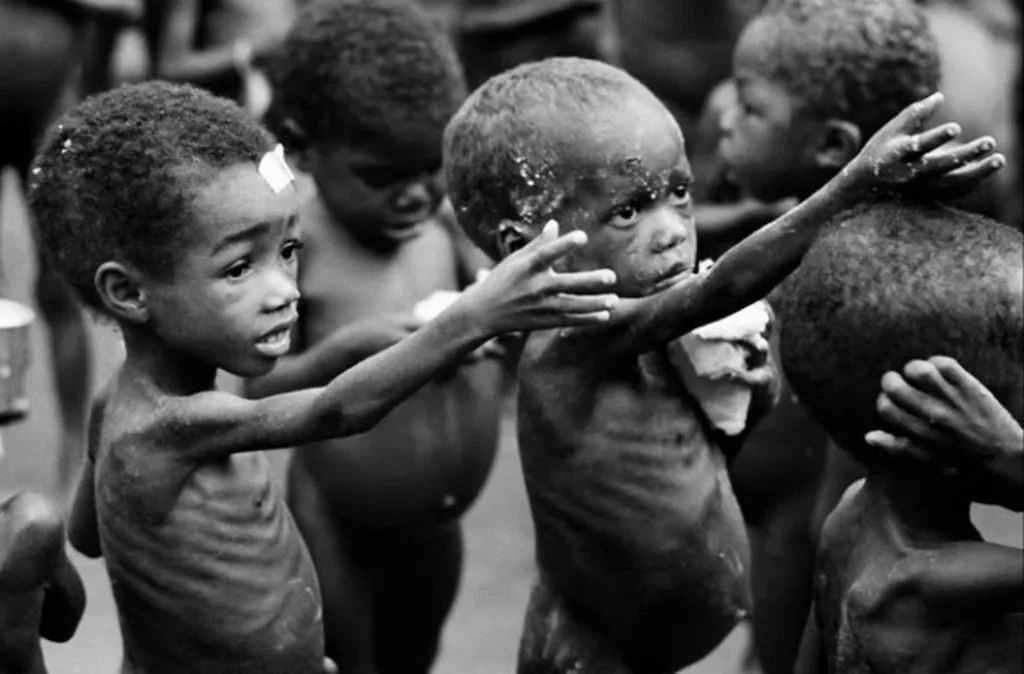
From the moment we are born, we are taught a story—a story about scarcity. There is never enough. Not enough food. Not enough money. Not enough homes. Not enough energy. We are told that life is a battle for limited resources, and if we don’t fight for our share, we’ll be left with nothing.
But that story is a lie.
The truth is, we have more than enough of everything.
The world produces 20% more food than we need to feed every human being alive today. There are far more vacant homes than there are homeless people. The sun delivers more energy to Earth in one hour than we use in an entire year. And yet, millions starve, sleep on the streets, and live without basic necessities—not because we lack resources, but because we’ve built a system that withholds them.
Scarcity is not a natural condition. It is manufactured, enforced, and protected by laws, markets, and financial systems designed to keep resources in the hands of the few while the many fight for scraps. This isn’t a radical idea—it’s a measurable, data-backed fact.
The Food Myth
If hunger were truly about not having enough food, it would have been solved decades ago. In 2023 alone, global food production reached 3.04 billion metric tons, enough to provide every person on Earth with 2,960 calories per day—well above the minimum needed for survival. The problem isn’t that we don’t have enough food. The problem is who controls it.
A staggering 1.05 billion tons of food—17% of all food produced—is wasted each year. In wealthier nations, almost a third of all food is thrown away while millions go hungry. But the waste isn’t just at the consumer level. Nearly 40% of U.S. corn production isn’t even used for food—it’s turned into biofuel. Meanwhile, 85% of the world’s grain trade is controlled by just four corporations, deciding who gets to eat and at what price. Hunger isn’t a food shortage—it’s a business model.
The Housing Myth
Walk through any major city, and you’ll see people sleeping on the streets, shivering in the cold or sweltering in the heat. The common narrative tells us that homelessness exists because there aren’t enough homes, but that, too, is false.
In the United States alone, there are 16 million vacant housing units, while only 582,000 people are homeless. The European Union has 11 million empty homes and 895,000 homeless individuals. In Japan, 8.5 million homes sit vacant, yet homelessness is still a problem. The truth is, we have more than enough housing—but it isn’t being used to shelter people. It’s being hoarded as an investment.
Nearly 70% of vacant properties in Toronto are owned by non-resident investors. In the U.S., institutional investors purchased 42% of all starter homes in 2023, making housing inaccessible to working people. And in most major cities, zoning laws deliberately limit the construction of multi-family housing, keeping supply low and prices high. Homelessness isn’t an accident—it’s a direct result of policies that treat housing as a wealth-building asset instead of a basic human need.
The Energy Myth
The idea that we don’t have enough clean energy to power the world is laughable. The International Energy Agency (IEA) reports that solar and wind power alone could generate fifteen times more energy than we currently consume. Yet, we still rely on fossil fuels, not because we lack alternatives, but because fossil fuel companies profit from the status quo.
In 2023, governments spent $7.3 trillion subsidizing oil and gas—a sum that could fund the global transition to renewables several times over. But energy isn’t just about power plants—it’s about control. 80% of existing power grids are designed for centralized fossil fuel distribution, making it difficult for individuals and communities to generate their own energy. If we truly unleashed the potential of renewables, energy wouldn’t just be abundant—it would be decentralized, outside the grip of powerful corporations and governments.
The Money Myth
At the root of it all is wealth concentration. The world doesn’t suffer from a lack of resources—it suffers from a lack of distribution.
The top 1% control nearly half of all global wealth—a staggering $230 trillion. Meanwhile, the bottom 50% of humanity controls just 1.2% of global wealth. During the COVID-19 pandemic, billionaires gained $4.2 trillion in wealth while 165 million people fell into extreme poverty.
And here’s the kicker: eradicating extreme poverty worldwide would cost just $190 billion a year—0.35% of global GDP. That’s less than what is lost to corporate tax avoidance ($600 billion), less than what governments spend on military budgets ($2.2 trillion), and less than what was handed to banks in bailouts since 2020 ($1.9 trillion).
Scarcity is a Lie—Abundance is the Reality
We have everything we need to provide food, shelter, and energy for all. The only thing standing in the way is a system that benefits from keeping resources scarce.
The problem isn’t that we can’t afford to solve these crises—it’s that those in power don’t want to. When people are hungry, when housing is unaffordable, when energy is expensive, they are easier to control. Keeping essential resources out of reach isn’t a failure of capitalism—it is capitalism working exactly as designed.
But here’s the truth:
There is no scarcity.
Only hoarding.
Only control.
Only the lie we still choose to believe.
The world isn’t running out of anything except excuses.