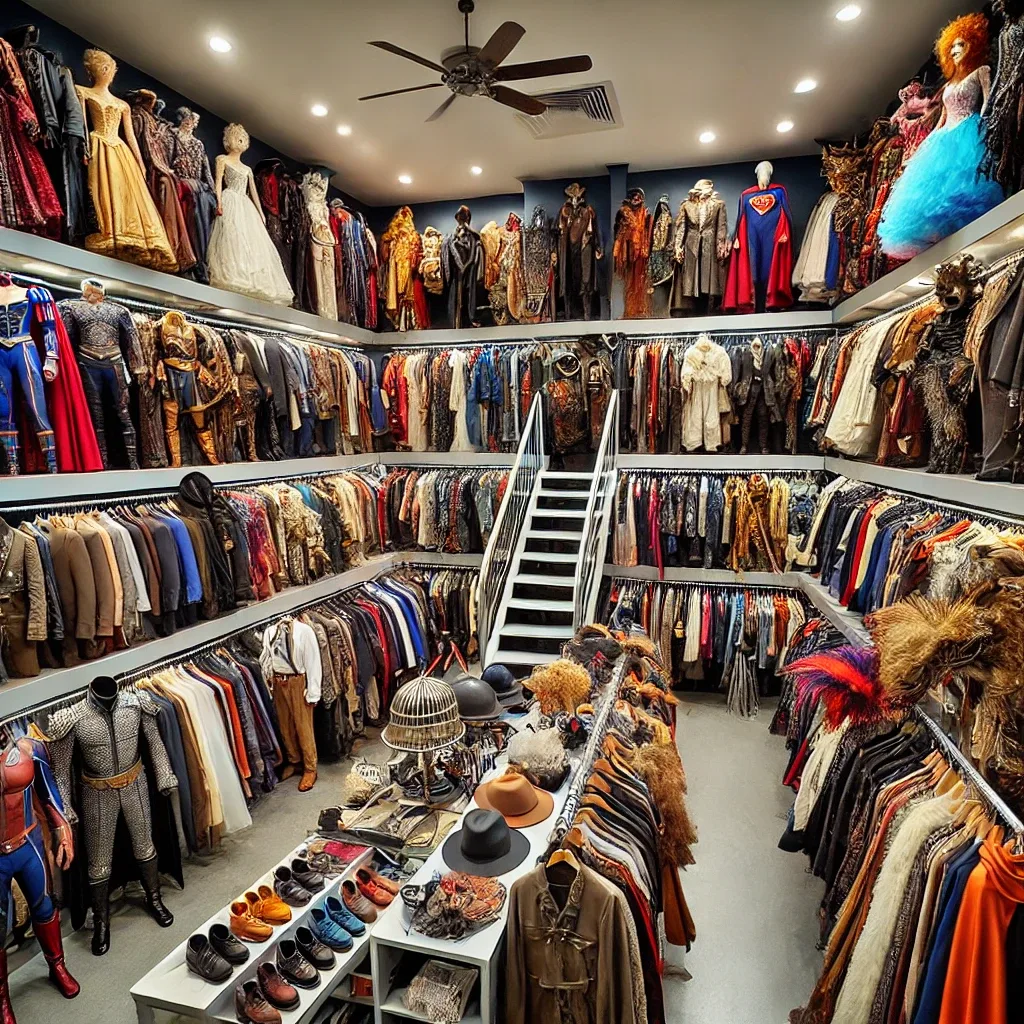
Most people don’t realize how much of their identity is tied to what they wear.
Every morning, we pull open drawers, rifle through closets, and make a quiet declaration of who we are—or who we want to be. A blazer signals professionalism. A band tee nods at nostalgia. The smallest choices—color, fit, brand—become whispers of identity. Even those who claim not to care still participate. The absence of a choice is a choice.
But what happens when you remove that question entirely?
One day, I stopped choosing. I pulled on the same comfortable pants, the same hoodie, the same bucket hat, the same bright pink Crocs. And then I did it again. And again. Until it wasn’t a choice anymore, but a practice.
At first, I assumed people would notice. They didn’t. Or if they did, they never said anything. Which was revealing in itself. We like to think we’re seen, that we’re observed, but the truth is: unless you step directly into someone’s story, they’re barely paying attention.
But when they did notice, their reactions said everything about how much clothing dictates perception.
The Outfit, The Reflection
For clarity’s sake, here’s what I actually wear:
Loose-fitting harem pants, soft and neutral, comfortable in a way that makes you wonder why anyone chooses denim. A hoodie, always the same, worn like a monk’s robe but without the implied asceticism. Crocs—not just Crocs, but bright pink Crocs—a single splash of chaos against the muted palette. A bucket hat, shielding me from both the sun and the unnecessary expectations of formal attire.
In the summer, the hoodie disappears, replaced by a Hawaiian shirt, loud and carefree, an intentional clash against the predictability of the pants and shoes. The socks vanish too. A seasonal shift, but still the same rhythm. A uniform, with room for evolution.
Nothing about this outfit is inherently strange. It isn’t a uniform in the way a suit or a monk’s robe is. It doesn’t signal wealth or poverty, intention or accident. And yet, by wearing it every day, I have seen the way the world projects meaning onto it.
I have been mistaken for homeless.
I have been asked to pay for my drink before it arrived, something that had never happened to me before.
I have been watched in stores, shadowed by employees as though I were a potential problem.
People don’t say anything outright, but I can feel the shift in energy, the unspoken calculations happening behind their eyes. If I had been wearing a suit every day, I imagine the response would be different. If I had been wearing monk’s robes, people might assume a quiet wisdom. But the same plain clothes, repeated daily, seem to create discomfort. It is a glitch in the system.
Disrupting the Ego’s Costume
I didn’t start this as a grand experiment in human behavior, but over time, I realized how much clothing is a social contract. When you choose not to participate in the expected variation, people don’t know how to categorize you.
And it’s not just how others see me—it’s how I see myself.
For most of my life, I’ve enjoyed playing with perception. A bright pair of glasses. An unusual mustache. A tattoo peeking from the sleeve. Little signals to the world, small nudges toward curiosity. I enjoy watching people react.
But this was different. This wasn’t creating a signal, it was removing one. And in that void, something unexpected happened: I became more comfortable in public.
Without the unconscious performance of choosing an outfit, I felt less self-aware in the best possible way. Less concerned with how I was perceived, because I was no longer offering a curated version of myself. I wasn’t trying to communicate anything. And in that, there was freedom.
Too Much Comfort, or Time for Change?
It has been a couple of years now. What began as an experiment became a routine.
And now, I feel something shifting.
It is too comfortable.
That might sound strange. Isn’t comfort the goal? Isn’t eliminating unnecessary choices a positive thing? And yes, it is—until it isn’t. I’ve always believed that when something becomes too automatic, it’s time to question it.
The first time I put on this outfit, it felt intentional. Now, it feels like a default. There’s a fine line between intentional simplicity and passive habit.
So what comes next?
I’m considering replacing this uniform with something more structured—something that still strips away unnecessary choices, but adds a layer of ceremony. Maybe a floral-patterned monk’s robe. Maybe something that feels more like a statement, rather than an absence.
Or maybe I abandon it altogether. Maybe I return to the world of fabric choices and shifting identities.
I don’t know yet.
But what I do know is this: The moment something becomes too easy, too automatic, it stops being a choice. And I never want to stop choosing.
What About You?
We all wear something every day. We all engage, consciously or unconsciously, in the quiet ritual of self-presentation.
So here’s a question:
What is one thing about your daily routine that you never question?
And what might happen if, just for a while, you did?
If you find value in these explorations and want to step beyond the veil with us, consider becoming a paying subscriber. Soon, we’ll be offering subscriber-only videos, Q&As, and deeper discussions-because forcing is always better with a good mirror.