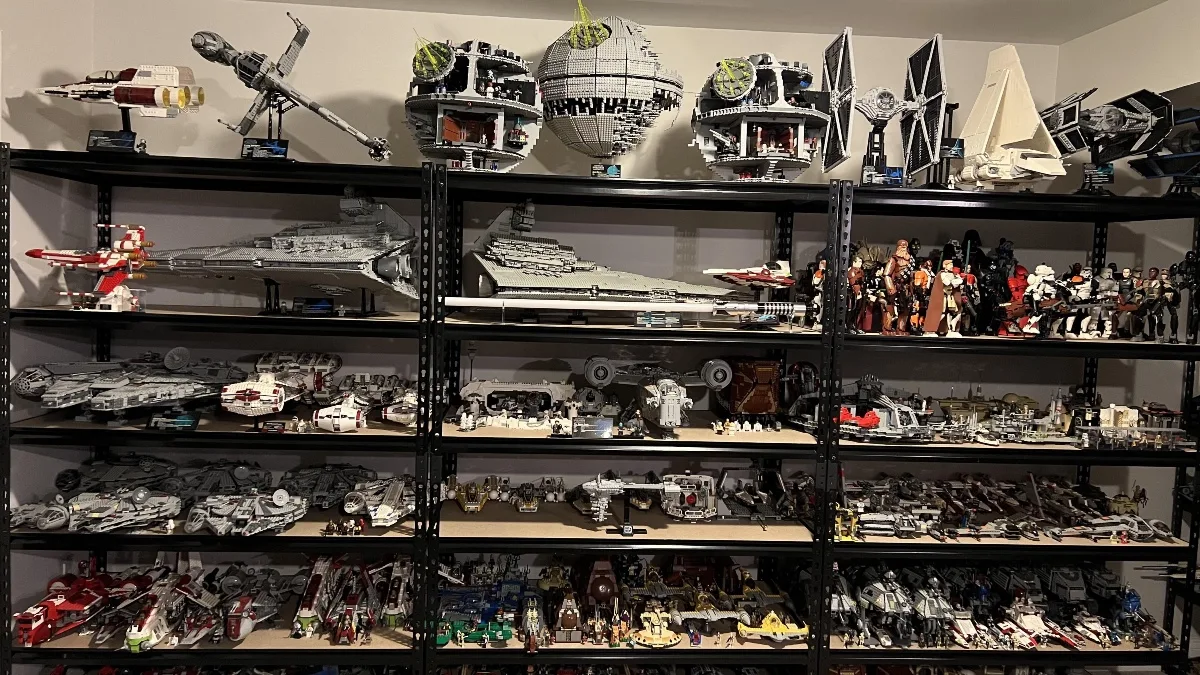
If you’ve somehow avoided the increasingly bizarre saga between YouTuber Reckless Ben and Bricks & Minifigs, allow me to summarize it in the least helpful way possible: a children’s toy has become the center of investigations, lawsuits, police reports, internet vigilantism, franchise disputes, crowdfunding campaigns, and enough interpersonal drama to fuel several seasons of reality television.
At the heart of the story sits a collection of LEGO bricks. Not gold bullion. Not rare artwork. Not classified government documents. LEGO. Small plastic bricks originally designed so children could build spaceships, castles, and questionable architectural projects that inevitably collapsed under their own ambition. And yet here we are.
As I’ve watched the story unfold, I find myself less interested in who is right and who is wrong than in what the whole thing reveals about us. Because the saga isn’t really about LEGO. It merely demonstrates a truth that has followed humanity throughout history: capitalism can turn almost anything into something else.
A tomato becomes a commodity. A forest becomes lumber. A home becomes an investment vehicle. A hobby becomes a side hustle. A toy becomes an asset class. The object itself doesn’t change. The meaning changes.
I spent years buying and selling LEGO. I sold on Whatnot. I hunted collections. I tracked values. I knew the thrill of finding a rare set at a garage sale and the satisfaction of turning knowledge into profit. There is nothing inherently wrong with commerce. People have traded things for as long as people have existed. But somewhere along the way, something strange happens.
The LEGO set stops being a spaceship and becomes inventory. The minifigure stops being a character and becomes a price chart. The collection stops being a collection and becomes a portfolio. The transformation is subtle enough that most people don’t notice it happening. At first you love the thing. Then you love finding the thing. Then you love selling the thing. Then you start loving what the thing can become: money.
The dangerous part isn’t greed. Greed is obvious. The dangerous part is that the process feels perfectly rational every step of the way. Nobody wakes up one morning intending to convert joy into spreadsheets. It happens gradually, one decision at a time. Eventually you find yourself staring at shelves filled with objects you once adored and realizing you’ve stopped seeing them entirely. All you can see are numbers.
This isn’t a criticism of collectors or resellers. I was one. It’s a criticism of a system capable of monetizing almost every corner of human experience. We have turned hobbies into content, friendships into networks, attention into currency, identity into branding. Even leisure increasingly arrives with a revenue model attached. The modern mind is constantly encouraged to ask the same question: “How can this make money?”
What fascinates me about the Reckless Ben story is that everyone involved almost certainly began from a place of genuine enthusiasm. Somewhere beneath the allegations, investigations, arguments, and legal filings are people who probably loved LEGO. That may be the saddest part. The toy survived. The relationships didn’t.
The irony is almost too perfect. LEGO is fundamentally about creation. You take simple pieces and build something new. It is one of the most beautiful metaphors for imagination ever invented. Yet this saga feels like the opposite process. Instead of building, everyone is dismantling. Trust is dismantled. Communities are dismantled. Businesses are dismantled. Reputations are dismantled. And all the while, millions of little plastic bricks sit silently in boxes, completely unaware of the chaos unfolding around them.
There is something deeply absurd about that. But maybe that’s the lesson. The corruption doesn’t live in the bricks. The poison isn’t in the toy. The problem is our remarkable ability to transform nearly anything into a vehicle for extraction. Give us enough time and we’ll financialize joy itself.
Which is perhaps why I’ve drifted away from selling things. Not because selling is wrong. Not because money is evil. But because I eventually realized I was more interested in what objects meant than what they were worth.
A LEGO set can be inventory, or it can be a spaceship. A painting can be an investment, or it can be a conversation with yourself. A life can be optimized, or it can be lived.
The bricks don’t care which one you choose. But eventually, you might.