Inspired by Anton Petrov’s overview of a 2026 study on bacteria growing inside radiation fog, because apparently even mist has been keeping secrets from us.
There is something especially delightful about learning that fog is not simply fog. It feels like one of those little reality trapdoors opening under your feet while you are just trying to drink coffee and watch a YouTube video like a normal mammal with Wi-Fi. One moment fog is atmosphere doing atmosphere things. The next moment it is a floating aquatic neighborhood full of tiny organisms eating toxins and quietly participating in the chemistry of the sky like microscopic custodians with no union representation.
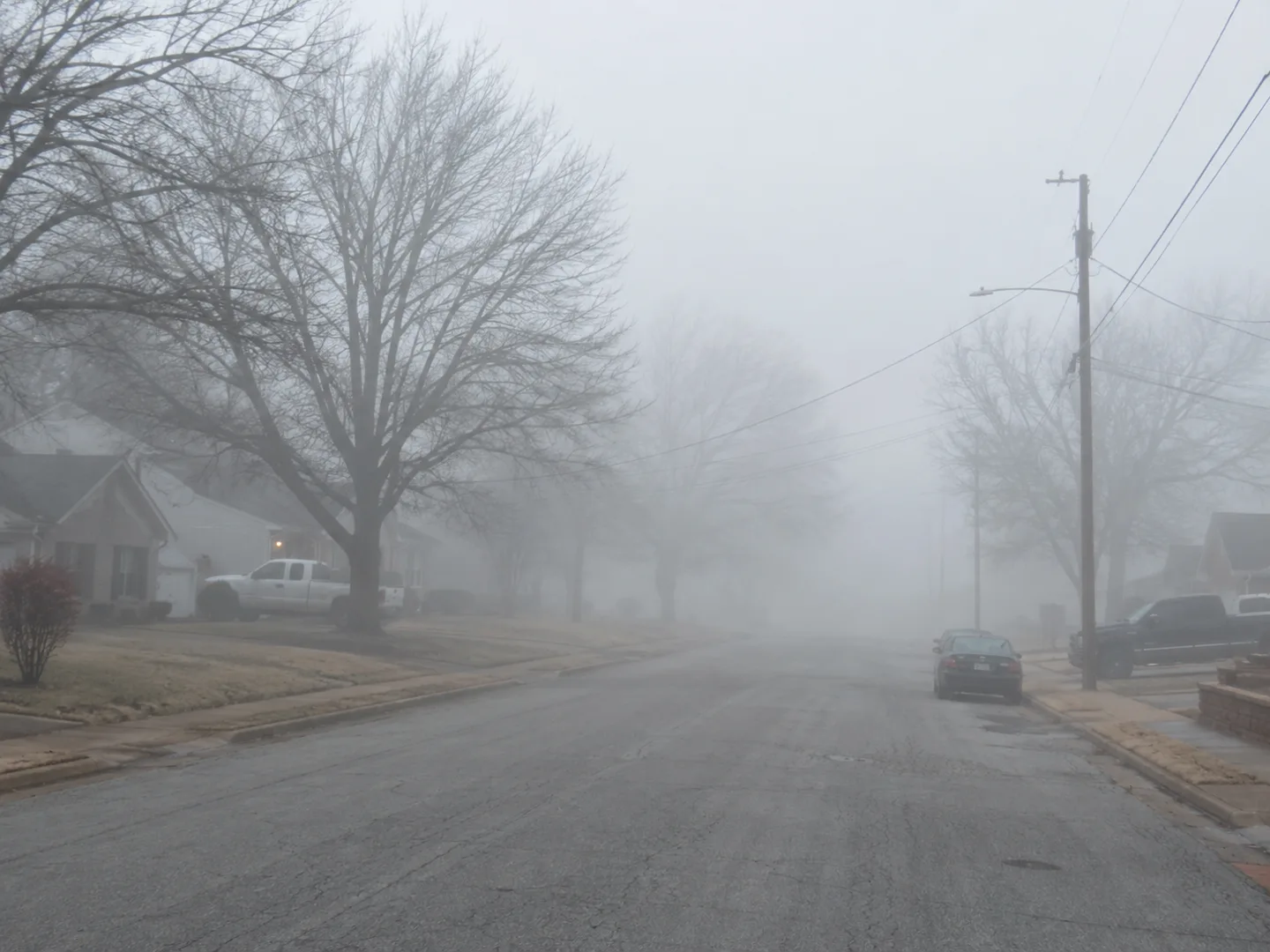
I love discoveries like this because they remind me how much of reality we mistake for scenery. Fog has always seemed like a mood more than a place. It rolls in, makes everything feel haunted or cinematic, ruins visibility, dampens your beard, and then leaves without explaining itself. We treat it as an effect. A filter. Nature’s low-budget smoke machine. But apparently, inside those little suspended droplets, life is not just hitchhiking. Life is doing what life does. Growing. Dividing. Eating. Surviving. Making a habitat out of what we thought was only weather.
That is the part that made me smile. Not because I particularly needed fog to become more complicated. I already have enough problems. I am a human being with a calendar, a child, opinions, laundry, and at least seventeen unfinished ideas pacing around my brain like raccoons in a ceiling. But there is something beautiful about being reminded that the world is never as flat as our first interpretation of it. We walk through a fog bank and think, “I cannot see.” Meanwhile, the fog is over there saying, “Actually, I am a temporary ecosystem. Please update your ontology.”
And that may be the real lesson. Our perspective dictates almost everything because interpretation is not just something we add to reality after the fact. Interpretation is the version of reality we live inside. Fog, to a driver, is danger. Fog, to a photographer, is atmosphere. Fog, to a poet, is metaphor. Fog, to bacteria, is a lake in the sky. Same fog. Different universe.
This is the absurd little magic trick consciousness performs all day long. It takes an infinite world and makes it personal. It edits the overwhelming into the usable. It turns raw existence into “my morning,” “my problem,” “my walk,” “my weather.” And that is necessary. We cannot live while constantly perceiving the hidden machinery of everything. If every glass of water revealed its molecular ballet, if every patch of dirt screamed its microbial epic, if every foggy morning announced itself as a suspended aquatic metropolis, we would never get anything done. We would stand in the yard for six hours whispering, “What the hell is going on?” which, to be fair, may be the most honest spiritual practice available.
Still, every once in a while, science hands us a little crack in the ordinary. Not enough to break us. Just enough to widen the eyes. We learn that trees communicate through fungal networks. That our guts are bustling microbial democracies with questionable campaign finance laws. That the deep earth contains life miles beneath the surface, thriving without sunlight like little subterranean monks who took detachment way too seriously. And now fog joins the list. The mist itself is alive with activity.
Not alive in the horror movie sense, thankfully. No need to run screaming through the streets yelling, “The fog has opinions!” But alive in the more interesting sense: full of hidden relationships, hidden processes, hidden participation. The world is not a pile of separate objects sitting politely in space. It is a continuous exchange. Breathing into breathing. Water into air into life into chemistry into weather into lungs into thought.
That is what keeps stunning me. Not just that we know so little, but that we keep assuming we know enough. We name a thing and mistake the name for understanding. Fog. Dirt. Body. Mind. Self. Reality. We put a label on the mystery and then act like the mystery has been handled. But the label is only a handle. The door remains enormous.
Maybe that is why this study feels less like a fact about fog and more like a spiritual reminder wearing a lab coat. It says: look again. The ordinary is not ordinary. The world you are walking through is not the world you think you are walking through. Your interpretation is useful, but it is not complete. The fog is not only blocking your view. It is revealing the limits of how you view.
And honestly, I find that comforting. There is relief in being wrong about the depth of things. There is joy in discovering that even the grayest, dampest, most in-between parts of the world are secretly full of life. Fog is the thing between clarity and blindness, between here and there, between what we can see and what we cannot. Of course it would be alive. Of course the in-between would be crowded.
So the next time I walk through fog, I hope I remember this. I hope I do not just think, “This is weather.” I hope I think, “This is a temporary world.” A passing habitat. A small gray universe brushing against my skin. Something I have moved through my entire life without really seeing.
Which, if I am honest, is probably true of almost everything.