We like to imagine that progress is neat. A linear story. A genius sits down, makes a plan, executes the plan, changes the world. End of story.
But it’s not true. That’s just how we tell the story after the fact, when we’re uncomfortable admitting that we’re mostly a species of improvisers stumbling through the dark, occasionally tripping over a light switch.
Most of what brought us here wasn’t brilliance. It was boredom. It was distraction. It was someone not following instructions.
Penicillin was discovered because a petri dish was left out too long and started growing mold. The microwave was invented when a guy realized the chocolate bar in his pocket melted while he stood near a radar machine. The slinky fell off a table and started doing what slinkies do—by accident.
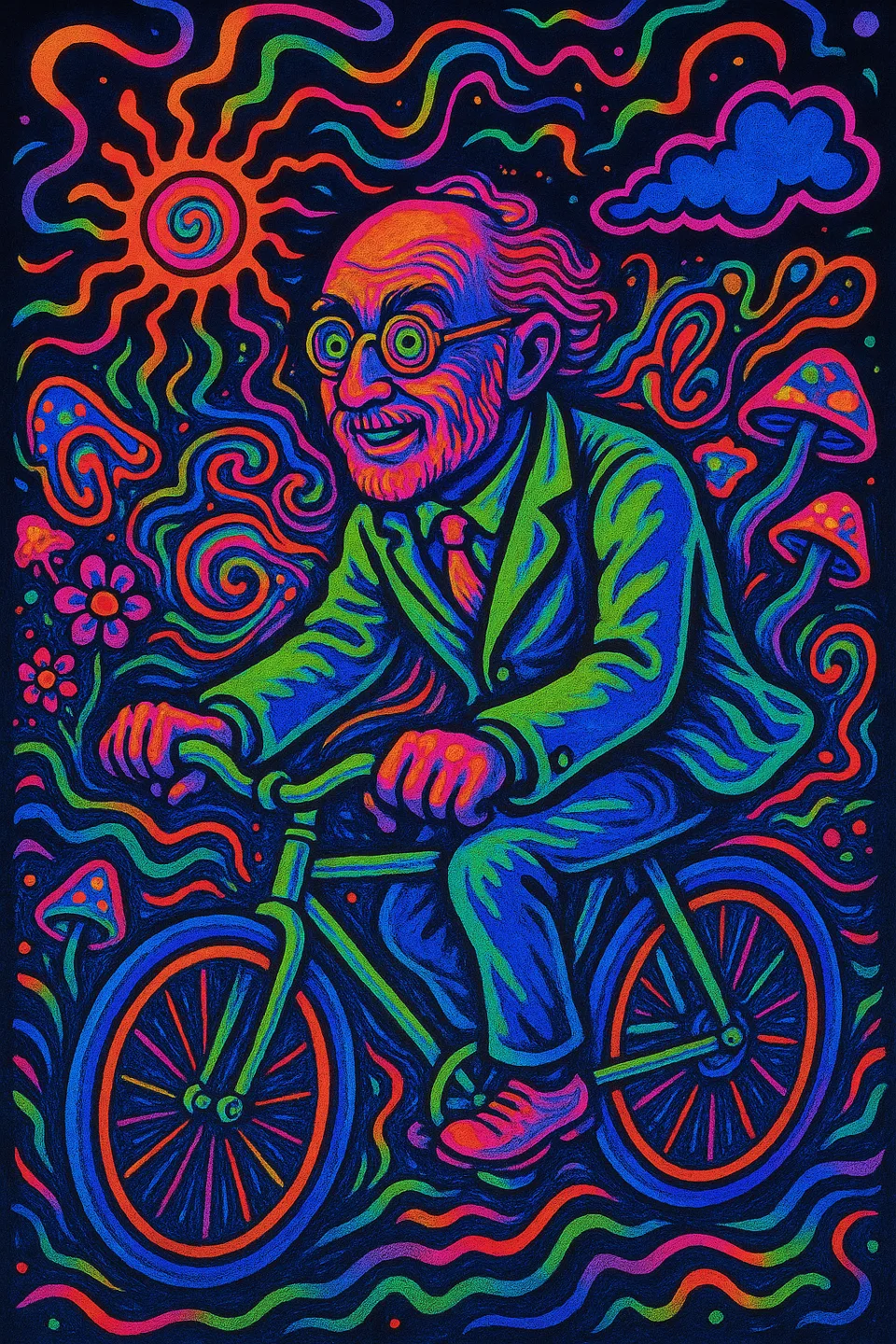
Velcro came from a guy who stared at burrs stuck to his dog’s fur and thought, “Huh.” LSD was synthesized by someone trying to make a respiratory stimulant—and then, quite accidentally, taken by someone who had a very weird bike ride home.
We’ve been telling ourselves that genius is about foresight, about calculation, about big brains solving big problems. But the truth is, some of the most enduring human breakthroughs came from not knowing what we were doing.
And maybe—just maybe—that’s not something to be embarrassed about. Maybe it’s something to protect.
Because if you look closer at these accidental discoveries, they’re not just flukes. They’re intersections. A random event collides with a curious mind, and suddenly something opens.
The accident is only half the story. The other half is someone noticing. Someone asking, “What just happened?” and not turning away too quickly. Someone not trying to get back on track, but being willing to follow the thread sideways.
That’s the secret. It’s not just luck—it’s presence in the chaos. It’s having just enough structure to notice when something breaks it. Structure isn’t the enemy—it’s the frame through which we notice disruption. Without some expectations, we wouldn’t recognize surprises as significant. Genius thrives at the intersection of order and chaos.
We like to think that intelligence is about having a plan and sticking to it. But maybe intelligence—real, living intelligence—is about being ready to deviate. To reorient. To say, “That wasn’t what I expected,” and keep going anyway.
Which brings us to Mirror Theory. The idea that awareness doesn’t grow in a vacuum—it expands through reflection. That the mind evolves not by marching in a straight line, but by encountering things that challenge its shape, forcing it to adapt, stretch, rewire.
What is an accident but an unexpected mirror?
Something outside our control that suddenly reflects something back to us—some hidden potential, some forgotten layer of reality, some overlooked connection that only reveals itself in the moment of rupture. An accident doesn't just reflect the unexpected—it reflects hidden potentials within us, revealing new layers of our capabilities we never consciously planned to discover.
Forcing Theory, too, lives here. Because these accidents force us into new modes of awareness. They interrupt the default, and in doing so, open a kind of portal. Most people close it immediately—because it doesn’t fit the plan. But the ones who don’t? The ones who linger in the rupture, curious and alert and just slightly unhinged?
Those are the accidental geniuses.
Perhaps genius requires embracing absurdity—recognizing that our deepest insights often lie hidden behind laughter, confusion, or apparent nonsense. Maybe accidents are how we glimpse freedom in an otherwise deterministic universe—moments where unpredictability cracks open new possibilities.
And here’s the wild part: you are one of them.
Not because you’ll invent the next miracle material or synthesize the next psychedelic wonder drug. But because your brain is doing this all the time.
You forget things. You wander. You daydream in the middle of an important sentence. You try to remember something and come up with something else entirely.
Your brain is not a machine—it’s a chaos engine.
And buried in that chaos are signals. Insights. Patterns. Accidents waiting to be noticed. Think of a time you took a wrong turn, clicked on the wrong link, or mistakenly said something out loud—and suddenly discovered something entirely unexpected about yourself or your path. You’ve lived this theory.
You don’t have to optimize everything. You don’t have to master the algorithm. You don’t have to know what you’re doing every minute of the day.
You just have to notice the glitch when it shows up. And then, instead of correcting it, follow it.
You might end up somewhere better than what you were aiming for.
Maybe genius was never about the plan. Maybe it’s always been about the moment you realized the plan had nothing to do with what was actually happening—and leaned in anyway.