It happens all the time. I hear parents talk about how dangerous Roblox is. Or how YouTube is melting their kid’s brain. There’s this persistent cultural fear around screens—as if the screen itself were the threat. But when I hear these concerns, I don’t feel fear. I feel confusion. Because that hasn’t been our experience at all.
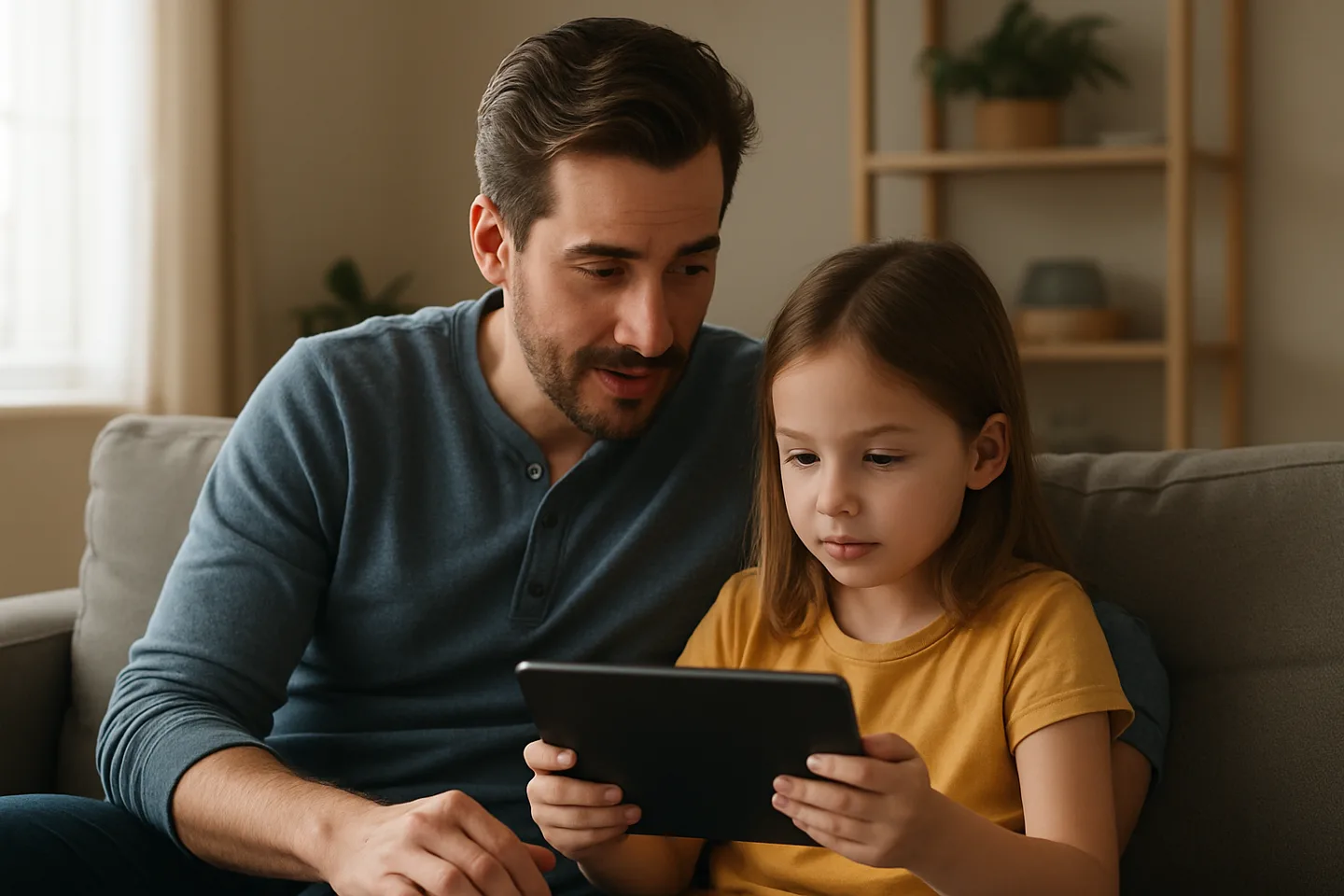
My daughter Jett is seven. She has played games and watched YouTube her entire life. And she hasn’t had issues. Not because she’s different. Not because we got lucky. But because we parent. Because we’re there. We play with her. We talk with her. We sit beside her when she explores digital spaces. We don’t outsource our presence.
That’s the thing no one seems to say out loud: screens become a problem when they replace relationship. The issue isn’t what our kids are watching—it’s whether anyone is watching with them. The real danger isn’t YouTube. It’s neglect, disguised as convenience.
What most people are calling a "screen problem" is actually a surrogacy problem. Parents are using devices as stand-ins for connection, for presence, for attention. And when those devices fail to parent—as they inevitably do—the blame gets placed on the screen.
But tools are mirrors. And when we fear the mirror, we miss the message. Screens reflect what we bring to them. A child left alone with a device for hours will be shaped by that isolation. But a child accompanied, guided, and engaged? That child learns how to explore, to question, to filter, to discern.
Of course, content matters too. Presence isn't a magic shield against every influence. Some material online is predatory, manipulative, or simply not age-appropriate. But parental presence—curious, active, and ongoing—is what makes it possible to help children process and contextualize what they encounter. It creates the feedback loop that fosters discernment.
And yes, many parents turn to screens out of necessity. Time is scarce. Work is demanding. Exhaustion is real. There’s no judgment here for survival-mode parenting. But if we can name what’s happening, we can also look for moments of repair. Micro-engagements. A check-in. A question. A shared laugh. Presence doesn’t have to mean perfection. It just has to mean trying.
When I watch Jett navigate Roblox or YouTube, I don’t see danger. I see opportunity. I see moments to talk about what she’s seeing. I see doorways into curiosity, learning, and play. The problem isn’t the technology. The problem is the expectation that technology should raise our kids for us.
Parenting has always required presence. The medium may change—chalkboard, television, tablet—but the principle doesn’t. Kids need guides. They need people in the room. Not just to monitor content, but to co-create meaning.
So if we want to address the real issue, let’s stop blaming the screen. Let’s ask better questions. Are we present? Are we curious? Are we participating in our children’s digital lives with the same care we bring to their physical ones?
The screen isn’t the surrogate. We are. Or we aren’t. And that choice, like always, is ours.
If you're looking for ways to begin, try this: watch an episode together. Ask what they like about a game. Sit nearby when they play. Not to control, but to witness. To be part of the world they’re in. It doesn’t take hours. It just takes attention. And attention, in any era, is the most powerful parenting tool we have.