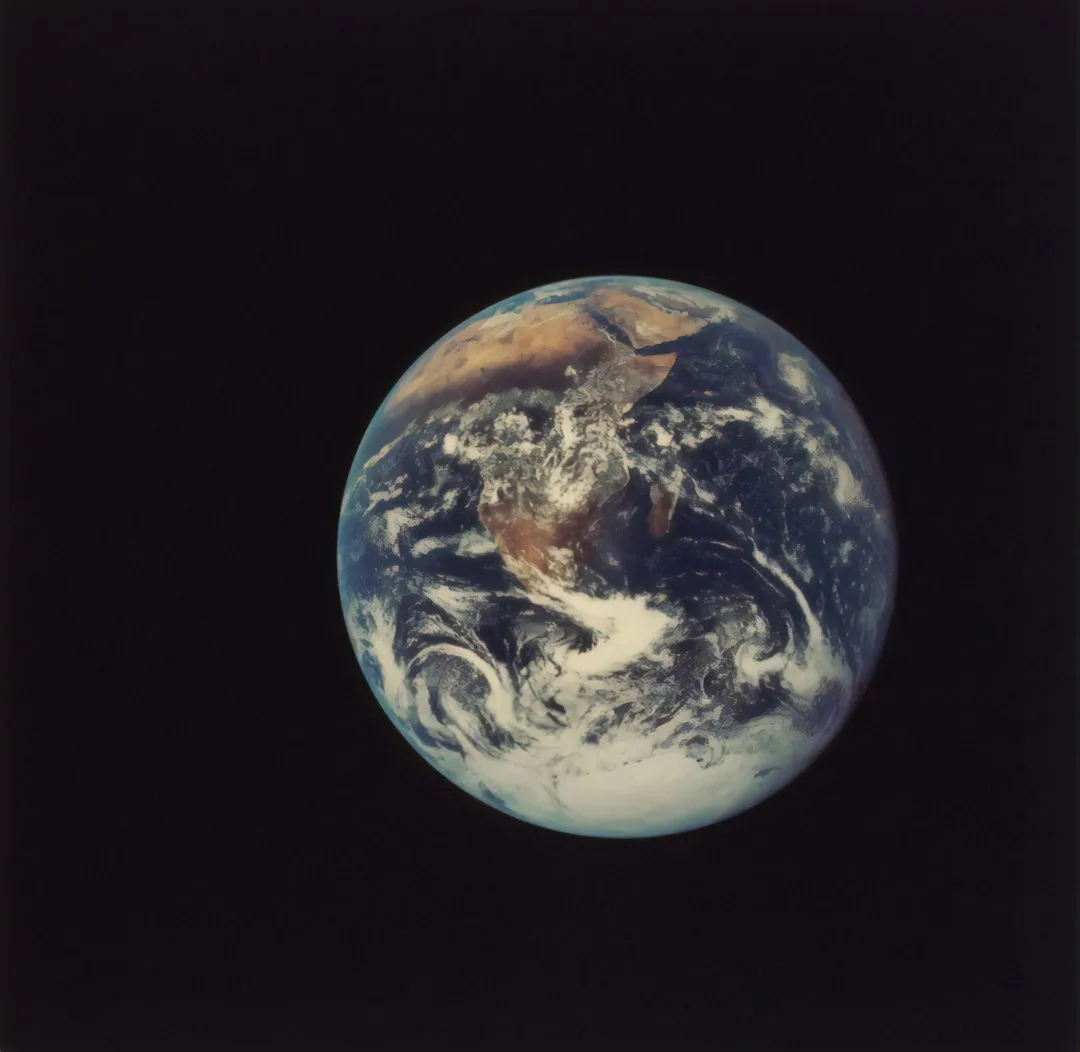
I have a simple litmus test for politicians here in Oklahoma. I don’t ask about taxes. I don’t ask about immigration. I don’t ask about abortion, guns, or whichever cultural bonfire happens to be burning hottest this week. Instead, I ask one question:
“How old is the Earth?”
Sometimes I phrase it a little differently: “How long did it take the Earth to form?” That’s it.
At first glance, it sounds like I’m trying to start an argument about religion. I’m not. In fact, there are several answers I’d consider perfectly acceptable. “I don’t know” is one of the most underrated phrases in the English language. “Science says about 4.5 billion years.” Perfectly reasonable. Even something like, “My faith and science answer different questions,” tells me the person has spent at least some time wrestling with the tension instead of pretending it doesn’t exist.
There is, however, one answer that immediately disqualifies someone from earning my vote. If the response is that the Earth is around six thousand years old and was created in six literal days, I’m done. Before anyone starts constructing a cross out of reclaimed Hobby Lobby lumber, let me explain why.
This isn’t really about geology. It isn’t even about religion. Some of the smartest, kindest, and most intellectually honest people I’ve known have been deeply religious. Plenty of Christians accept modern cosmology, geology, and evolutionary biology without feeling that their faith has been diminished in the slightest. The issue isn’t belief. It’s epistemology.
The question I’m actually asking is much stranger: How do you decide what is true? If someone rejects an overwhelming body of evidence because it conflicts with a preferred interpretation of an ancient text, I’m less interested in the conclusion than I am in the cognitive process that produced it. If that’s the operating system being used for one question, I have to wonder where else it might be running. Medicine? Education? Climate? Economics? Eventually every public servant reaches a point where they must decide whether evidence serves their worldview or their worldview serves the evidence.
Living in Oklahoma makes the question even more interesting. In much of the country, answering “about 4.5 billion years” doesn’t tell me very much. It’s simply the answer most people learned in school. Here, though, the question has acquired an unexpected superpower because there is genuine social pressure to answer differently. A politician willing to give the scientific answer may be revealing intellectual honesty, political courage, or simply a willingness to disappoint part of their base. Another politician may privately agree with modern science while publicly reciting a different answer because they know exactly who is listening.
That’s why I’ve grown to appreciate how deceptively simple the question is. It doesn’t reveal the rubric. If I asked, “How do you reconcile scientific evidence with your religious beliefs?” every seasoned politician would immediately hear the trap being set. Their media training would spring to life, followed by a beautifully rehearsed answer that somehow says everything while revealing absolutely nothing. But ask, “How old is the Earth?” and the first answer often arrives before the political software has finished loading. It’s less polished, less calculated, and usually far more revealing.
Of course, this isn’t a perfect filter. Human beings are gloriously inconsistent. Some candidates know the scientific answer because they memorized it, not because they value evidence. Others may privately accept modern science while publicly saying something entirely different because they believe political survival requires it. We are remarkably talented at lying to ourselves before we ever get around to lying to anyone else.
Still, I’ve found the question remarkably useful because I’m not actually trying to discover how old someone thinks the Earth is. I’m trying to discover what they instinctively trust when they’re asked about reality itself. Do they reach first for evidence? Authority? Tradition? Identity? Or the audience standing in front of them?
For someone who spent years inside fundamentalist Christianity before eventually finding his way out, that distinction matters. Maybe that’s the real question beneath every political question. Not what do you believe, but how did you arrive there? If I understand the process, I can usually predict the conclusion.
Besides, if one innocent question about rocks can trigger an existential crisis before the campaign volunteer has even finished unfolding the yard signs, I’d call that an efficient use of democracy.