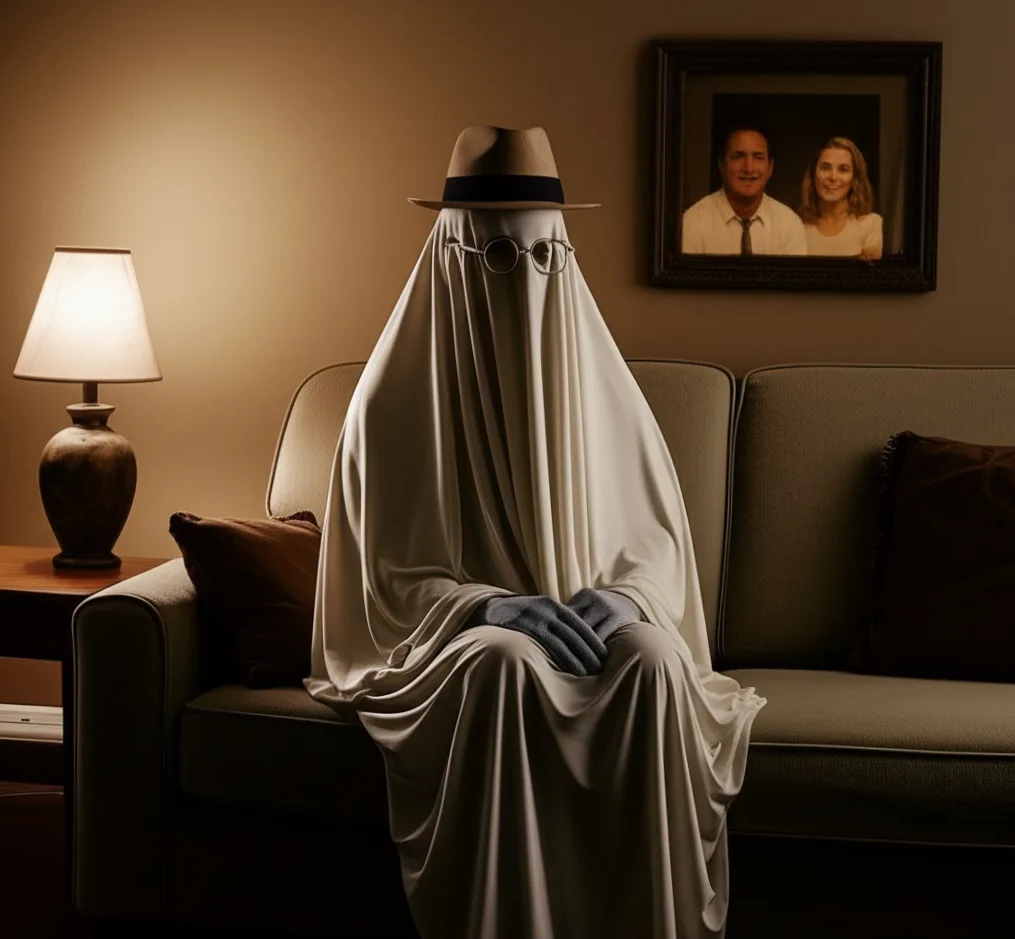
I don’t know when it happened, but somewhere along the way the role of “grandparent” seems to have thinned out—less a pillar of family life, more a postcard presence. Talk to almost any parent my age, and you’ll hear some version of the same story: the grandparents don’t call, they don’t visit, they don’t seem especially interested in the lives of their grandchildren.
For those of us in the Xennial bracket—the ones who grew up half-analog, half-digital—this feels especially strange. We remember grandparents who were fixtures of family life. They were Sunday dinners, summer weeks, unshakable presences. They lived close by, or at least acted like distance was something to be crossed. Their houses smelled like permanence.
With our parents’ generation—the boomers—it often feels inverted. Many worked hard, raised kids, and then, when the parental duty box was checked, pivoted fully back into themselves. Retirement became a new adolescence: travel, hobbies, second homes, “me time.” For some, grandparenting feels optional, even burdensome—a role they didn’t sign up for, or at least don’t prioritize.
Why this shift? It’s tempting to reduce it to selfishness, but the reality is more complex. Economic mobility scattered families across states and time zones. The boomer pursuit of independence—the same drive that shaped their youth—often came at the expense of interdependence. Cultural norms shifted, too: where previous generations saw family obligation as non-negotiable, boomers were encouraged to choose self-fulfillment first. None of these factors erase the sting, but they do sketch a broader context.
Among my friends, the pattern is clear enough to feel almost universal. Nine out of ten will tell you: their kids barely know their grandparents, and it’s not for lack of trying. The calls go unanswered. The invitations fall flat. The interest just isn’t there. And while everyone jokes about it—trading memes about boomer aloofness—beneath the laughter sits a quiet ache.
Because children don’t just lose grandparents. They lose witnesses. They lose the sense of being held in a story that stretches back in time. When that chain of care breaks, families float more alone.
It’s not that all boomers fit this mold—some are devoted, present, deeply engaged. But the broader pattern leaves a mark on how our generation thinks about aging, about care, about what it means to step into elderhood ourselves.
And maybe this is the hidden gift inside the absence: clarity. We’ve seen what distance does, and we know we don’t want to replicate it. If boomers leaned into freedom, maybe Xennials and Millennials will lean back into presence. Maybe we’ll rediscover grandparenting as not a burden but as a kind of second flowering—the chance to love without the anxieties of survival, to anchor without the weight of obligation.
Until then, the ache remains: the gap between memory and reality, between what we once had and what so many of our children are missing. A fracture in the chain of care that, hopefully, we will be the ones to mend.
Because in Mirror Theory terms, even absence is a reflection. The vanishing grandparent mirrors back to us our own fears—that we, too, might fade into irrelevance, remembered only in fragments. But it also reflects our aspiration: to become elders who choose presence over distance, witnesses over wanderers. Their absence is a distorted mirror, yes—but one that dares us to step closer, to look hard, and to decide what kind of reflection we want to leave behind.