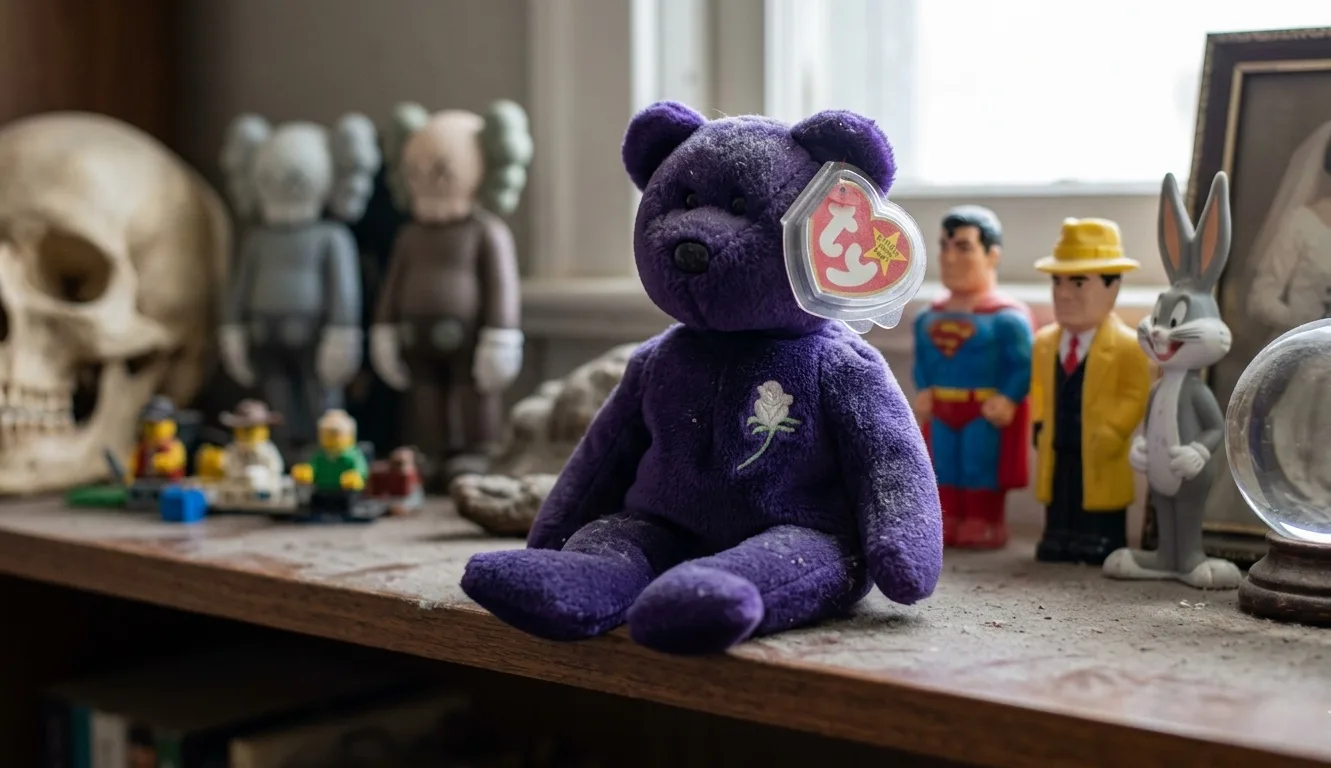
The year was 1998, my freshman year of college, and like many visionaries before us, my friend Aaron and I decided we were going to get rich selling tiny stuffed animals filled with plastic pellets.
Not just any stuffed animals, of course. Beanie Babies.
This was not a casual cultural moment. This was a frenzy. These little creatures had somehow become the stock market for grandmothers, children, collectors, and college freshmen with questionable business plans. They were bought, protected, tagged, stored, traded, and whispered about in the same breathless tone usually reserved for gold, real estate, or insider information.
Aaron had a family friend who could ship them to us wholesale, which, to our freshman-in-college brains, meant we had cracked the code. We were businessmen now.
Each week, Ty would announce which Beanie Babies were being “retired,” meaning they would no longer be produced. That one word had a magical effect. A bear that was merely cute on Monday could become a speculative asset by Friday. The right tag, the right name, the right retirement announcement, and suddenly you weren’t holding a stuffed animal. You were holding destiny. Or at least, a very soft, very purple version of it.
I remember sitting at the computer, refreshing the page over and over, waiting to see if anything we owned had been retired. We had cases of Princess Diana bears—the royal blue “Holy Grail” of the era—and I can still feel that absurd little pulse of hope: Maybe today is the day. Maybe this bear buys my books. Maybe this bear pays rent. Maybe the weight of a global tragedy, stitched into purple plush, was the beginning of an empire.
It was not.
But for one strange semester, Aaron and I traveled the back roads of Oklahoma, stopping at antique malls and collector booths, trying to flip Beanie Babies to anyone who could still be convinced that a small plush iguana was a sound investment. We made a little money. We laughed a lot. We were young, ambitious, and probably deeply annoying, fueled by optimism, bad math, cheap gas, and the intoxicating belief that we had figured out something adults had missed.
Then, like most things from youth, the memory faded. It became one of those stories filed away in the dusty back room of the mind. Not forgotten exactly, but no longer active. A weird little artifact from a weird little time.
Years later, after opening our vintage store, I was out hunting for inventory. I don’t remember the exact place. Probably an estate sale, thrift store, antique mall, or one of those strange liminal retail spaces where the past goes to wait for someone with taste and questionable impulse control to rescue it.
And there it was: a Beanie Baby.
Nothing dramatic. No heavenly light. No swelling music. Just a small plush ghost from 1998 sitting among the other discarded relics of other people’s lives. But the second I saw it, the whole thing came rushing back: Aaron, the wholesale boxes, the road trips, the antique malls, the retired lists, the Princess Diana bears, the refresh button, and the absurd seriousness with which we treated the whole operation.
Then came the realization: this wasn’t just a funny thing I did once. This was training. Not formal training, not the kind you put on a résumé, but the kind life gives you before you have any idea what it’s preparing you for.
Because there I was, decades later, owning a vintage and antique store called Curating the Cool, selling strange and wonderful treasures to collectors, nostalgia seekers, decorators, oddballs, resellers, and people with amazing taste. Obviously.
Had something in me changed since 1998? Absolutely. I no longer believed every collectible was destined to become valuable simply because someone said the word “retired.” I had learned the difference between hype and history, between scarcity and meaning, between collecting as speculation and collecting as a form of memory. But something had also remained: the thrill of the hunt, the ability to see value where others might only see clutter, and the joy of matching an object with the right person.
Years before I understood the logistics of a global marketplace, I was learning the weight of a bubble. Later, that scaled into shipping over 10,000 items on Whatnot. Ten thousand little acts of exchange. Ten thousand objects packed, sent, and released into new lives. Would I have done that without the Beanie Baby semester? Would I have opened Curating the Cool? Would I have spent so much of my life orbiting the strange gravity of objects, collections, nostalgia, and taste? Probably not. Or at least, not in the same way.
That Beanie Baby business was ridiculous. But it was also real. It taught me how objects move through desire, how trends become economies, and how nostalgia gets priced, displayed, protected, and eventually rediscovered in a dusty booth years after everyone thought the moment had passed.
At eighteen or nineteen, I thought we were selling Beanie Babies. But maybe we were really selling possibility.
I still have one Beanie Baby. It lives in my toy/meditation closet, which is exactly the kind of sentence that makes sense if you know me and sounds mildly concerning if you don’t. It sits in the quiet company of a human skull, original KAWS figures, various LEGO sets, and vintage Soaky shampoo bottles shaped like Superman, Dick Tracy, and Bugs Bunny. There’s a crystal ball nearby, and a photo of Mary Ann on our wedding day.
I don’t keep the bear because it’s worth a fortune. I keep it because it is a mirror.
A small, ridiculous, pellet-filled mirror.
It reminds me that even the silly chapters count. Maybe especially the silly chapters. The absurd little side quests of youth often contain the early patterns of our becoming. We just don’t recognize them yet because they’re dressed as jokes.
But life has a way of circling back. Sometimes it hands you a profound revelation. Sometimes it hands you a Beanie Baby. And if you’re paying attention, they might be the same thing.