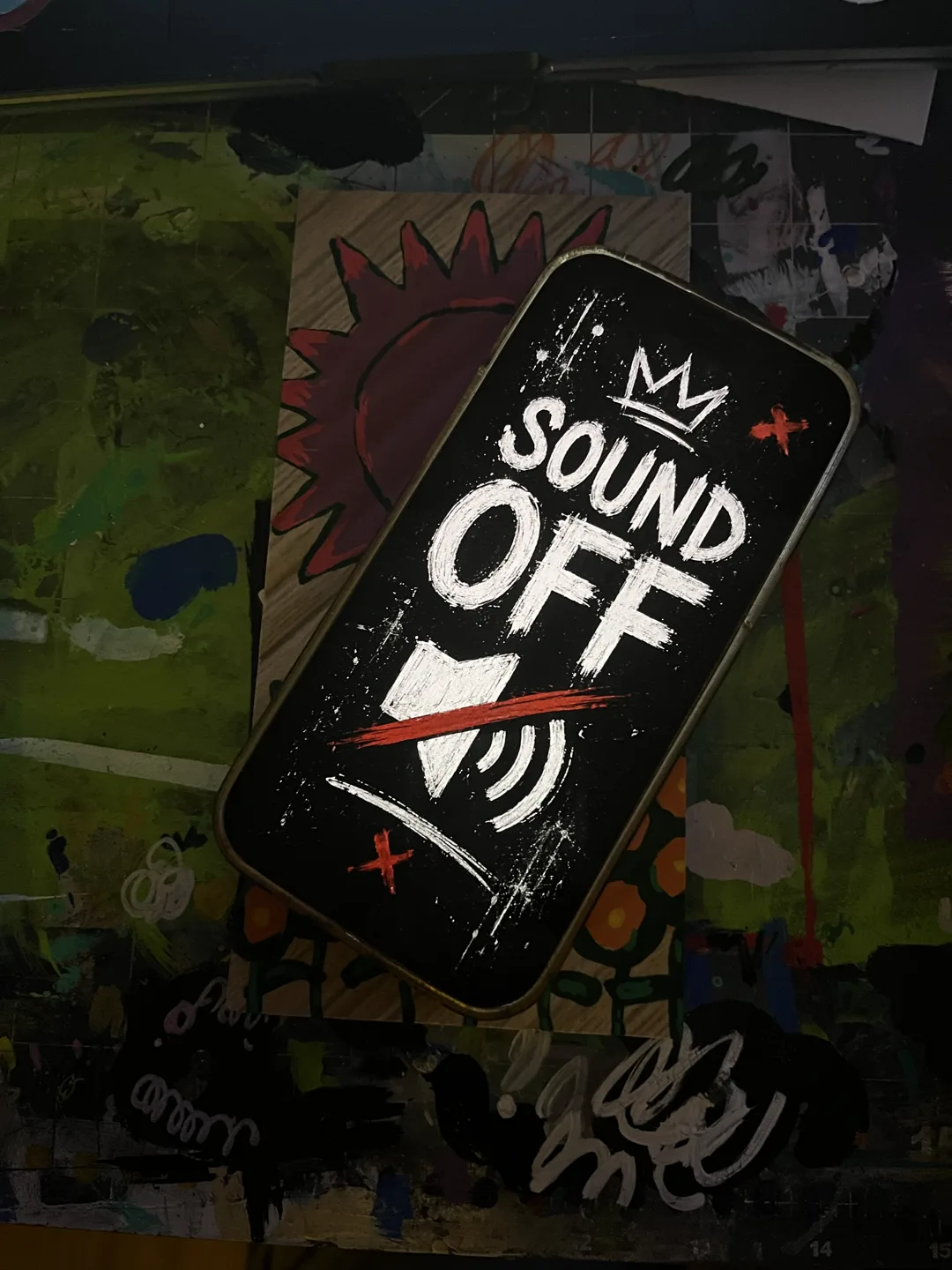
I turned off my phone ringer sometime in the early 2000s and never turned it back on.
There wasn’t a grand philosophical reason for it at the time. I wasn’t making a statement about technology, society, or the attention economy. I simply found the ringing intrusive and decided I didn’t need it. Twenty-something years later, every phone I’ve owned has remained silent.
What’s strange is that despite all this, I wouldn’t describe myself as disconnected. Admittedly, many people reading this will laugh at that statement because I can be notoriously difficult to get ahold of. My wife has become the de facto point of contact for much of the world. If you text me, I’ll almost certainly text you back eventually. If you’re on the approved contact list and happen to call, I’ll usually respond to the missed call with a text at some point. Unknown numbers, however, are automatically routed to a voicemail box that might as well be a black hole. I assume important messages occasionally arrive there. I have no evidence to support this claim.
Over the years, friends, family, and acquaintances have adapted. They’ve learned the rules of engagement. Don’t call Z. Text him. Or better yet, ask Mary Ann.
The realization that this might be unusual came to me recently while thinking about a business my wife and I owned years ago. We operated a vintage gift store, a physical space filled with old objects, forgotten stories, and curiosities waiting for someone to discover them. Looking back, one detail stands out more than any other: we never installed a phone line.
Even now, that feels slightly absurd. Most businesses treat a phone line as a mandatory organ, as essential as a front door or cash register. Customers occasionally asked for our number. Vendors assumed we had forgotten to set one up. Business advisors would likely have diagnosed us with some form of entrepreneurial negligence. Yet somehow the store functioned just fine. If someone needed us, they came through the front door. If they had a question, they sent an email. If something truly mattered, it found another way in.
At the time, I didn’t think of this as a philosophy. It simply felt natural. Only years later did I realize that the silent storefront and the silent phone were expressions of the same instinct. Both were built around a simple belief: not every signal deserves immediate access to consciousness.
A ringing phone is an interesting thing when you stop and really think about it. We tend to categorize it as communication, but that isn’t quite accurate. Functionally, it is an interruption. It is an external force entering your immediate reality and demanding attention. Every ring carries the same implicit message: stop what you’re doing and tend to this instead.
Imagine if a stranger walked into your home, clapped loudly, and announced that they required your attention immediately. Most of us would find that behavior ridiculous. Yet we carry devices specifically designed to do exactly that. We have simply become accustomed to it. The modern world has normalized interruption so thoroughly that silence now feels unusual.
The expectation is no longer that we can be reached. The expectation is that we can be reached instantly.
Turning off my ringer wasn’t an act of rebellion against technology. If anything, it was an attempt to remain present within reality. Long before I had language like Mirror Theory or Forcing Theory, I was intuitively experimenting with the forces I allowed into my environment. I was creating boundaries around attention.
Every ecosystem has filters. Every organism has membranes. Every shoreline determines how the ocean will be received. The phone ringer bypasses those natural boundaries. It grants remote events direct access to the nervous system. For some people, that arrangement works perfectly well. For me, it never did.
The older I get, the more I appreciate something about vintage objects that may explain why our shop felt so aligned with this philosophy. Old things rarely demand attention. A record player waits patiently until someone decides to play it. A typewriter sits silently until someone chooses to write. An old camera doesn’t interrupt dinner to remind you that a photograph could be taken. These objects exist in a state of readiness rather than urgency.
Perhaps that is why I loved being surrounded by them. They seemed to understand something that modern technology often forgets. Presence cannot be rushed. Meaning cannot be accelerated. Genuine connection does not emerge from constant interruption.
One of the stranger paradoxes of modern life is that we have mistaken interruption for connection. We are more reachable than any generation that has ever lived, yet many people feel increasingly fragmented. We call this hyper-connectivity, but I often wonder if hyper-interruption is the more accurate term.
Connection requires attention. Attention requires presence. Presence requires space. And space requires silence.
This is why I think of silence as an architecture rather than merely the absence of noise. Architecture is intentional. It involves choices, boundaries, and design. Every day we construct environments that shape our consciousness, whether we realize it or not. We decide which notifications arrive, which voices enter, which demands receive immediate access, and which can wait patiently at the door.
When viewed this way, turning off my ringer wasn’t a rejection of the world. It was a decision about how I wanted to meet it. Instead of constantly adapting my nervous system to every tremor, ping, and vibration, I created a small space where the world would have to adapt to my cadence. If something mattered, it would still arrive. It simply wouldn’t arrive on its own terms.
There is a subtle absurdity hidden within all of this. The modern world celebrates being always available, always connected, and always responsive. Yet many of us have become so accessible that we’ve lost access to ourselves. We spend our days reacting rather than engaging, responding rather than reflecting.
I’ve increasingly come to believe that attention is one of the most valuable resources we possess. What enters consciousness shapes consciousness. Every notification, interruption, headline, and demand leaves a trace. We become, in part, the sum of what we repeatedly allow through the gate.
A mind with no gates eventually becomes a hallway. Everyone passes through, but nothing stays.
Maybe the most radical thing I’ve done over the last twenty years wasn’t turning off my ringer. Maybe it was deciding that my attention belonged somewhere before it belonged everywhere.
The phone still rings, of course. More accurately, it rings somewhere out in the void while I remain blissfully unaware. Eventually a text appears, a voicemail gathers dust, or Mary Ann informs me that civilization has once again attempted contact. At that point, I choose whether to engage.
And in that small decision, repeated over thousands of days, I’ve built a quieter life.
Not silent.
Just sovereign.