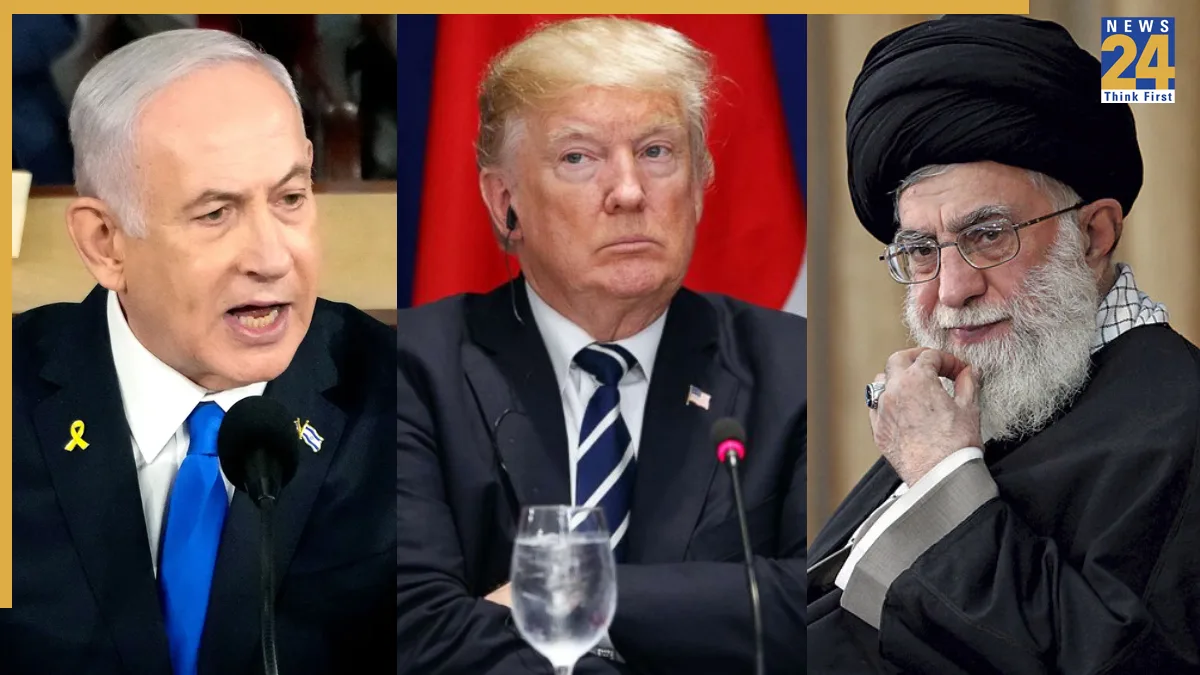
There’s a particular kind of moment when the news stops feeling like information and starts feeling like déjà vu. A coordinated strike lands in the middle of ongoing diplomacy. The justifications arrive instantly — polished, sober, strategic. Words like security, deterrence, stability, necessity float across the screen like press-release confetti. And yet beneath it all, something feels painfully familiar. It feels like being back on a playground.
The biggest kid in class spends years shoving, mocking, denying. Claims the pushing never happened. Claims the bruises are imagined. Claims the victims are exaggerating. Then one day he storms across the yard and attacks the other bully from the next class — the one who behaves suspiciously like him — and tells everyone he’s doing it to protect the smaller kids. Do we believe him? Or do we recognize the performance?
I am not naive about war. I understand there are strategic doctrines, security dilemmas, intelligence assessments, alliance pressures, ideological fears, and bureaucratic momentum. I know that decisions are rarely made from a single motive. And yet, after nearly fifty years of watching the same theater repeat under new branding, I keep returning to a foundational belief: no war but class war.
Strip away the language and what remains is almost always a redistribution mechanism — not of justice, not of safety, but of power, money, and control.
Wars, we are told, are waged for security. But security for whom? They are waged for stability. But stability for what? They are waged for deterrence. But deterrence of which threat — and to which structure? Because when the smoke clears, it is almost never the general population of the attacking nation who emerges enriched. It is the contractors, the financiers, the energy traders, the logistics networks, the reconstruction syndicates, the surveillance firms, the permanent managerial class that thrives when emergency becomes routine.
War is one of the most efficient upward-transfer mechanisms ever devised. It centralizes authority, suspends dissent, floods public funds into private channels, converts fear into compliance, and perhaps most importantly, gives the ruling class a narrative.
We are told that force and diplomacy sometimes coexist — that strikes can reshape negotiations, that action can signal resolve, that intelligence windows close, that internal factions disagree, that leaders must act. All of this may be true. But notice the direction of persuasion. These arguments are not crafted for the exhausted parent trying to pay rent. They are not aimed at the teacher working two jobs. They are not designed for the warehouse worker or the nurse or the mechanic. They are made to resonate with those already seated at the decision-making table — legislatures, donor networks, defense bureaucracies, financial stakeholders. They are insider language. Strategic language. Managerial language.
War is explained upward. Its costs are distributed downward.
History struggles to provide a clean example of an unprovoked aggressor whose war materially and sustainably benefited its own non-rich population. There are temporary booms — factory jobs, mobilization wages, moments of expansion — but they tend to be fleeting and often accompanied by repression, rationing, inflation, or the eventual destruction that falls hardest on ordinary people.
When gains do appear for the working population after wars, they usually emerge not from the spoils of conquest but from pressure. Mass mobilization can force concessions. Tax demands can broaden representation. Fear of unrest can birth reform. In other words, gains are extracted despite war, not because of it.
And still, we are asked to trust — to believe that violence launched mid-negotiation is defensive, to accept that escalation is protection, to assume that force is reluctant rather than convenient. Maybe sometimes it is. But even when security concerns are genuine, they rarely exist in isolation from political utility.
War distracts. War consolidates. War reorders economies. War disciplines populations. War expands executive power. War justifies surveillance. War reallocates resources toward those already positioned to receive them. War transforms crisis into capital.
It would be comforting to believe otherwise — to believe that this time the playground story is different, that this shove is principled, that this punch is protective, that this escalation is altruistic. But the counterarguments — thoughtful as they are — do not weaken the suspicion. They clarify it. Because the deeper one looks, the more war appears not as a singular act of defense or aggression, but as a recurring political technology — a tool that can serve security concerns while simultaneously serving class consolidation.
It speaks in the language of necessity while operating in the logic of hierarchy. It promises safety while reliably transferring wealth upward.
Wars have endless reasons. But those reasons rarely speak to the people who bleed for them and almost never enrich the people who fight them. When bombs fall, the story is told in strategic terms. When budgets rise, the benefits are booked in private ledgers. And when the dust settles, the class structure remains — usually stronger than before.
No war but class war.
History doesn’t repeat, but it has a way of keeping score.