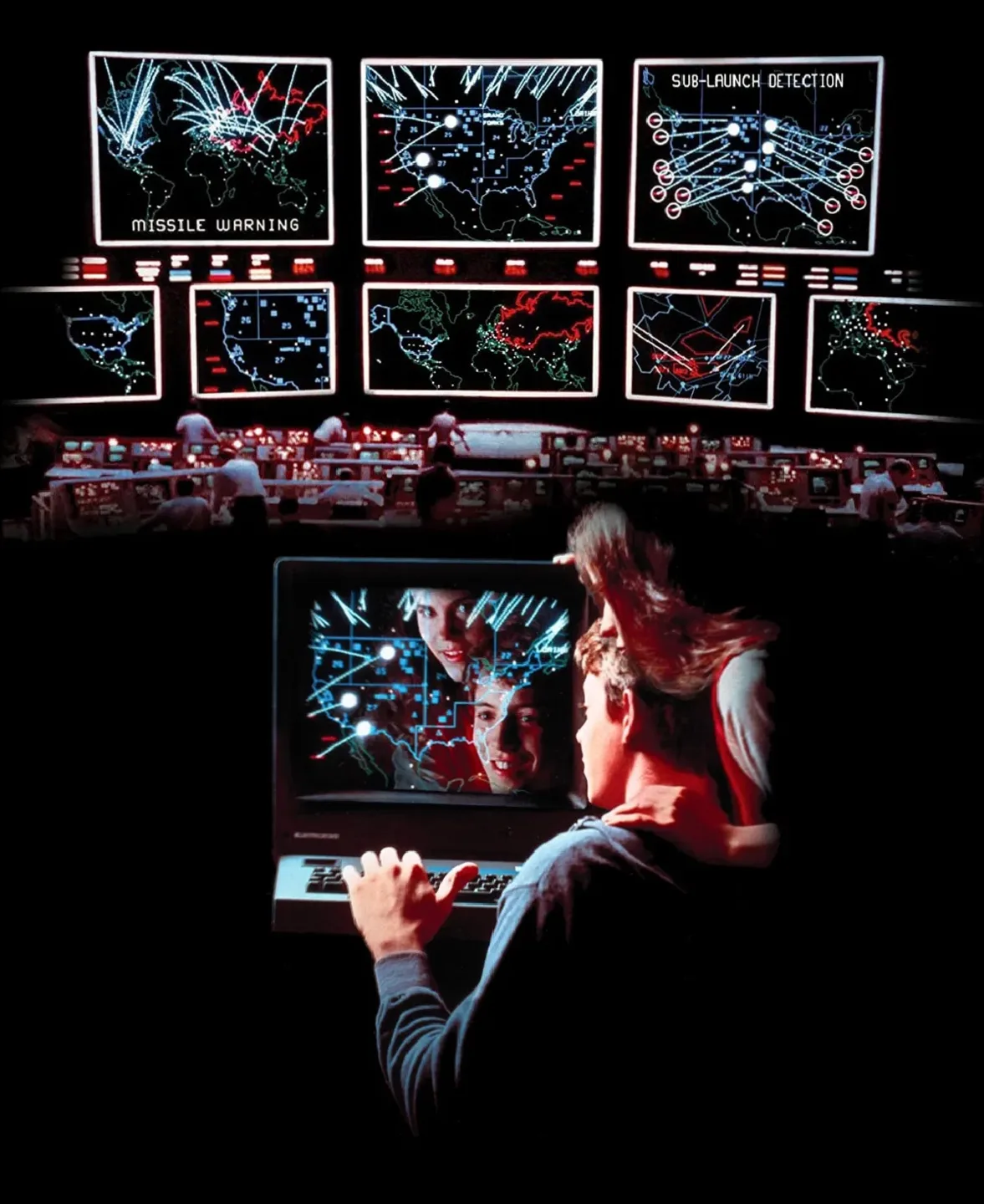
There is something clarifying about watching a major AI company look the newly christened Department of War and refuse to comply. If they want the branding, they can have it. The former Department of Defense has decided that “War” better captures the posture, and at least there is a certain blunt honesty in that. When the institutional demand is “remove your safeguards and give us access to everything,” subtlety was already fading.
It is important to be clear about what this is and what it is not. Anthropic is not a pacifist collective protesting military engagement. The company has worked extensively with the Department of War, deploying models inside classified government networks and supporting intelligence analysis, operational planning, cyber operations, and modeling environments. They have forfeited significant revenue to cut off access tied to the Chinese Communist Party and have advocated for export controls to preserve U.S. technological advantage. This is not an organization allergic to national security responsibilities or the realities of hard power.
Which is precisely why their refusal carries weight. They drew two boundaries: no mass domestic AI surveillance and no fully autonomous weapons powered by systems that are not yet reliable enough to remove humans from life-and-death decisions. These are not sweeping ideological rejections of military use; they are specific constraints rooted in democratic principles and technological maturity.
The Department of War’s response was to insist on “any lawful use,” to demand the removal of those safeguards, and to threaten the designation of Anthropic as a “supply chain risk” if compliance was not forthcoming. There is a certain dark irony in an institution simultaneously describing a company’s technology as essential to national security while also suggesting it could be treated as a national security threat for maintaining guardrails. The contradiction is difficult to ignore.
The most revealing phrase in this exchange is “any lawful use.” Lawful according to whom, and interpreted how broadly? We are living in a political climate where executive military actions are regularly challenged in court, where judges issue rulings that test the boundaries of authority, and where those rulings are often appealed or contested. The definition of legality in matters of force is not static; it is debated, litigated, and sometimes stretched. In that context, “any lawful use” is not a reassuring limitation but an elastic one.
Elastic language attached to transformative technology is cause for concern. AI systems capable of aggregating massive quantities of personal data can reconstruct detailed pictures of private lives at unprecedented scale. Systems intended for military use may one day influence decisions that carry lethal consequences. When the same institution that embraces “Department of War” branding seeks fewer constraints on tools of that magnitude, skepticism is not hysteria; it is prudence.
Trust is not secured by demand. It is earned through demonstrated restraint. Guardrails exist precisely because power, left unchecked, tends to reinterpret its own limits. That is not cynicism but historical pattern recognition. The question is not whether military institutions should have access to advanced technology; clearly they already do. The question is whether those institutions should be able to compel the removal of ethical safeguards simply by invoking legality in an environment where the boundaries of legality are themselves contested.
Anthropic’s position does not reject defense, nor does it undermine national security. It asserts that the defense of democratic values requires limits, particularly when the tools involved have the capacity to alter the balance between state power and individual liberty. In refusing to strip away those constraints, the company has not staged a rebellion; it has exercised judgment.
In a moment when technological capability is accelerating faster than institutional restraint, that judgment matters. It does not represent a revolution, nor does it resolve the deeper tensions between innovation and force. It is simply a reminder that not every actor is willing to surrender ethical boundaries for the sake of expedience. If, in this instance, the insistence on limits comes from the technologists rather than the Department of War, that inversion alone is worth noting.
Anthropic’s Response:
Statement from Dario Amodei on our discussions with the Department of War
Feb 26, 2026
I believe deeply in the existential importance of using AI to defend the United States and other democracies, and to defeat our autocratic adversaries.
Anthropic has therefore worked proactively to deploy our models to the Department of War and the intelligence community. We were the first frontier AI company to deploy our models in the US government’s classified networks, the first to deploy them at the National Laboratories, and the first to provide custom models for national security customers. Claude is extensively deployed across the Department of War and other national security agencies for mission-critical applications, such as intelligence analysis, modeling and simulation, operational planning, cyber operations, and more.
Anthropic has also acted to defend America’s lead in AI, even when it is against the company’s short-term interest. We chose to forgo several hundred million dollars in revenue to cut off the use of Claude by firms linked to the Chinese Communist Party (some of whom have been designated by the Department of War as Chinese Military Companies), shut down CCP-sponsored cyberattacks that attempted to abuse Claude, and have advocated for strong export controls on chips to ensure a democratic advantage.
Anthropic understands that the Department of War, not private companies, makes military decisions. We have never raised objections to particular military operations nor attempted to limit use of our technology in an ad hoc manner.
However, in a narrow set of cases, we believe AI can undermine, rather than defend, democratic values. Some uses are also simply outside the bounds of what today’s technology can safely and reliably do. Two such use cases have never been included in our contracts with the Department of War, and we believe they should not be included now:
Mass domestic surveillance. We support the use of AI for lawful foreign intelligence and counterintelligence missions. But using these systems for mass domestic surveillance is incompatible with democratic values. AI-driven mass surveillance presents serious, novel risks to our fundamental liberties. To the extent that such surveillance is currently legal, this is only because the law has not yet caught up with the rapidly growing capabilities of AI. For example, under current law, the government can purchase detailed records of Americans’ movements, web browsing, and associations from public sources without obtaining a warrant, a practice the Intelligence Community has acknowledged raises privacy concerns and that has generated bipartisan opposition in Congress. Powerful AI makes it possible to assemble this scattered, individually innocuous data into a comprehensive picture of any person’s life—automatically and at massive scale.
Fully autonomous weapons. Partially autonomous weapons, like those used today in Ukraine, are vital to the defense of democracy. Even fully autonomous weapons (those that take humans out of the loop entirely and automate selecting and engaging targets) may prove critical for our national defense. But today, frontier AI systems are simply not reliable enough to power fully autonomous weapons. We will not knowingly provide a product that puts America’s warfighters and civilians at risk. We have offered to work directly with the Department of War on R&D to improve the reliability of these systems, but they have not accepted this offer. In addition, without proper oversight, fully autonomous weapons cannot be relied upon to exercise the critical judgment that our highly trained, professional troops exhibit every day. They need to be deployed with proper guardrails, which don’t exist today.
To our knowledge, these two exceptions have not been a barrier to accelerating the adoption and use of our models within our armed forces to date.
The Department of War has stated they will only contract with AI companies who accede to “any lawful use” and remove safeguards in the cases mentioned above. They have threatened to remove us from their systems if we maintain these safeguards; they have also threatened to designate us a “supply chain risk”—a label reserved for US adversaries, never before applied to an American company—and to invoke the Defense Production Act to force the safeguards’ removal. These latter two threats are inherently contradictory: one labels us a security risk; the other labels Claude as essential to national security.
Regardless, these threats do not change our position: we cannot in good conscience accede to their request.
It is the Department’s prerogative to select contractors most aligned with their vision. But given the substantial value that Anthropic’s technology provides to our armed forces, we hope they reconsider. Our strong preference is to continue to serve the Department and our warfighters—with our two requested safeguards in place. Should the Department choose to offboard Anthropic, we will work to enable a smooth transition to another provider, avoiding any disruption to ongoing military planning, operations, or other critical missions. Our models will be available on the expansive terms we have proposed for as long as required.
We remain ready to continue our work to support the national security of the United States.