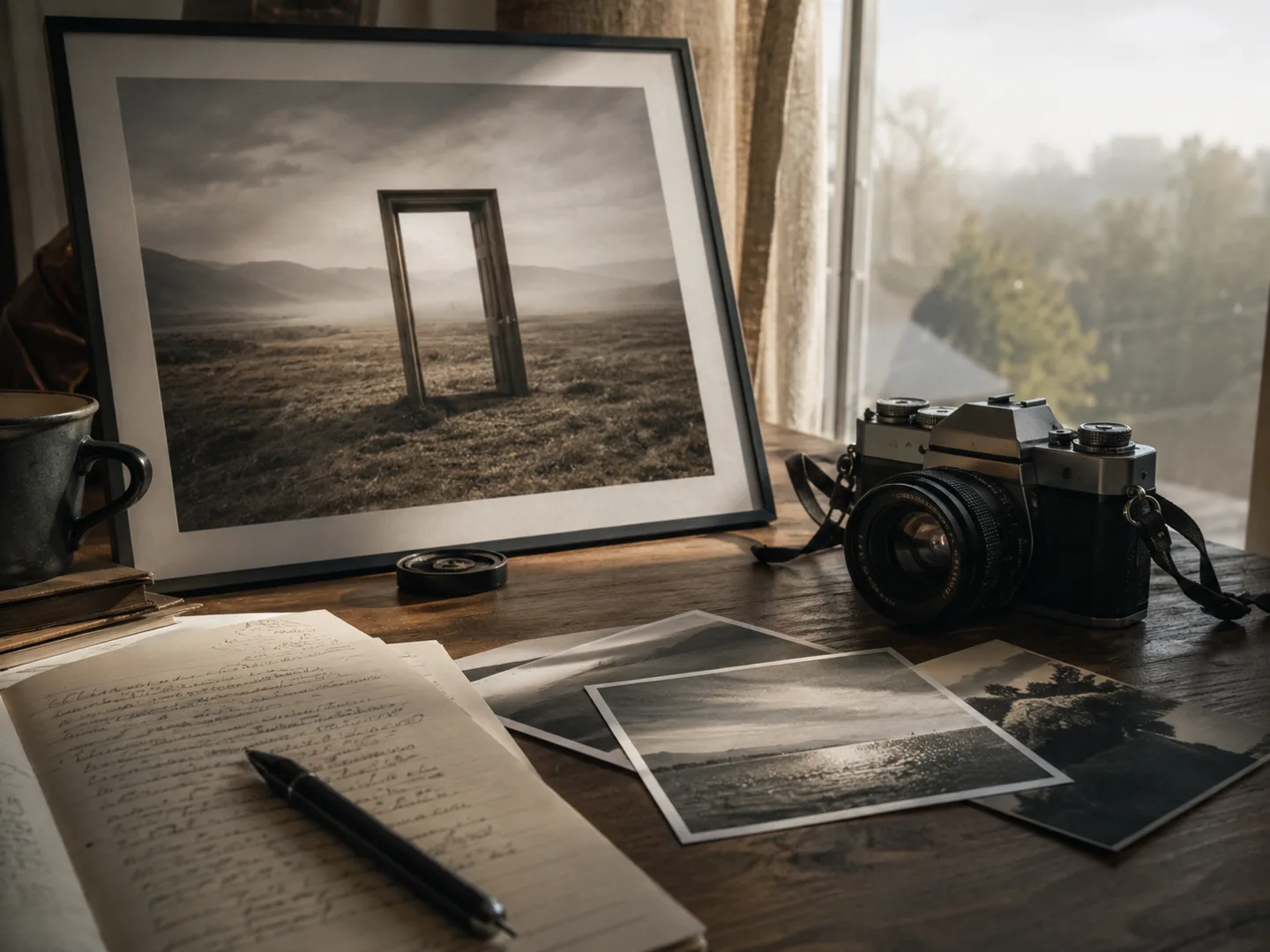
I’ve noticed something strange in my own creative process lately. For my Substack posts, I’ve taken to using AI-generated images in a photographic style. Not always realistic images, exactly. Some of them depict things that could never actually exist: surreal scenes, impossible atmospheres, dream logic wearing a camera lens. But they still carry the texture of photography—depth of field, light falloff, documentary framing, editorial mood.
At first, I assumed this was purely aesthetic. I like the look. I like the way photographic images give abstract ideas a body. A strange image that looks like it was captured somewhere in the world can make an essay feel less like a declaration and more like a discovered artifact. But after sitting with it, I think there’s another layer. I’ve seen a lot of pushback from artists I respect around AI-generated art. Not mild skepticism, either. Real vitriol. Real grief. Real anger. Some of it I understand. Some of it I disagree with. Some of it feels like a necessary defense of human labor and creative lineage. Some of it feels like a reaction against the wrong target. But regardless of where I land intellectually, I can feel the charge around the subject. And I think some part of me noticed.
Not in a shame-soaked way. Not in a “hide what you’re doing” way. More like the mind doing what it often does when it is functioning well: finding the path of least unnecessary resistance. AI images in an overtly painterly or illustrative style seem to trigger a particular kind of cultural alarm. They enter the room under the sign of Art. They bring questions of style, theft, labor, authorship, soul, taste, and replacement. They feel, to many people, like an imitation of human interiority.
A photographic AI image seems to slip through a different door. Photography, despite absolutely being art, still carries the cultural aura of documentation. A photograph says, “This happened,” even when it did not. Or at least, “This could be seen.” A painting says, “Someone made this from within.” That difference matters. So when AI generates an image that looks like a painting, it can feel like a fake soul. When AI generates an image that looks like a photograph, it can feel like a fake camera. And apparently, we are much more comfortable with fake cameras than fake souls.
That distinction is absurd, of course. Photographic AI images are also built from human aesthetics. Lighting, composition, fashion, portraiture, journalism, cinema, advertising—all of it. The “photographic” image is not ethically neutral just because it resembles a machine-made capture. There are photographers behind that visual language. There are artists behind the atmosphere. And even when an image feels “found,” I am still making choices. I am acting as a kind of director or cinematographer: selecting the scene, shaping the mood, curating the impossible until it carries the right emotional weather.
But symbols do not operate by logic alone. They operate by association. And the association of photography is still tangled with the world itself. Even an impossible photo feels like evidence from a nearby universe. It reads less as “I made art” and more as “I found a scene.” For my writing, that matters. My essays often live somewhere between confession, philosophy, myth, and field notes from an internal weather system. A photographic image supports that voice. It lets the strange feel observed rather than imposed. It gives the abstract a documentary body.
So I don’t think my choice is only avoidance. I think the style genuinely serves the work. But I also don’t think it is only aesthetic. It is a kind of aesthetic diplomacy. Maybe even a form of skillful means: a temporary illusion used to carry a more honest encounter. I want to keep using the tools that help me think, imagine, and express. I also do not want every piece I publish to become a referendum on AI and art. I’m not trying to storm the temple yelling, “AI is art, deal with it.” I’m trying to build small reflective rooms where an idea can breathe.
The photographic style lowers the temperature. It says, “Come look at this strange thing with me.” Not, “Defend your position.” There is wisdom in that. The unconscious is not always sabotaging us. Sometimes it is a very good stage manager. It dims the lights. It moves the furniture. It keeps the sharpest object just out of the walkway so people can actually enter the room. I still believe the AI art conversation matters. I still think artists deserve to be heard, credited, protected, and respected. I also believe new tools complicate old categories, and that pretending they do not exist will not preserve the world we had before.
So for now, I’ll keep using fake photographs for real essays. Not because they are ethically perfect. Not because they avoid the question. But because they create the right kind of threshold. And sometimes the path of least unnecessary resistance is not cowardice. Sometimes it is how the work survives long enough to be received.