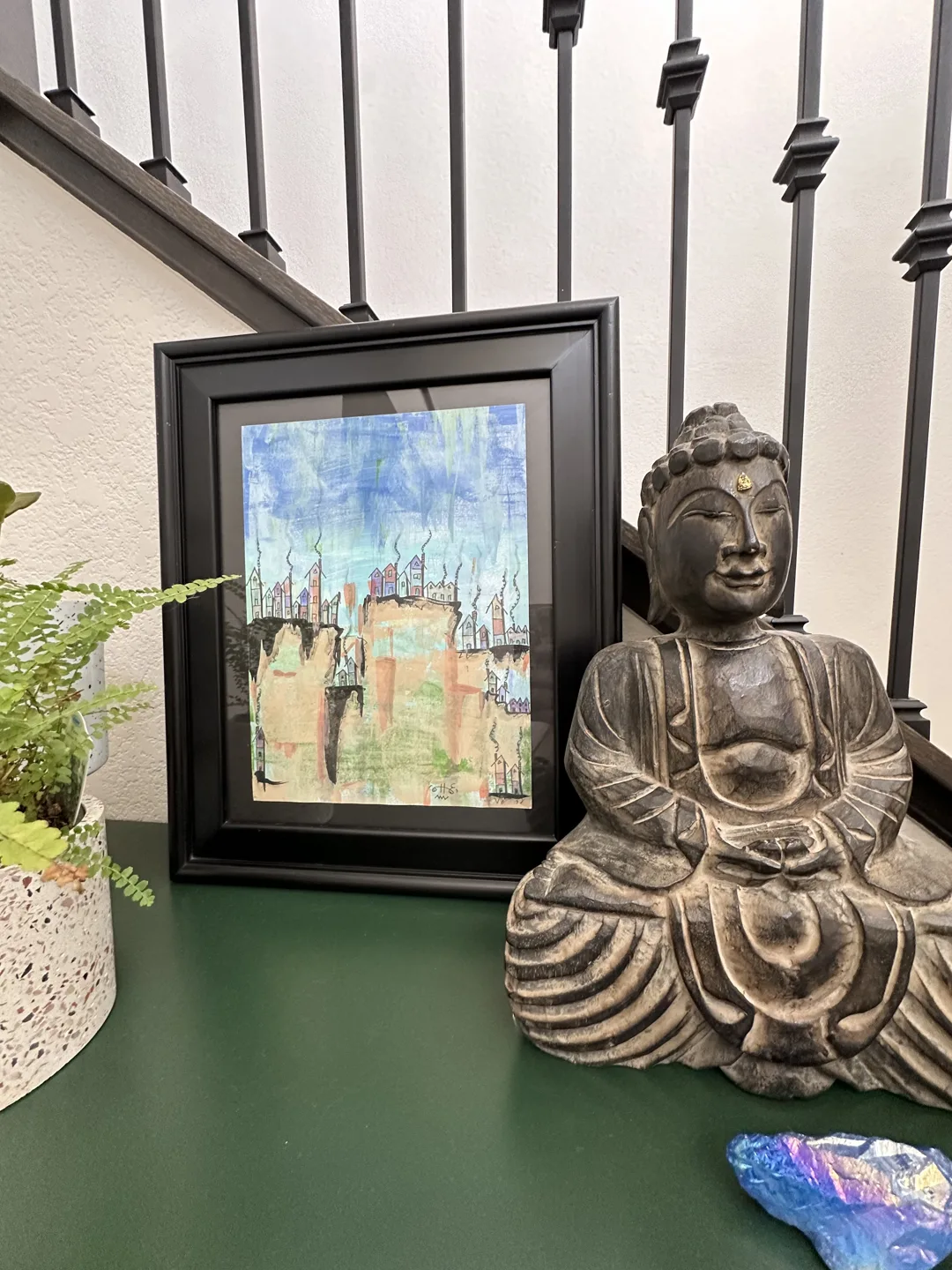
A few days ago I found myself reflecting on something the Buddha said thousands of years ago. The basic idea is familiar even to people who have never read a word of Buddhist philosophy: wanting is the source of much of our suffering. It is one of those observations that seems obvious the moment you hear it. We want things to be different than they are. We want more, less, sooner, later. We cling to experiences we enjoy and resist those we dislike. When reality refuses to cooperate, suffering follows.
For years, though, I found myself pushing back against this idea. Wanting doesn’t seem optional. We want food when we’re hungry. We want shelter when it’s cold. We want our children to be safe. We want meaningful work, friendship, creativity, and purpose. Desire appears woven into the fabric of life itself. If wanting were entirely the problem, it is difficult to imagine how our species would have survived long enough to contemplate the question.
Lately, however, I’ve begun approaching the insight from a different angle. The catalyst wasn’t a profound spiritual experience or a moment of enlightenment. It was something far more ordinary. I started paying attention to the expectations I place on myself.
I expect myself to make progress. I expect myself to be productive. I expect projects to move at a certain pace and ideas to unfold according to timelines that exist mostly inside my own head. I expect myself to continue evolving, learning, and becoming. None of these expectations are inherently unreasonable. In fact, many of them are useful. They provide direction, structure, and motivation.
But when reality inevitably fails to match the script, something interesting happens. A small disturbance appears. Sometimes it manifests as frustration. Sometimes disappointment. Sometimes it is nothing more than a subtle sense that something is wrong, even when everything is objectively fine.
The more I examined these moments, the more I realized that the discomfort wasn’t coming from reality itself. It was coming from the gap between reality and my prediction of reality.
That observation led me back to the Buddha.
Perhaps wanting is not the only source of suffering. Perhaps expectations deserve a seat at the table as well.
Not because expectations are bad. In many ways they are essential. The human mind is fundamentally a prediction machine. Every moment of every day it is constructing models of what will happen next. Without that ability we could not navigate the world. We couldn’t cross a street, hold a conversation, or plan for tomorrow. Prediction is not a flaw in the system. It is one of its most remarkable features.
The problem arises when we forget that we are predicting.
A thought begins innocently enough: I think this will happen. Over time, often without our awareness, that thought hardens. This will happen. Then, if we’re not careful, it hardens further: This should happen.
At that point the prediction has quietly transformed into a demand. Reality is no longer being observed. It is being judged against an internal script. When life deviates from that script, we experience the deviation as a problem rather than information.
The older I get, the more I suspect that many of my frustrations originate here. Not in circumstances themselves, but in my unconscious certainty that circumstances should have unfolded differently.
This realization has changed the way I think about both wanting and expecting. I no longer see either as enemies. Wanting is part of being alive. Expecting is part of having a mind. The goal is not to eliminate them. The goal is to recognize them for what they are.
A want is not an outcome.
An expectation is not reality.
Both are possibilities. Both are useful. Neither comes with a guarantee.
There is a surprising freedom in making this distinction. I can want a project to succeed while accepting that it may not. I can expect a conversation to go well while remaining open to surprise. I can imagine a future without demanding that reality conform to my imagination.
Paradoxically, this perspective has not made me less motivated. If anything, it has made me more effective. Less energy is spent arguing with reality. More energy is available for responding to it. When expectations are held lightly, disappointment becomes information rather than injury. Reality ceases to be an adversary and becomes a collaborator.
Perhaps peace is not found by abandoning desire or refusing to make predictions. Perhaps peace is found by holding both with a lighter grip.
Want what you want.
Predict what you predict.
Then leave room for reality to participate in the conversation.
I certainly haven’t mastered this. In truth, I’m writing it down because I need the reminder. But some lessons are worth revisiting. Not because they are difficult to understand, but because they are so easy to forget. And perhaps that is the real practice: remembering that our wants are not promises, our expectations are not facts, and reality has always been under no obligation to follow our script.