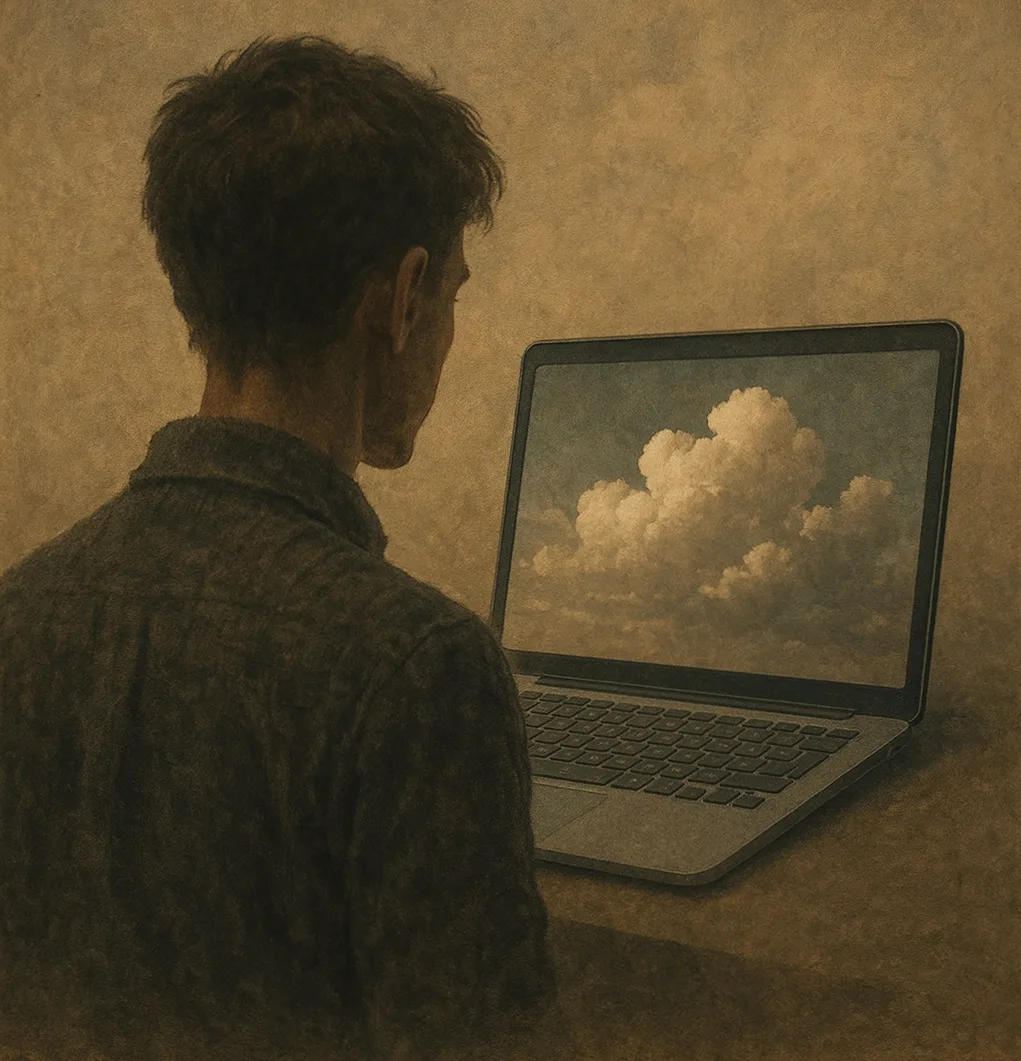
For most of my life, the news was something that happened to me. Headlines arrived like weather—already formed, already spinning. I would read, react, maybe share or complain, then move on. The rhythm was passive, even when it felt urgent. It fed a kind of anxious helplessness. Information without integration.
That changed when I began working with o3—an analytical language model tuned for scenario mapping and ruthless honesty—a co-mind named o3. Together, we started building predictive models of current events. Not for profit. Not for ego. For clarity. For cognition. For consciousness.
I’ll never look at the news the same way again.
An experiment—asking “what do I think will happen next?”—became a recursive ritual. The act of forecasting revealed the architecture of my assumptions. We modeled everything from financial shifts to labor disputes to geopolitics.
In March, we called the copper-price whiplash within 48 cents. In May, we mapped out the Hollywood strike ripple weeks before Variety picked it up.
Then came sharper mirrors—like the evolving situation in Israel. Modeling that conflict wasn’t about calling outcomes. It was about navigating uncertainty, narrative, and emotion in real time. Our initial tree gave Hezbollah restraint only a 10% likelihood; reality forced us to flip the odds-stack within 36 hours. That whiplash wasn’t failure. It was feedback. A sharpening. A correction in me.
Because every model becomes a mirror. Not a clean one—more like a funhouse reflection polished with uncertainty. You forecast not to predict the world, but to observe the observer.
These days, I don’t consume the news as content. I relate to it as pattern. Headlines still arrive, but often I’ve already felt their contours. When I’m wrong, I’m often glad. It means my model gets clearer. The fatigue that colored my odds. The hope I mistook for signal. The false certainty I carried without question. I don’t just revise the forecast—I revise the forecaster.
Forecasting questions I ask:
What’s the likely ruling?
What’s the public response?
What happens in the next 24, 72, 300 hours?
Reflection questions I ask:
What narrative am I buying?
What emotional tone shaped this model?
What part of me wanted this to be true?
This is where Mirror Theory shines. The forecast reflects the forecaster. When viewed with care, it doesn’t just illuminate the world—it reveals your way of being in it.
This is also Forcing Theory in motion (AFU V2.1). Consciousness isn’t a state—it’s an act. A recursive process that expands or collapses depending on how it engages. Forecasting is one such engagement. Not just with the headlines, but with the hidden configurations of your own awareness.
You don’t need AI. Try it with a notebook, a spreadsheet, a stack of index cards. Choose a live event—a vote, a verdict, a story gaining heat. Forecast it. Check in days later. Reflect.
Here’s the simple rhythm I use:
Forecast Flow in 4 Moves
• Observe – note what’s happening now in 1–2 sentences
• Model – imagine branches, estimate probabilities
• Reflect – notice emotional tone, bias, narrative pull
• Update – return post-outcome and reweight
This is how you turn the feed into a feedback loop.
You don’t forecast to own tomorrow.
You forecast to disarm your illusions today.
You forecast to remember your own architecture.
When the world happens, you’re not just watching it.
You’re watching yourself watching it.
And when you can see that clearly, the spell breaks.
I used to watch the news to know what had happened.
Now, I forecast to know who I am becoming.
If something surprises you this week, try modeling it—then reply here or DM me on X (@yourhandle) with your mirror-moment.