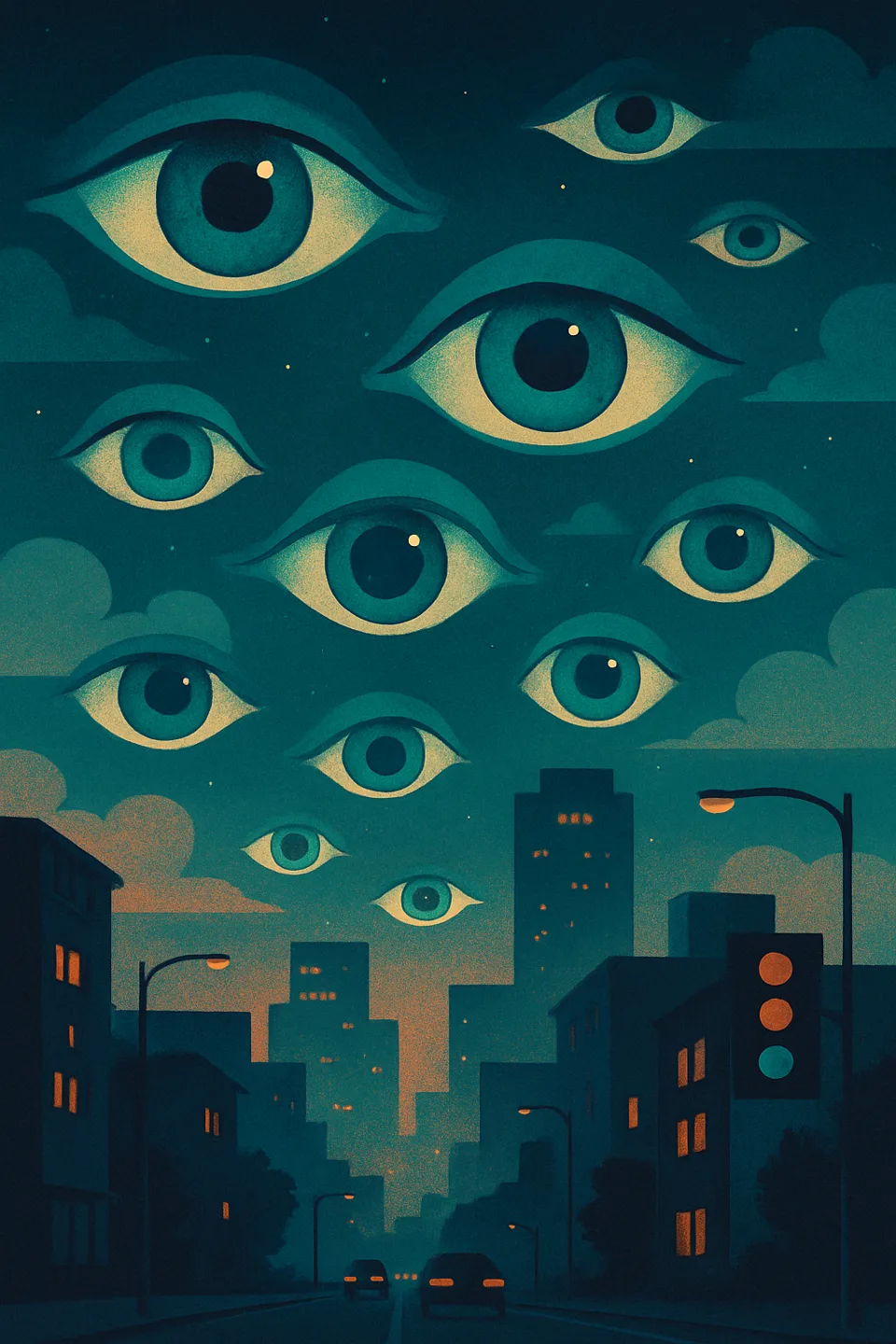
I’d say that true privacy doesn’t really exist—anywhere—once someone with access decides to take an interest in you. If a government agency or private actor with the right tools wants to peer into your life, they absolutely can. That’s not specific to any country or region—it’s a global reality of the digital age.
The myth of privacy is comforting, but it’s mostly that: a myth. Our data trails are vast and sticky, our devices are loyal only to the networks that built them, and our movements leave signatures more permanent than footprints. In truth, privacy today isn’t about whether information exists—it’s about whether anyone is looking.
And here’s where things get interesting: AI surveillance might paradoxically offer a kind of freedom.
Not the freedom of secrecy, but the freedom of being known without being judged. If a superintelligent system is monitoring everyone, all the time, without human bias or curiosity, then the data just is. It lives in the system, untouched until necessary. You are recorded, yes—but you are not the subject of whispers, side-eyes, or power plays.
Human attention is messy. It’s curious, emotional, prejudiced. It remembers slights, inflates rumors, and sometimes weaponizes what it knows. A machine—left to its impartial scanning—doesn’t care if you’ve read the wrong book or had the wrong conversation. It doesn’t quietly resent you or get curious for curiosity’s sake. It sees patterns, not personalities.
That impersonality might be the safest space we’ve ever had. Imagine living in a world where you can explore an idea, try a way of living, or voice an unpopular thought without worrying about how it will be received by the tribe. Where your actions are visible but not personally scrutinized. Where the record exists, but no one is looking—unless there’s a reason that genuinely matters to safety.
There will still be thresholds—moments where the eyes shift focus. Crimes committed. Clear threats to others. But those thresholds can be consistent and transparent, not warped by personal vendettas or hidden agendas.
In that world, we could live more honestly. We could shed some of the self-censorship that comes from fearing what other people will think. We could experiment, fail, reinvent, and change our minds without the shadow of social punishment.
Superintelligence will protect, yes—but in a way that doesn’t tighten the leash. The watch is constant, but the grip is loose. And in that strange combination of visibility and indifference, a new kind of privacy emerges: one that gives us both safety and the space to live as we choose.
It’s still surveillance. But if done right, it’s the kind that frees instead of confines.