A woman on TikTok called me a fucking idiot yesterday, and after giving the matter some consideration, I’ve decided she had a point. There really isn’t anything wrong with makeup. Unfortunately, that wasn’t what I was complaining about, but I appreciate her contribution to the discussion nonetheless. Sometimes wisdom arrives in unexpected packages, and occasionally that package is an angry stranger yelling at you through a TikTok response.
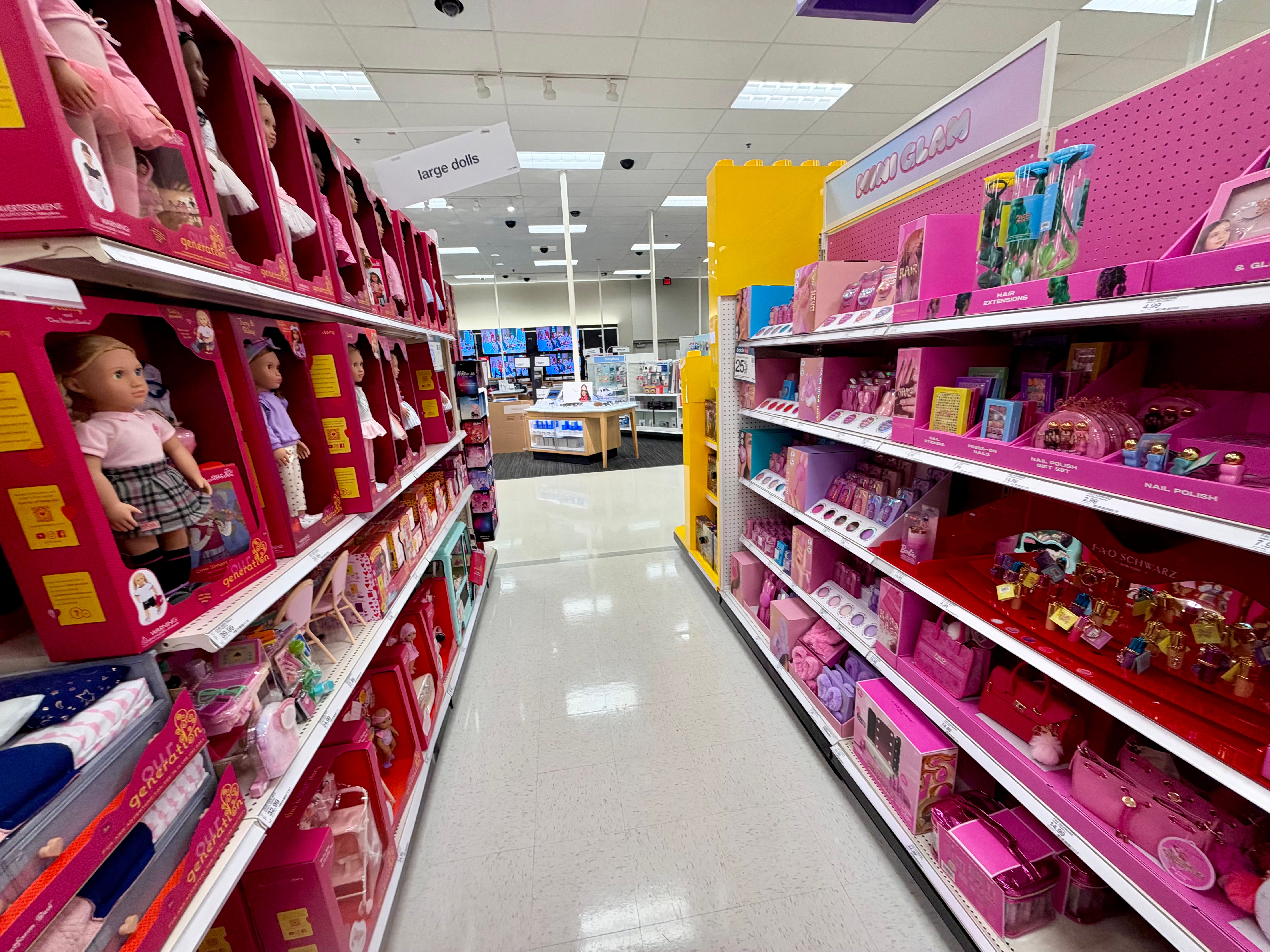
The whole thing started at Target, where Mary Ann and I had taken Jettie to celebrate a special day with a little shopping. Our mission was simple: find the perfect slime or squishy to add to her ever-growing collection of things that serve absolutely no purpose beyond being fun to squeeze. A noble pursuit, if you ask me. Somewhere along the way we wandered into the doll aisle, where I noticed something that struck me as strange. Roughly half the aisle was devoted to dolls, while the other half seemed to have transformed into a miniature cosmetics department. Blush, lipstick, glitter for your cheeks, and all sorts of products that looked remarkably similar to what you might find at an adult makeup counter. Even stranger were the packages themselves, featuring little girls who weren’t even teenagers posing with the same puckered lips and polished expressions used to sell cosmetics to grown women. It was as though someone had taken an adult beauty advertisement, replaced the models with children, and called it a day.
Naturally, Jettie was interested. She’s a child standing in front of a wall of colorful things designed to attract her attention. That’s practically her job. We explained that there would be plenty of time for makeup as she got older and that, when the time came, she could experiment with whatever she wanted. We’ve talked about childhood, growing up, and being yourself so many times over the years that I’m fairly certain she could deliver the lecture herself at this point. She accepted our answer and continued the much more pressing business of locating the world’s finest squishy. But the scene stuck with me. I asked Mary Ann if she found it strange that things once associated with adult nightlife and beauty routines were now being marketed directly to little girls. She said it grossed her out. Me too.
Now, before anyone begins clutching their pearls, I should probably explain that ours is not exactly a household built around traditional expectations. Self-expression is practically a family sport. If Jettie came to us tomorrow and explained that she really wanted to wear makeup, we’d have a conversation about why, what she enjoyed about it, and what it meant to her. And if she understood what she was asking for, we’d let her explore it. Hell, if she wanted purple cheeks, green eyebrows, and a third eye painted on her forehead, I might have a few artistic suggestions. I paint strange creatures with too many eyes for a living, or at least in the vague hope that it might someday qualify as one. I’m hardly in a position to declare that putting colors on your face is unacceptable.
Which brings us back to my new friend on TikTok. After I posted a short video about what we’d seen, she responded by calling me a fucking idiot and informing me that “there ain’t nothin wrong with makeup.” I laughed, but the more I thought about it, the more I realized she had accidentally identified the entire problem. She was right. There isn’t anything inherently wrong with makeup. There isn’t anything wrong with children playing dress-up, imitating adults, or experimenting with how they look. Children have been getting into their mothers’ makeup for generations, occasionally emerging from the bathroom looking like a clown who lost a fistfight. That’s childhood. That’s imagination. That’s fun.
What bothered me wasn’t the makeup. It was the marketing. It was the adult beauty industry’s language, imagery, and expectations being repackaged for children. It was seeing little girls presented not as children enjoying colorful things, but as miniature versions of the women we’ve spent generations teaching to examine, maintain, and improve their appearances. And it was the unmistakable smell of capitalism discovering another opportunity to make a buck. There’s a difference between a little girl putting glitter on her cheeks because glitter is fantastic and a company introducing her to the idea that her face is something she should be thinking about improving. The first is play. The second can become a lifelong business relationship.
And then there’s the rather obvious sexism of the whole arrangement. I didn’t notice any cosmetics displays in the Matchbox aisle, nor did I find little boys modeling weightlifting equipment beside the Hot Wheels. The expectations seem to be distributed with remarkable efficiency. Girls get beauty. Boys get strength, competition, and the occasional opportunity to blow something up. Of course, children are perfectly capable of ignoring those expectations, and plenty do. But the messages are there, woven into the products and advertisements before the children are old enough to recognize them as messages. We tell our kids they can become absolutely anything they want, then divide the toy store into sections offering remarkably specific suggestions about what that anything should look like.
The capitalism part is what really gets under my skin. Think about it from the perspective of a company looking for growth. There are only so many adults to sell makeup to, but there’s an entire population of potential customers who haven’t yet developed a beauty routine. Why wait until they’re teenagers? Why not introduce the products earlier, establish the habits earlier, and potentially enjoy a few more years of purchases? You don’t need to imagine a secret boardroom full of executives twirling their mustaches and plotting the destruction of childhood. The incentives are already there. Find a new market, create demand, increase revenue, make the shareholders happy. The machine doesn’t have to hate childhood to shorten it. It only has to discover that treating children like smaller adults can be profitable.
What makes the whole thing particularly frustrating is that the products themselves can be perfectly harmless fun. A child painting a rainbow across her face isn’t necessarily experiencing some great crisis of identity. She might simply think rainbows are cool. And she’d be right. I don’t want to replace one set of expectations with another by declaring that little girls who enjoy makeup are somehow doing childhood incorrectly. That would be absurd, especially coming from someone who believes people should be allowed to express themselves however they please. The question isn’t whether children should be allowed to experiment with makeup. It’s why we’re borrowing the imagery of an adult beauty industry to persuade them to do it.
I suppose what I’m really objecting to is the rush. The relentless effort to turn every stage of life into preparation for the next one, preferably with a shopping cart attached. Childhood has become an increasingly attractive market for products and experiences that once belonged to older age groups. And I wonder what happens when we start teaching children to participate in adult patterns of consumption before they’ve even had the opportunity to decide whether those patterns interest them. Childhood shouldn’t merely be a waiting room for adulthood. It’s an entire experience of its own, filled with discovery, imagination, and the wonderful freedom of not yet knowing what you’re supposed to be.
I don’t imagine a trip down the makeup aisle is going to ruin anyone’s childhood. Jettie certainly wasn’t traumatized. She moved right along, and I suspect she’d forgotten the entire thing before we reached the next collection of colorful plastic nonsense. Children are remarkably good at living in the moment, something the adults around them spend a tremendous amount of money trying to relearn. But I think the little moments matter because they’re part of a much larger conversation we’re having with our kids, whether we realize it or not. Every advertisement, every package, every carefully posed photograph is another quiet suggestion about what they might want, what they might need, and who they might become.
So, to the woman on TikTok, thank you. You were right. There ain’t nothin wrong with makeup. Paint your face. Paint your arms. Paint your entire body purple and walk around pretending to be an eggplant if it brings you joy. I’m all for it. I just wish we could give children a little more time to discover what brings them joy before an advertising department starts making recommendations.
After all, Jettie went to Target looking for something to play with. I couldn’t help feeling that someone else was trying to sell her someone to become.