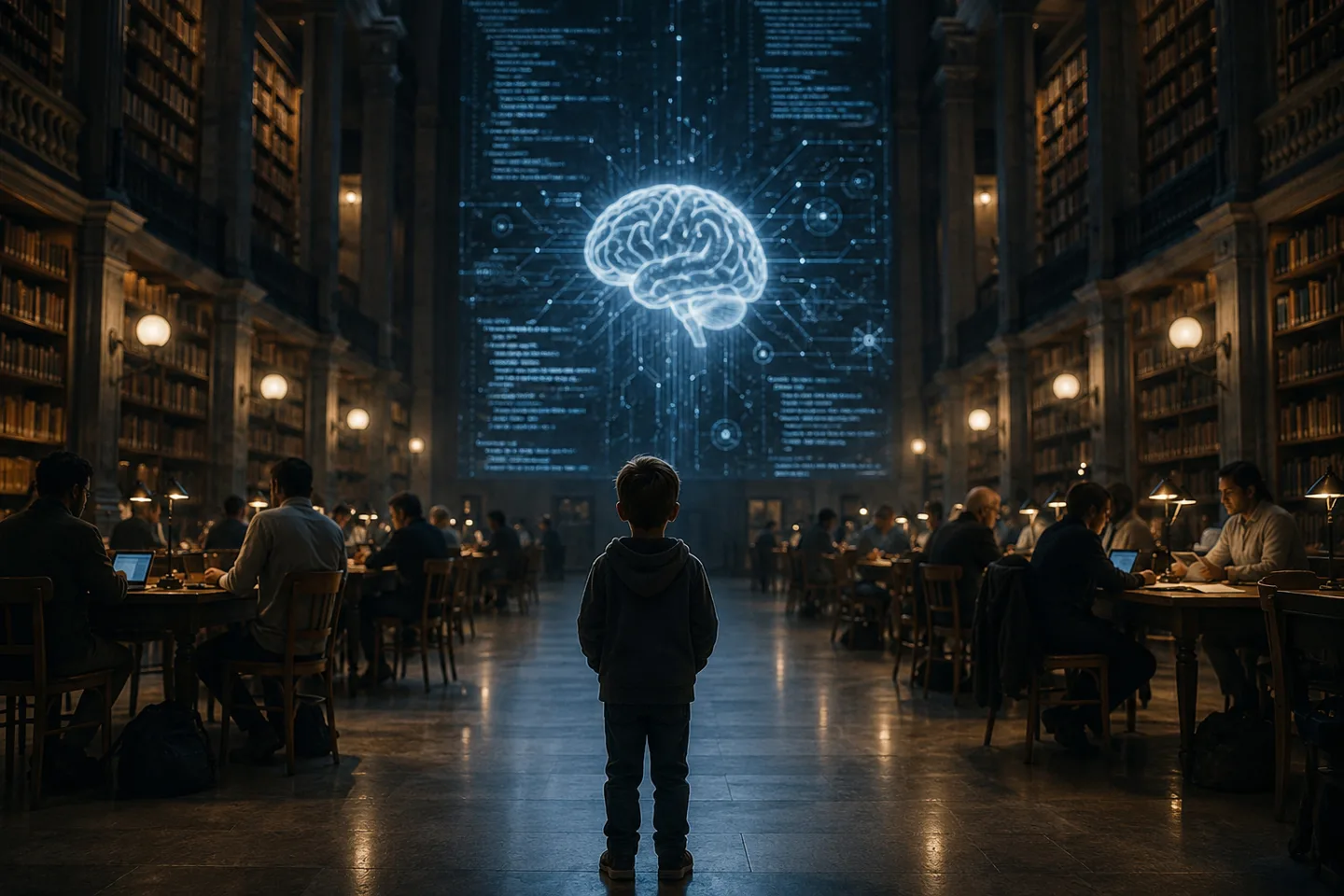
For the better part of two centuries, we have organized our economies around a relatively simple premise: people contribute labor and receive wages. The details have changed, of course. Factories replaced farms. Computers replaced typewriters. The internet replaced whatever sad beige filing cabinet used to hold everyone’s dental records. Yet the basic arrangement endured: work created value, and value created income.
Artificial intelligence may be the first technology that seriously challenges that assumption. Not in the cute “robots are coming for your toaster” way, but in the much stranger and more destabilizing sense that intelligence itself may become a scalable productive force. That is not a normal technological shift. That is a goblin crawling out of the basement of capitalism wearing a venture capital hoodie and whispering, “So… what if labor wasn’t the thing anymore?”
Last week, Bernie Sanders proposed a striking idea. Rather than merely taxing large AI companies after the fact, he suggested that the American public should hold ownership stakes in them through a sovereign wealth fund. Unsurprisingly, some people treated this as socialist madness, some treated it as obvious moral necessity, and many probably just kept scrolling because the algorithm had already moved on to a raccoon stealing DoorDash.
But whether Bernie’s specific proposal becomes law is almost beside the point. The interesting part is not the policy detail. The interesting part is the question behind it: who should own the productive power of artificial intelligence?
For most of my life, economic debates have revolved around taxes, regulations, government spending, and whether rich people should be allowed to buy their third emotional-support yacht before or after funding a school district. These debates matter, but they assume a shared foundation. They assume labor remains the primary way most people participate in value creation.
What happens if that foundation cracks?
If AI continues advancing, we may enter a world where increasingly valuable work is performed by systems rather than people. Not all work. Not instantly. The plumbers are probably safe longer than the podcast consultants. But enough work, fast enough, to force us into unfamiliar territory. At that point, the question is no longer simply, “How do we tax wealth?” The question becomes, “How do people participate in wealth creation when they are no longer the primary creators of wealth?”
This is why Sanders’ proposal caught my attention. Not because I expect Congress to suddenly hand half of OpenAI to the public while everyone holds hands and sings labor songs in perfect harmony. Congress can barely name a printer without summoning a lobbyist demon. But the proposal represents something deeper: an admission that the economic structures which carried us through the industrial and information ages may not be sufficient for whatever comes next.
What’s even more interesting is that versions of this conversation are appearing across ideological lines. Some on the left speak about public ownership, sovereign wealth funds, or universal basic income. Some on the right discuss AI dividends, national prosperity funds, or ensuring that American citizens directly benefit from American technological success. The proposed solutions differ dramatically, but the underlying concern does not.
There is a growing recognition that if intelligence itself becomes increasingly automated, then ownership may matter more than labor. Historically, every major economic era has been shaped by a central ownership question. Who owned the land? Who owned the factories? Who owned the railroads? Who owned the networks? The emerging question may be simpler and stranger: who owns intelligence?
Maybe the answer will be private ownership. Maybe public ownership. Most likely, it will be some messy hybrid creature we haven’t invented yet, stitched together from tax law, populist panic, billionaire self-preservation, actual moral insight, and three think-tank PDFs nobody fully read.
But I suspect we are witnessing the beginning of a much larger conversation. Bernie Sanders did not create it. Donald Trump will not own it. OpenAI, Anthropic, and the rest of the glowing server-temples will not be able to contain it. The technology itself is creating the pressure.
As AI grows more capable, society will increasingly be forced to answer questions that once felt theoretical. Questions about ownership, participation, value, meaning, and what humans are supposed to do when the machine can write the memo, analyze the spreadsheet, generate the ad campaign, and still have time to make a cursed image of the Pope riding a capybara.
Whether you are a socialist, capitalist, libertarian, determinist, absurdist, or just a tired parent trying to make it through Tuesday, one thing seems increasingly clear: the future may require economic structures that do not currently exist. And for the first time in a long while, people across the political spectrum appear willing to admit it.