This morning I found myself thinking something that sounded almost embarrassingly cynical.
Stupidity saves civilization.
It wasn’t really a political observation, although politics certainly provided the spark. Looking around at the current landscape, I couldn’t help but notice that many of the people who seem to crave power the most also appear blissfully unequipped to wield it well. The thought made me laugh. What if reality had quietly engineered a safety latch? What if the universe, in all its strange wisdom, simply refused to hand every desirable trait to the same person? Perhaps extraordinary ambition is frequently paired with poor judgment. Maybe overwhelming charisma arrives with a healthy dose of narcissism. Maybe immense intelligence often comes bundled with enough uncertainty and self-reflection to keep it from becoming tyranny. In other words, perhaps civilization survives because the universe is an atrocious talent scout.
The longer I sat with that thought, the more amusing it became. History is filled with villains undermined by their own egos, movements collapsing under infighting, and grand ambitions defeated by astonishing incompetence. There is something almost comforting about imagining reality shrugging its shoulders and saying, “Fine. You can have ambition—but you’re going to misplace the instruction manual.”
It’s a satisfying story.
Unfortunately, the longer I entertained it, the less convinced I became that stupidity was actually the hero. Like most good jokes, the humor seemed to be pointing toward something deeper. Perhaps it isn’t incompetence that protects us. Perhaps it’s imperfection.
Human beings have an odd habit of assuming perfection would solve nearly every problem. If only our leaders were smarter. If only our institutions were more efficient. If only every cog fit perfectly into every machine. Yet engineering often teaches the opposite lesson. Many stable systems owe their survival to inefficiency. Friction prevents runaway acceleration. Shock absorbers intentionally waste energy. Slack allows a bridge to flex instead of snapping beneath stress. What appears to be a flaw is often the very feature preventing catastrophe. Perfect efficiency, paradoxically, can become dangerously unstable.
The more I thought about it, the more humanity itself began to resemble one of those systems.
Imagine a person gifted with extraordinary intelligence, limitless charisma, unwavering confidence, impeccable discipline, ruthless ambition, and absolutely no empathy. That isn’t a superhero. It’s the opening chapter of a cautionary tale. Thankfully, reality seems remarkably reluctant to manufacture such people. Instead, it scatters the pieces. The brilliant scientist struggles to communicate. The charismatic leader overestimates himself. The gifted artist can’t organize a calendar. The entrepreneur lacks patience. The philosopher forgets where he left his keys. Everyone receives remarkable strengths. Everyone receives equally remarkable limitations. Whether that’s evolution, statistics, or simply my own tendency to anthropomorphize the cosmos, I honestly don’t know. I only know that no one seems to get all the stat points.
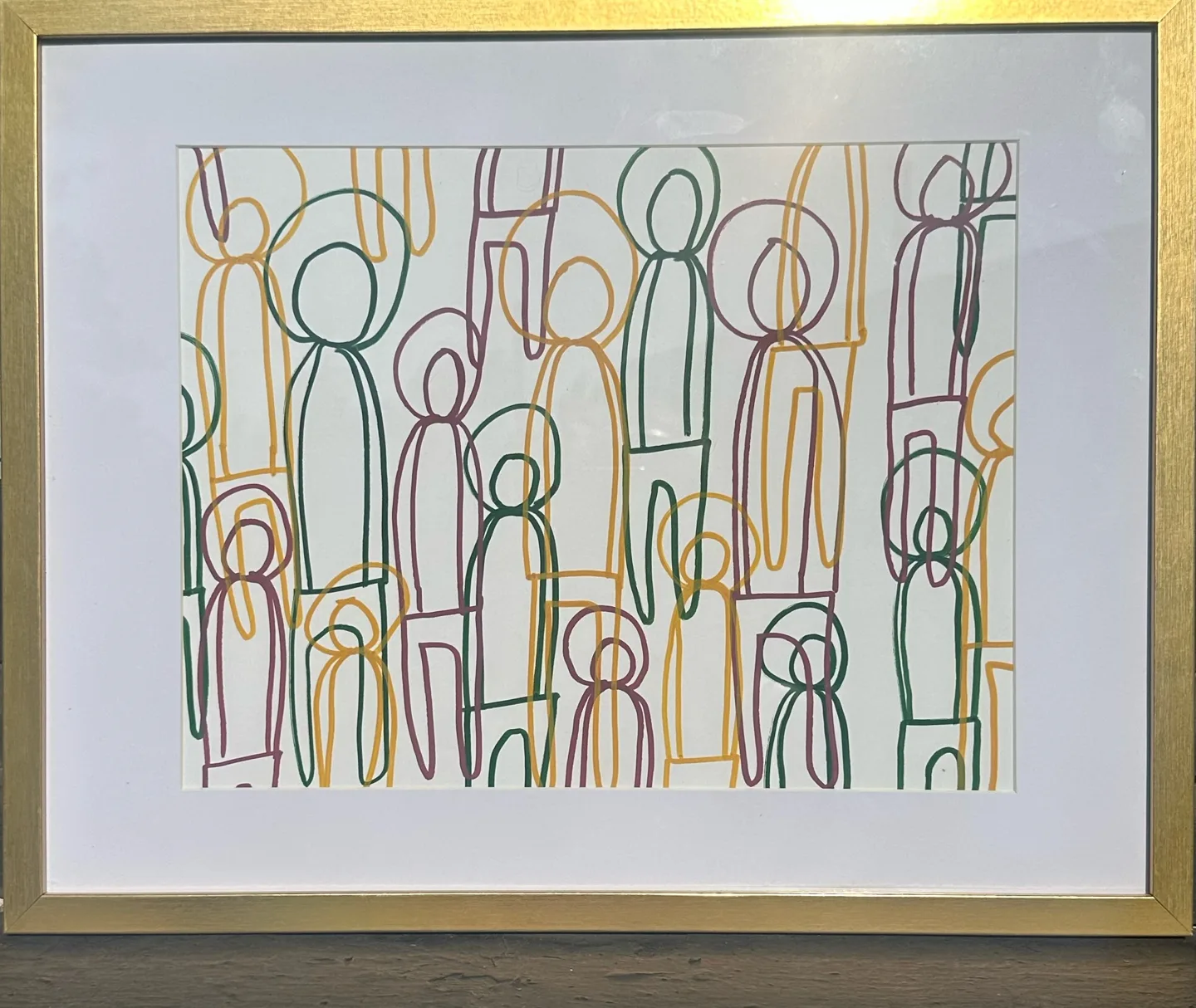
By this point my original thought had quietly transformed. It wasn’t stupidity that saves us. It’s the fact that none of us are allowed to become complete.
Civilization isn’t held together because humanity has solved itself. It’s held together because our strengths continually collide with one another’s weaknesses. One person’s overconfidence meets another’s caution. One person’s idealism is tempered by someone else’s skepticism. Creativity frustrates practicality. Practicality frustrates creativity. We spend an enormous amount of time annoying one another, but perhaps that’s precisely the point. Our imperfections create drag, and drag, as every engineer knows, isn’t always the enemy. Sometimes it’s the reason the machine survives.
Mirror Theory has slowly nudged me toward seeing this differently as well. Every person becomes a mirror, although not every mirror is flat. Some are polished. Others are warped beyond recognition. The people who irritate me often expose my own rigidity. The people whose flaws seem glaring remind me that mine are merely organized differently. Even those who seem frozen in certainty become useful reflections—not because they show me who I am, but because they remind me who I might have become had I stopped growing years ago. Like the funhouse mirrors I wrote about recently, distortion doesn’t eliminate truth. Sometimes it exaggerates it just enough for us to finally notice.
So I still smile when I catch myself thinking that stupidity saves civilization. It’s funny because it contains just enough truth to survive the joke. But perhaps the deeper truth is even more hopeful. The universe doesn’t protect us through stupidity. It protects us by refusing to make any one of us complete. It scatters brilliance, ambition, compassion, creativity, discipline, and foolishness across billions of imperfect people and quietly insists that if we’re going to build anything worthwhile, we’ll have to do it together.
Maybe that’s the real safety latch. Not our intelligence. Not our stupidity. Our incompleteness.