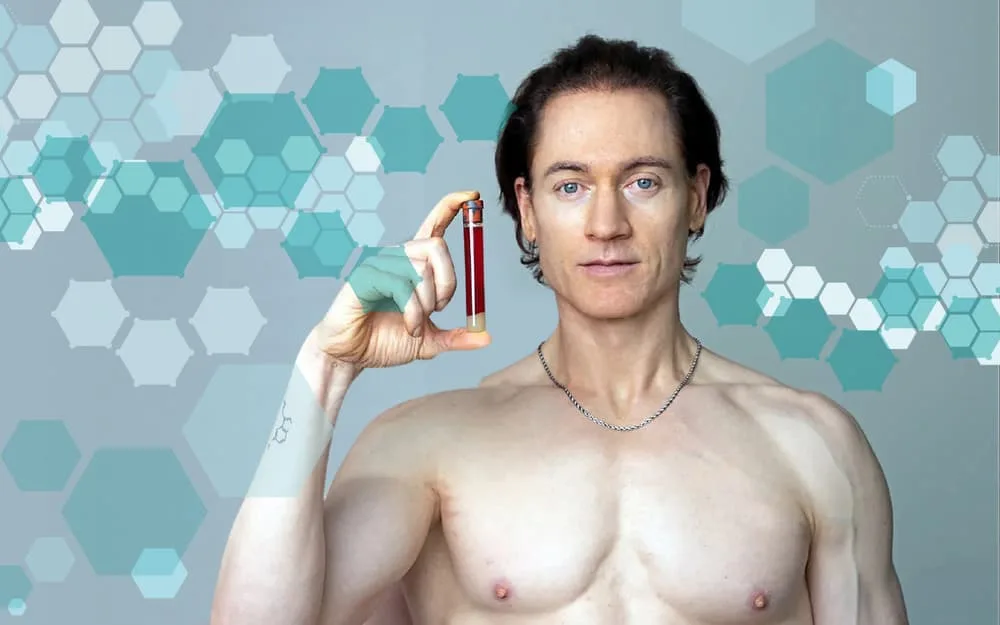
I read an article this morning about Bryan Johnson, the biohacker/longevity evangelist/most-measured-human-at-the-cosmic-county-fair, being diagnosed with an autoimmune disorder. And my first thought was not mockery. That would be too easy, too cheap, and honestly too cruel.
The desire to live better and longer is not silly. Wanting more time in a body that hurts less, works better, and lets you stay present for the people you love is one of the most understandable quests a human can take on. It is not vanity at its root. It is fear, love, hope, and biology wearing a very expensive smartwatch.
What struck me was not the man. It was the myth around the man. The fantasy that if we gather enough data, spend enough money, buy enough supplements, optimize enough sleep, and turn the body into a very expensive spreadsheet, we might finally become exempt from the ancient condition of being alive. We imagine that somewhere behind the dashboard is a steering wheel, and if we grip it hard enough, we can keep the whole thing between the lines forever.
But the body does not appear to have read the brochure.
This is the uncomfortable truth underneath wellness culture at its most feverish, every longevity protocol sold as salvation, every miracle diet, every “ten habits of people who never age” article written by someone with ring lights and abdominal definition. Health matters. Of course it matters. Sleep matters. Food matters. Movement matters. Drinking less matters. Not treating your body like a rented bumper car at the county fair matters.
I say this as a man whose personal wellness philosophy has often been, “surely this gas station snack has nutrients if I believe hard enough.”
Effort counts. Habits count. Choices shape the odds.
But shaping the odds is not the same thing as controlling the outcome.
That is the line we keep crossing. We turn health into morality. We talk as if illness is proof that someone failed the test. Ate the wrong thing. Thought the wrong thoughts. Didn’t manifest hard enough. Didn’t cold plunge with sufficient reverence. Didn’t align their mitochondria under the correct moon. Somewhere in our terror, we make sickness into a character flaw because that lets us pretend we are safe. If illness only happens to people who did something wrong, then perhaps we can do everything right and escape.
But the universe is not a meritocracy, and the body is certainly not HR.
You can do everything “right” and still get bad news. You can do everything “wrong” and somehow coast into old age like a raccoon blessed by dark forest magic. We all know someone who eats like a haunted teenager, smokes on the porch, distrusts vegetables, and still seems biologically sponsored by the devil. Meanwhile, someone else is counting macros, getting bloodwork, meditating, walking, lifting, hydrating, and suddenly a lab result appears like a little telegram from entropy.
From the inside, life is a crapshoot. From a deterministic perspective, maybe it is all cause and effect all the way down. Genetics, environment, history, stress, exposure, mutation, childhood, chance meetings, invisible processes, and ten billion little dominoes tipping before we ever knew there was a table.
But we do not experience the whole chain. We experience the diagnosis when it arrives. We experience the body as mystery. We experience the limits of our authority.
That does not mean we give up. That is the lazy nihilism door, and I am not walking through it unless there are snacks.
The lesson is not “why try?” The lesson is “try without worshipping control.” Care for the body because it is the only strange little animal you have been assigned. Take the walk. Eat the vegetable. Get the checkup. Sleep like your brain is not a trash fire with Wi-Fi. Do the reasonable things. Maybe even a few unreasonable things if they make you feel alive and don’t involve stealing your child’s plasma.
But do not confuse discipline with sovereignty.
We are not pilots in full command. We are weather systems with opinions. We are ecosystems pretending to be individuals. We are biology wearing pants. We can influence, tend, participate, and respond, but we cannot finally dominate the mystery we are made of.
And this is where Bryan Johnson becomes interesting again—not because he failed. That would still be buying into the same moral math. He is interesting because he represents the purest version of a bargain many of us secretly want to make: if I am disciplined enough, informed enough, optimized enough, maybe the body will spare me.
But the body does not make that bargain. Not fully. Not forever.
That may sound bleak, but I find it strangely freeing. If health is not a reward for virtue, then illness is not proof of failure. If control is limited, then compassion has to expand. For ourselves. For others. For the people trying desperately to live forever and for the people just trying to make it through Thursday with a blood pressure cuff and a half-finished iced coffee.
The steering wheel was always mostly decorative. Still, we keep our hands on it. Not because we control the road, but because this is how humans travel: alert, confused, hopeful, absurd, and occasionally signaling before the universe cuts us off anyway.