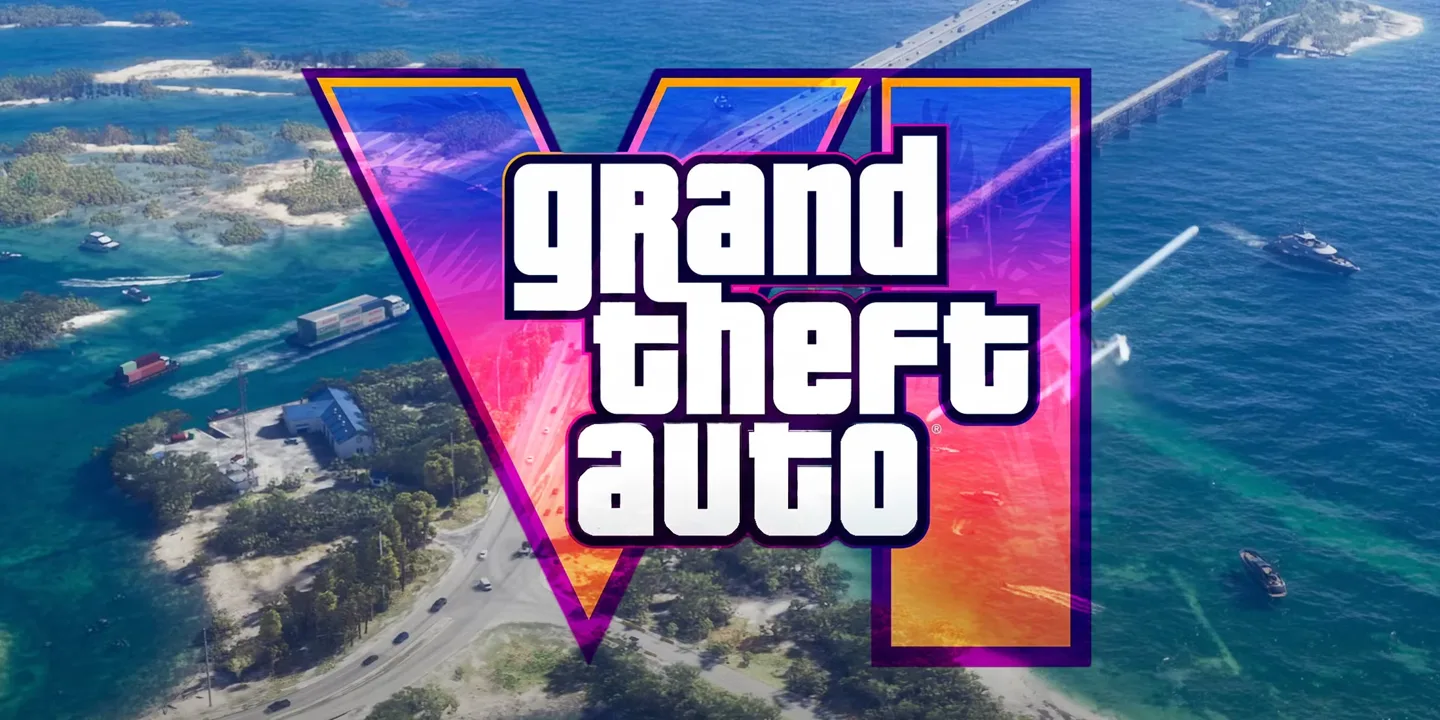
I have seen people online mocking the idea of paying $100 for Grand Theft Auto VI, especially before a full gameplay presentation has even been released. And look, I understand the impulse. I am, by temperament and spiritual constitution, a cheap bastard. I have talked myself out of things I genuinely wanted. I have stood in a store holding some object, done the emotional math, sighed like a Victorian widow, and put it back on the shelf. So yes, I understand hesitation. I understand skepticism. I understand the deep ancestral pain of watching modern entertainment slowly become a subscription model wearing a fake mustache.
But also? I’m probably buying the fancy version. Not because I have been hypnotized by marketing, not because I believe corporations need more of my money, and not because I want every publisher on Earth to hear “$100 game” and immediately start charging us extra for grass textures, pause menus, and the ability to wear pants. No. This one feels different. This one feels less like a normal purchase and more like admission to the next visible stage of something I have been watching unfold for most of my life. For me, GTA VI is not just another game. It feels like a culmination.
I started gaming on the Atari 2600 and the Apple IIc, which means I come from a time when imagination was not a bonus feature. It was required hardware. A square was a person. Another square was a dragon. A line was a wall. A blinking object was treasure, danger, destiny, or possibly a graphical error. You did not ask whether the world felt immersive. You supplied the immersion yourself, usually while sitting far too close to a television that weighed as much as a refrigerator and gave off the faint electrical hum of a haunted appliance. Those early games were primitive, yes, but they were also magic. They were invitations. They pointed toward worlds they could not yet fully build.
Then came games like King’s Quest, which cracked something open in me. Suddenly games were not just reflex tests or score machines. They were places. Strange, frustrating, beautiful places where you could wander, experiment, fail, and occasionally die because you typed the wrong verb, forgot to save, or angered some fairy-tale logic that Sierra apparently harvested from a cursed medieval forest. I loved it. I still love it. And yes, if anyone ever creates a complete modern remake of King’s Quest I with love, care, atmosphere, and just the right amount of old-school cruelty, I may become legally insufferable.
From there, the worlds kept expanding. The Fable series gave me fantasy with personality, absurdity, consequence, chickens, glowing morality, and the possibility of becoming either a beloved hero or a haunted landlord depending on how the afternoon went. The Elder Scrolls gave me scale and wandering. It gave me the sacred gaming act of ignoring the main quest for 90 hours because I found a cave, a book, a mushroom, and then somehow became the leader of an organization I had joined twelve minutes earlier. Then came ARPGs, shooters, loot systems, skill trees, factions, moral choices, open worlds, cinematic campaigns, expansions, online chaos, and the gradual realization that games were no longer simply something you played. They had become something you entered.
And through all of this, Grand Theft Auto was its own strange evolutionary branch. I have played every Grand Theft Auto and Red Dead Redemption game since inception. I do not say that as a flex. It is more of a confession. A digital carbon dating of my inner life. I remember when GTA was top-down madness, a chaotic little crime ant farm where the violence was so abstract it barely registered as violence. Then came GTA III, and suddenly the camera dropped behind the character and the world opened like a trapdoor. Vice City gave us neon, satire, music, mood, and an atmosphere so thick you could practically smell the cocaine and sunscreen. San Andreas gave us scale, identity, sprawl, and the feeling that a game world could contain entire lives. GTA IV gave us grit and melancholy. GTA V gave us three protagonists, a living Los Santos, and a version of America so exaggerated that reality apparently took it as a personal challenge.
And then there was Red Dead Redemption 2. That game changed something for me. Not because it was perfect. No game is. But because it felt lived in. The mud, the horses, the weather, the camp conversations, the slow decline of a world that knew it was being replaced. Arthur Morgan was not just a protagonist. He was a man being crushed between necessity and conscience, between loyalty and awakening, between the life he inherited and the one he could almost imagine. That game was not simply a western. It was a cowboy death meditation with side missions. It showed what Rockstar could do when mayhem, beauty, grief, and world-building all sat at the same table.
So when people ask why I am excited for GTA VI, the answer is not simply, “Because I want to steal cars in Florida.” Although, to be clear, that is absolutely on the list. The deeper answer is that I want to see where this medium has arrived. I want to see what happens when decades of design, technology, satire, simulation, cinematic storytelling, environmental detail, and player freedom converge into one absurd, sun-blasted, neon-soaked monstrosity. I want the living world. I want the fake social media. I want the NPCs with just enough apparent agency to make me wonder whether I am still the main character or simply another lunatic in traffic. I want the swamps, beaches, strip malls, highways, alleys, bad decisions, radio stations, background conversations, and useless little details that serve no purpose except to make the world feel less like a level and more like a place that would keep existing after I turned the console off.
And yes, I want the single-player campaign most of all. I have played plenty of GTA Online. I have owned yachts. I have owned mansions. I have spent fake money with the kind of reckless confidence I wish I had in real life. But the campaigns are what stay with me. The characters. The worlds. The missions. The satire. The melancholy hiding beneath the mayhem. Online chaos can be fun, but the single-player worlds are where Rockstar has always done its deepest work. That is where the absurdity sharpens into commentary. That is where the violence becomes theater, the city becomes mirror, and the whole ridiculous machine starts whispering uncomfortable truths about culture, money, desire, boredom, freedom, and the American hunger to become something by consuming everything.
That is why the price discourse, while understandable, feels slightly beside the point for me. I know there is an $80 version, but from where I’m standing, the $100 version feels closer to the complete experience I actually want. And again, I do not say that lightly. My inner accountant is alive, well, and currently pacing in a dim room with a clipboard. I understand waiting. I understand not wanting to reward bad industry habits. I understand the wisdom of skepticism before release. But excitement is not always rational. Sometimes excitement is historical. Sometimes you are not merely buying a product. You are buying a ticket to witness the next stage of a medium that raised part of you.
Because for me, gaming has never been separate from imagination. It has been one of the places where imagination learned to walk. First as pixels. Then as sprites. Then as polygons. Then as worlds. Then as characters with grief in their eyes. Then as cities dense enough to feel like mirrors. I can trace a line from the Atari 2600 to King’s Quest, from Fable to The Elder Scrolls, from ARPGs and shooters to the sprawling, strange, morally deranged playgrounds of Rockstar’s open worlds. All of it has been part of the same unfolding. All of it has been the slow transformation of games from symbolic spaces into inhabitable realities.
That is the part that thrills me most. Not only GTA VI as a game, but GTA VI as evidence. Evidence that the medium kept going. Evidence that the crude little squares of childhood were not dead ends, but seeds. Evidence that the worlds we once had to imagine around the screen have slowly, impossibly, begun to appear inside it. That does not mean the future of gaming is automatically good. Bigger is not always better. Realism is not the same as meaning. Technology alone does not create soul. But when the right studio, the right scale, the right history, and the right cultural moment collide, there is still a chance for something astonishing.
So yes, I am excited. Ridiculously excited. Possibly embarrassingly excited. Excited in a way that makes me feel both 45 and 9 years old at the same time. I am excited as someone who has watched games evolve from bleeps and blocks into living worlds. I am excited as someone who still remembers needing imagination to fill in every blank, and who now gets to watch those blanks rendered in impossible detail. I am excited because somewhere inside me there is still a kid sitting in front of an Atari, staring at a blocky little screen, imagining the future.
And somehow, absurdly, beautifully, the future is almost here.
So fine. Take my money, Rockstar. But please understand: I am not paying $100 because I am careless. I am paying because I want to stand at the edge of this strange little art form and watch it become whatever it is becoming next.