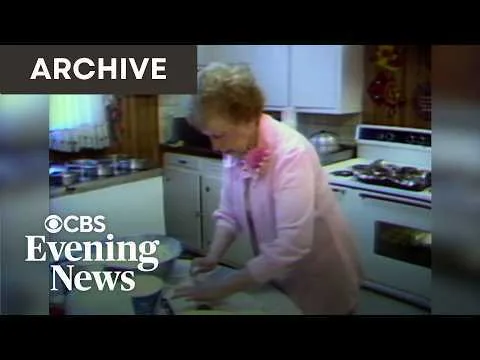
Recently I found myself watching an old news archive from 1983. One of those quiet human stories that used to fill a few minutes of the evening broadcast. The segment followed a woman who cooked food every day in her own kitchen and welcomed anyone who wanted to come by and eat. No forms to fill out. No sign-up sheet. Just a simple invitation: if you were hungry, come in.
At one point she quoted a line from a poem—almost casually, as if everyone already knew it: “Let me live in my house by the side of the road and be a friend to man.” Something about that sentence lodged in my mind. I had never heard the poem before, but the idea behind it felt instantly familiar, like running into a philosophy that had quietly been waiting for you your whole life.
The poem is called “The House by the Side of the Road,” written in 1897 by Sam Walter Foss. When I went looking for it, I found this.
The House by the Side of the Road
Sam Walter Foss (1897)
There are hermit souls that live withdrawn
In the place of their self-content;
There are souls, like stars, that dwell apart,
In a fellowless firmament;
There are pioneer souls that blaze their paths
Where highways never ran—
But let me live by the side of the road
And be a friend to man.
Let me live in my house by the side of the road
Where the race of men go by—
They are good, they are bad, they are weak, they are strong,
Wise, foolish—so am I.
Then why should I sit in the scorner’s seat
Or hurl the cynic’s ban?
Let me live in my house by the side of the road
And be a friend to man.
I see from my house by the side of the road
By the side of the highway of life,
The men who press with the ardor of hope,
The men who are faint with the strife.
But I turn not away from their smiles nor their tears—
Both parts of an infinite plan—
Let me live in my house by the side of the road
And be a friend to man.
I know there are brook-gladdened meadows ahead,
And mountains of wearisome height;
That the road passes on through the long afternoon
And stretches away to the night.
But still I rejoice when the travelers rejoice,
And weep with the strangers that moan,
Nor live in my house by the side of the road
Like a man who dwells alone.
Let me live in my house by the side of the road
Where the race of men go by—
They are good, they are bad, they are weak, they are strong,
Wise, foolish—so am I.
Then why should I sit in the scorner’s seat
Or hurl the cynic’s ban?
Let me live in my house by the side of the road
And be a friend to man.
The poem immediately struck me as strangely aligned with something I have been circling for years in my own thinking—what I tend to call Zen Absurdism. Reality passes us constantly. People pass us constantly. Their struggles, their victories, their oddities, their mistakes. The road never really empties.
The poem does not suggest withdrawing from that parade of humanity, nor does it suggest trying to control it. Instead, it proposes something much quieter. You sit where the road runs and watch people come and go. You recognize their strength and their foolishness and, in a small moment of humility, realize you share both.
So am I.
That line might be the entire philosophy in miniature. Zen often points toward accepting reality exactly as it unfolds, while Absurdism recognizes that life can be strange and chaotic and unpredictable. Somewhere between those two positions is the idea that we do not necessarily need to solve the human condition. Sometimes it is enough simply to remain present for it—to watch the road, see the travelers, rejoice when they rejoice, and feel something when they struggle. If possible, in whatever small way we can, we offer warmth along the way.
When I think back to that woman in the news clip quietly cooking meals in her kitchen for whoever might arrive, it feels like she had already figured the poem out. She had built a house by the side of the road. Not a fortress. Not a temple. Just a place where travelers could pause for a moment.
Reading the poem, I felt something quietly shift inside me. Not because the idea was new, but because it suddenly felt clear. Foss had written down something I had been circling in my own thinking for years. The image of the house by the side of the road feels almost like a philosophical position—one that fits naturally with my own strange blend of Zen acceptance and absurd curiosity about the human condition. Life passes us constantly, and the question Foss quietly asks is simple: how will you sit beside that road?
When I read the poem, I realized something that was both inspiring and uncomfortable. This is the kind of person I want to be, but it is also the kind of person I often fail to be. It is surprisingly easy to slide into the scorner’s seat Foss mentions in the poem—to feel a little more informed than the person speaking, a little more capable, a little more thoughtful, a little more aware. Intelligence, knowledge, and experience can quietly become distance if you let them.
Judgment has a way of sneaking in through those doors, and judgment almost never helps anyone. What helps people far more often is something simpler: sharing the moment with them and meeting them where they are on the road. The traveler in front of you may be joyful, confused, tired, or hopeful, and remembering that you have been each of those things yourself changes how you see them.
So am I.
That line from the poem keeps echoing in my mind—not as a criticism, but as a correction. A reminder that the goal is not to stand above the road analyzing the travelers as they pass. The goal is simply to remain human among them, to sit beside the road with a little humility and stay open to the people who appear for a moment in your life before continuing on their way.
And if possible—though I will certainly miss the mark many times—to keep practicing the same small ideal Foss wrote down more than a century ago: to be a friend to man.