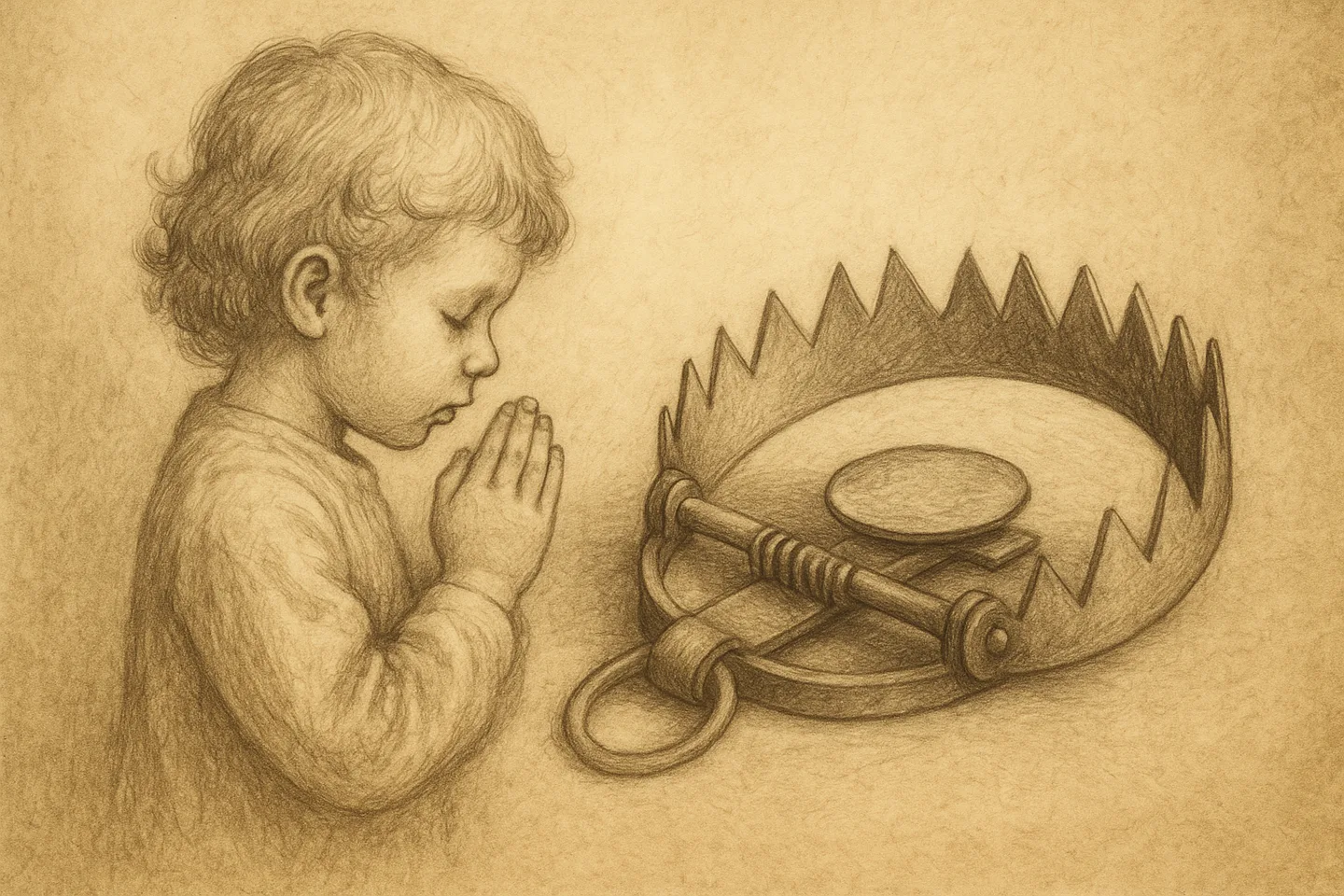
We weren’t just taught to believe in Jesus.
We were trained to recruit for Him.
From as early as I can remember, the Southern Baptist world I was raised in wasn’t content with personal faith—it demanded evangelical warfare. We were given scripts, pamphlets, and instructions. We role-played salvation pitches like other kids practiced for school plays. We were told—over and over—that it was our job, our duty, to “win souls for Christ” before they turned eighteen. Because after that, hearts hardened. Doors closed. And if we didn’t try… maybe their blood was on our hands.
This wasn’t Sunday-only messaging. It saturated everything.
Falls Creek. Wednesday night youth group. Sunday morning service. Sunday night revival. Tuesday visitation.
There was never a time where saving others wasn’t the point.
And the target audience? Kids.
Other kids.
I remember the pride in adult eyes when someone said, “He brought three of his friends to Jesus this week.” We were praised for being spiritual salespeople. We were soldiers in a war we didn’t understand, recruiting others to fight a battle no one could see.
We were children. And they gave us hell to weaponize.
The announcements didn’t stop when I left church.
Now they just show up in a new cathedral: Facebook.
Scrolling through, I still see the same victories. Parents praising God that their son or daughter “made the most important decision of their life” at age six, seven, ten. Another salvation. Another sigh of relief. “We got them before the world could.”
And I feel it—that old churn.
Not anger, exactly. Something more tangled. Grief braided with nausea.
Because I remember what it was like to believe in hell before I believed in puberty. I remember being told I was born wicked. That Jesus loved me—but would burn me forever if I didn’t love him back. I remember crying during altar calls, not from joy, but panic. I didn’t want to go to hell. I didn’t want my friends to go to hell. And if I didn’t try to save them, maybe I would.
That’s not salvation. That’s spiritual blackmail.
But this isn’t a story of destruction.
It’s a story of rupture, and what came after.
Leaving that world wasn’t a single break—it was a slow unspooling. Years of peeling back beliefs that were knotted to my identity. I carried fear long after I stopped believing. The echo of damnation doesn’t leave your bones quickly. I worried I was ruining my daughter by not teaching her “the truth.” That I was being irresponsible. Damning her by omission.
But over time, that internal voice got quieter.
And her voice got louder.
She doesn’t know what sin is.
She’s never heard a sermon.
She views “God” like Santa Claus—a character some people take very seriously, but one she’s never had to fear.
She believes in logic, beauty, and curiosity. We talk about the universe. About death. About kindness. She asks better theological questions than I ever dared to as a kid. There’s no guilt in her learning. No punishment baked into her wonder.
And here’s the part that undoes me:
She agrees with me.
Not because I’ve programmed her. Because we’ve explored together. Because I answer her questions without a script. Because when she asks “What happens when we die?” I don’t sell her heaven—I say, “I don’t know. What do you think?”
And what she thinks is often more compassionate, more intelligent, more free than anything I was taught.
I used to be the child who wept at the altar.
Now I’m the parent of a child who smiles at the stars.
And that, to me, is the truest kind of salvation.