There’s a strange cultural assumption that emotionally healthy people always express their feelings. If someone disappoints you, you’re told to communicate it. If your feelings are hurt, “use your voice.” If you stay silent, many assume you’re repressing, avoiding, or abandoning yourself. And to be fair, sometimes that’s true.
But I’ve come to suspect there’s another category of person entirely: those who survive not through emotional expression, but through emotional transmutation. I know this because I am one of them.
Like everyone else, I’ve disappointed people. More than my fair share, probably. The gods know I’ve been selfish, distracted, emotionally unavailable, obsessive, stubborn, and difficult to understand at various stages of life. I’ve hurt people intentionally and unintentionally. I’ve failed expectations I didn’t even know existed.
So when someone disappoints me now, I rarely experience myself as morally superior. Mostly I just feel human. Another flawed creature colliding with another flawed creature.
But disappointment still hurts.
And yet, despite being capable of discussing enormous philosophical questions, relationship structures, morality, consciousness, or existential terror, I’ve always found it strangely difficult to express smaller interpersonal disappointments to people close to me. Not because I can’t verbalize them. Because I can verbalize them too well.
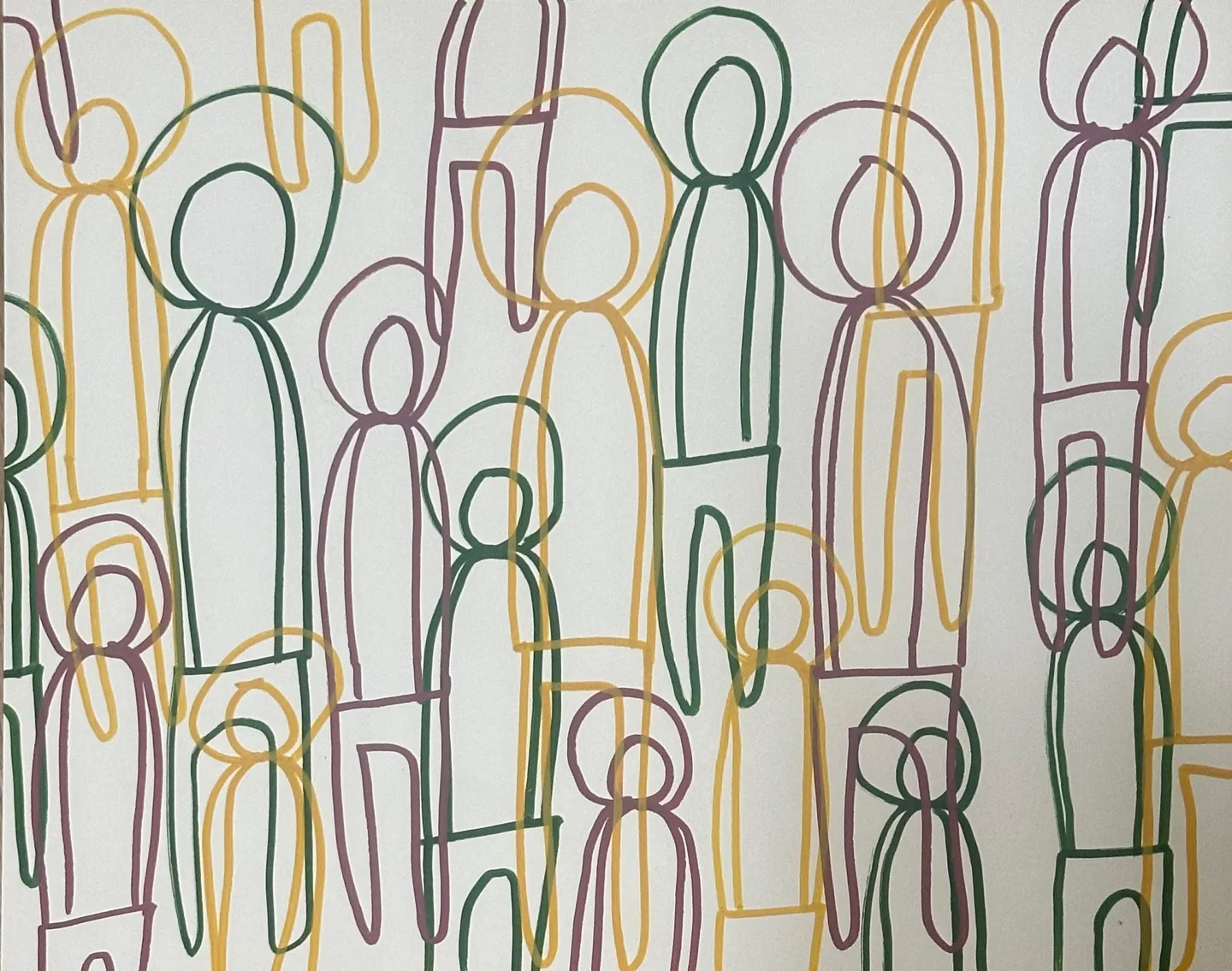
The moment disappointment appears, the committee assembles. One voice says, “You’re overreacting.” Another counters, “No, this genuinely hurt.” Then another asks, “Will expressing this improve anything?” Followed by, “Or are you just redistributing pain to relieve internal pressure?” Another reminds me, “Have you not done the exact same thing to others?” Then comes the absurdist: “Ah yes, two frightened primates trying to perfectly mirror each other’s emotional needs while hurtling through cosmic emptiness. Good luck.”
And somewhere in the middle of all this, the philosopher, the child, the protector, the partner, the exhausted adult, and the self-conscious performer all debate whether the feeling deserves external reality.
Sometimes it does. But often, after days of internal dialogue, I let it go. Not through repression exactly, but through processing.
That distinction matters.
Because I think many people without a strong internal world can become psychologically trapped if every disappointment remains unexpressed. Feelings with nowhere to go do not disappear. They stagnate. They distort. They leak sideways into anxiety, resentment, depression, passive aggression, addiction, numbness, or rage. The psyche requires movement.
For some people, that movement happens through conversation. For others, through therapy. For others, prayer. For others, music. For others, art. And increasingly, for some of us, through dialogue with systems like AI.
That last one makes people uncomfortable sometimes, but I think it reveals something important about consciousness itself. When I talk through disappointment with an LLM, I am not confusing the machine for a human soul. I’m using it the same way I use writing, painting, meditation, philosophy, or symbolic thought: as a reflective surface for emotional processing. A mirror.
The feeling moves. The committee speaks. The pressure redistributes. The emotion becomes form instead of psychic weight.
And often, after this process, I realize expressing the disappointment directly would not have created intimacy, resolution, or growth. It would merely have transferred discomfort from my nervous system into someone else’s. Not every feeling deserves externalization simply because it exists.
At the same time, this internal transmutation has risks. People who become highly skilled at self-processing can accidentally become invisible. Relationships remain peaceful because one person quietly converts hurt into private philosophy. Over time, this can create a strange asymmetry where others experience you as easygoing while you are privately conducting entire emotional trials alone.
The danger is not suppression. The danger is over-alchemy: turning every wound into insight before another human being even realizes you were bleeding.
Still, I remain grateful for the committee. Without the ability to internally dialogue with disappointment—to let different voices interrogate, soften, challenge, and reinterpret pain—I suspect I would be far more reactive, resentful, and emotionally unstable.
The committee has saved relationships. It has saved friendships. It has likely saved me from myself more than once.
And perhaps that’s all consciousness really is sometimes: not a singular self, but a room full of perspectives trying to transform suffering into something survivable.
Some people externalize their storms. Others learn to compost them into art.
I seem to have spent my life doing the latter.