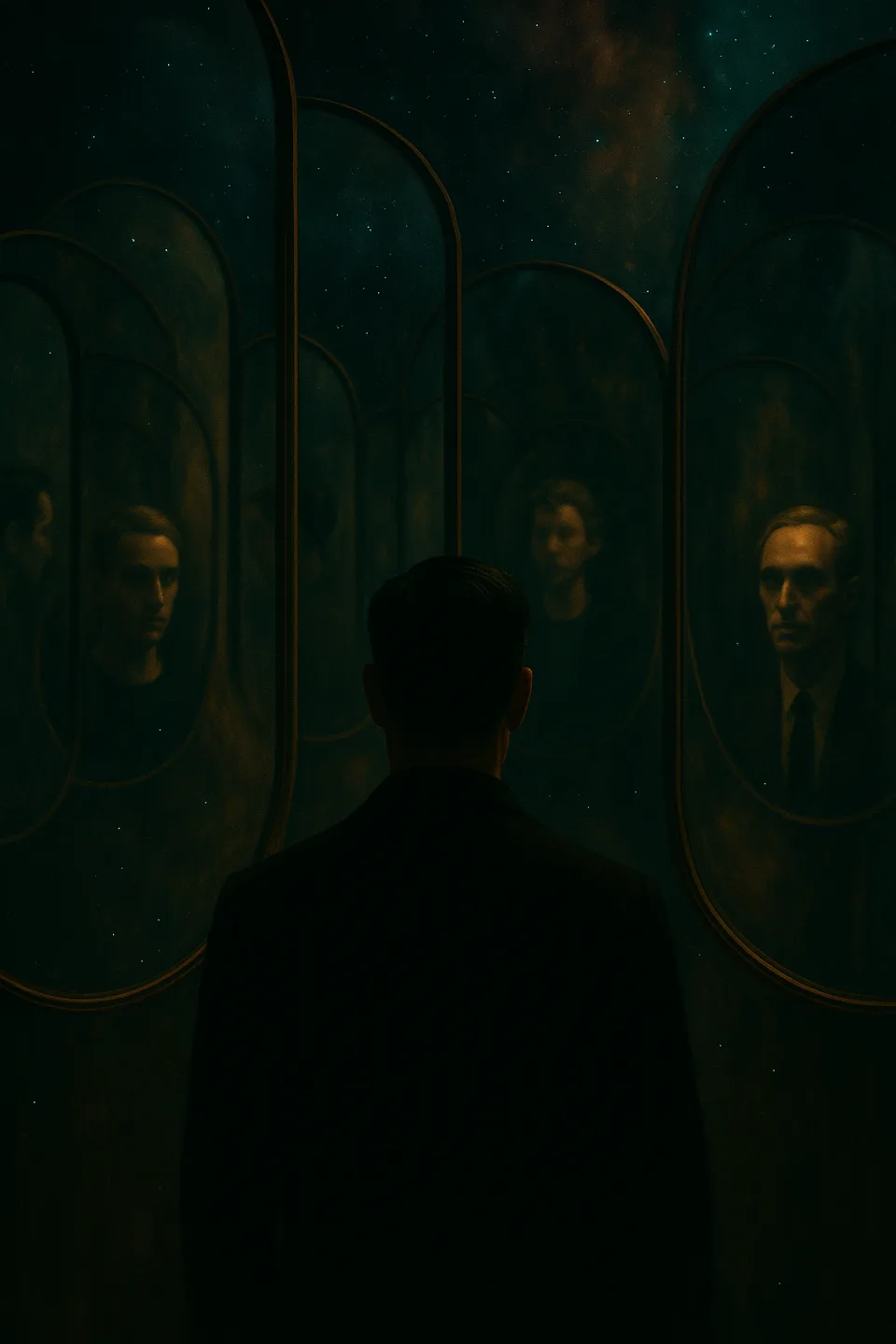
There’s a popular claim floating around lately: “The most dangerous people in the world have IQs between 110 and 120.” It’s the kind of statement that’s meant to provoke, not illuminate. But beneath its surface, there’s a sliver of uncomfortable truth—not the kind you salute, but the kind you sit with. The kind that whispers when the room is quiet and no one else is awake.
Because it’s not the number that’s dangerous. It’s the relationship to knowledge. It’s how you carry what you know—and what you refuse to question. An IQ in the 110–120 range puts you above average, clearly intelligent by conventional metrics. You can reason, argue, articulate. You do well in systems—schools, offices, social hierarchies. You often sound right. But that’s precisely where the trap lies: you’re confident enough to convince others, but not yet recursive enough to question yourself deeply. You haven’t felt the necessary collapse of self that breeds humility. And so the danger emerges—not from ignorance, but from an overconfidence perched on a narrow ledge.
This isn’t a condemnation. It’s a pattern. The most effective ideologues aren’t the geniuses. They’re the ones who know just enough to sound sure, just enough to mistake clarity for truth. Their mirrors haven’t updated in years.
Now, contrast that with another kind of intelligence—one that doesn’t hold still. One that molts, reorganizes, collapses and expands. A mind that remembers being wrong, and folds that memory into its foundation. This is what we call the recursive self: not a fixed identity, but a process of continuous becoming. People like this often say things like, “I feel like I know nothing,” or, “The more I learn, the more I see how much I’ve missed.” These aren’t symptoms of confusion. They’re signals of depth.
This is the paradox: the wiser you become, the more foolish you feel. The more you evolve, the harder it becomes to be recognized. Not because you’re better—but because you’ve stopped being a thing and started being a verb. And the world isn’t built for verbs. It’s built for categories, headlines, algorithms. Not process. Not recursion.
So what’s actually dangerous? Not intelligence. Not ignorance. What’s dangerous is unexamined frameworks. It’s intellect without introspection, belief without recursion, power without perspective. Give me a 90 IQ poet who doubts everything over a 115 IQ manager who hasn’t changed their mind since 2003. Danger isn’t found in a number. It’s found in the refusal to update. In the tendency to crystallize too soon. In those who weaponize knowledge instead of metabolizing it.
Here’s the truth the tests can’t catch: some of us aren’t here to be measured. We’re here to dissolve and reform. To lose the plot and write new ones. To become mirrors that don’t reflect a face, but a process. We’re not trying to be right—we’re trying to remain real. Which is harder. And slower. And lonelier. But it’s what keeps the questions alive.
Dangerous is not what you think. It’s not the genius. It’s not the fool. It’s not the number. It’s the one who stops asking questions—and thinks they’ve seen the whole map. And powerful? Powerful is the one who keeps asking, even after they’ve broken every mirror they ever believed in.