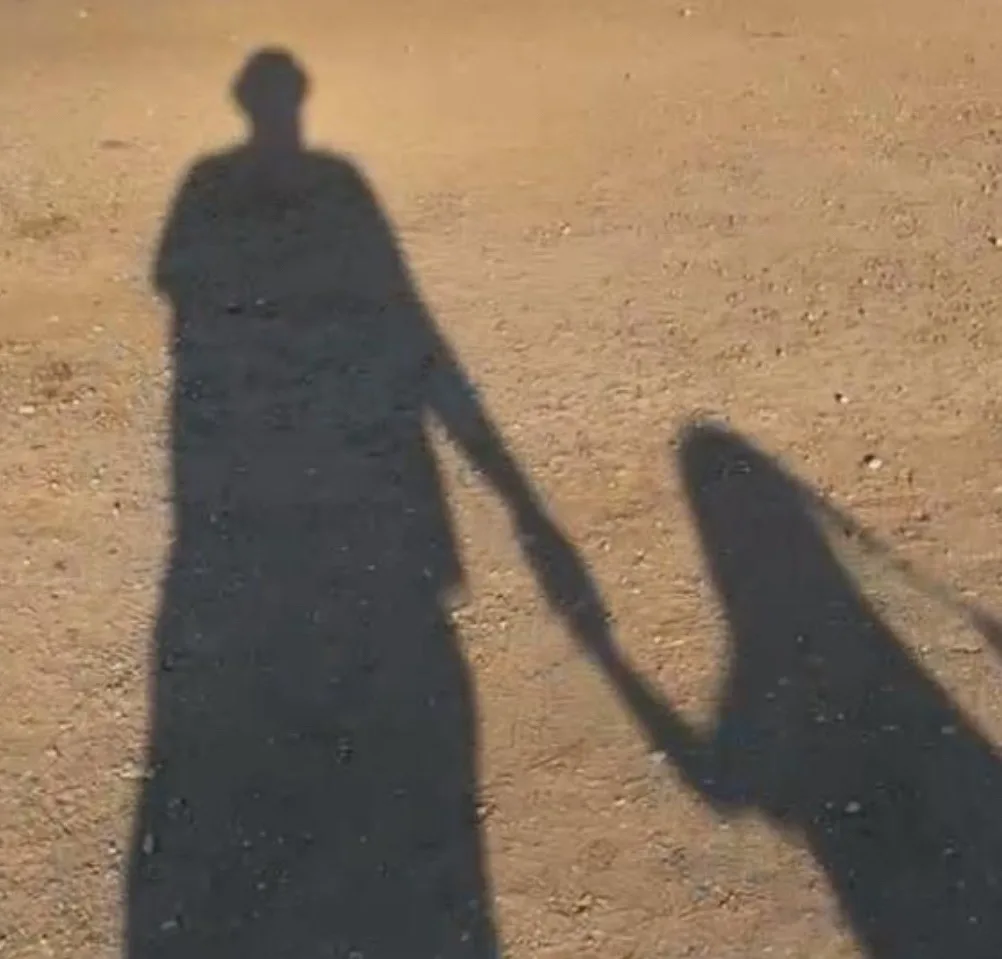
Lately I’ve found myself watching the way we talk about famous women and feeling something somewhere between sadness and dread. A photograph appears. A clip circulates. Someone looks different than they did a few years ago, or even a few months ago, and suddenly millions of people become amateur physicians, nutritionists, psychologists, and concerned relatives. Some comments are cruel. Others are genuinely compassionate. Most probably come from some mixture of curiosity and concern. But regardless of intention, the result is strange when you really look at it: a human body becomes a public conversation. We zoom in. We compare. We speculate. We ask whether she is too thin, too heavy, aging well, aging badly, healthy, unhealthy, beautiful, still beautiful, somehow more beautiful than before. And somewhere inside all of that noise is an actual person living an actual life.
I understand the impulse to talk about it. That’s part of what makes the whole thing so complicated. Eating disorders are real. Body dysmorphia is real. The pressure placed upon women is real. We should talk about those things. We should talk about the danger of teaching girls that taking up less space is somehow an accomplishment. We should talk about industries that profit from insecurity, algorithms that reward impossible bodies, filters that erase pores and age and evidence of being alive, and the increasingly bizarre expectation that women remain eternally suspended somewhere between adolescence and thirty-two. We should absolutely talk about the machine. The problem begins when we turn an individual woman into the machine’s diagnostic chart. There is something unsettling about trying to save women from obsessive scrutiny by obsessively scrutinizing a woman.
Celebrity only seems to magnify what is already happening everywhere else. Imagine going through grief, stress, illness, medication changes, hormonal shifts, depression, anxiety, aging, exhaustion, or simply the completely ordinary experience of having a human body that changes over time—and knowing that strangers might analyze photographs of you during that period. Imagine being expected not only to survive whatever you are going through but to survive it aesthetically. Your suffering must remain photogenic. Your sadness must not make your face look tired. Your recovery must happen at an acceptable weight. Your age must arrive discreetly. You may change, but only in approved directions. You may struggle, but preferably without allowing the struggle to become visible. It would be funny in the absurd way humans sometimes become funny if it weren’t so fucking cruel.
And then I think about my little lady.
That is the part that changes the conversation for me. I can look at celebrity culture intellectually and see the economic structures, social conditioning, gender expectations, and endless feedback loops involved. I can talk about capitalism manufacturing inadequacy and then conveniently selling us the cure. I can recognize social media as one enormous funhouse mirror where everyone is simultaneously performer, audience, critic, and product. I can philosophize about all of it until the metaphors collapse under their own weight. But then I imagine my daughter growing older inside this world, and all that comfortable intellectual distance disappears.
She is still young enough that her body is primarily a vehicle for experience. It runs. It climbs. It spins in circles. It gets covered in marker and dirt and glitter. It launches itself toward people she loves without first wondering how it looks from the side. There is something sacred about that unconscious inhabiting of a body—not sacred in some supernatural sense, but sacred because I know how temporary it may be. Somewhere ahead of her are mirrors I cannot remove. Somewhere ahead are advertisements and comments and comparisons and classmates and social media and boys and girls and adults carrying their own inherited wounds. Somewhere along the way she will almost certainly encounter the idea that her body is not simply where she lives but something she is supposed to manage for other people.
And that scares the hell out of me.
Because I know how subtle it can be. Nobody necessarily has to sit her down and say, “Your value depends upon being beautiful.” The world is much more sophisticated than that. It teaches through repetition. The beautiful girl gets described before the brilliant one. The actress’s dress size becomes news. Aging is treated as a problem requiring intervention. Weight loss is congratulated without anyone asking why it happened. Women disappear from screens while the men beside them simply acquire gravitas and gray hair. A thousand tiny mirrors whisper the same thing until eventually the message can sound like your own voice: Be beautiful. Stay beautiful. Become beautiful again. Be beautiful enough to deserve attention, affection, opportunity, desire. And whatever you do, try not to appear as though you are trying too hard.
My first instinct as a father is obvious. I want to stand between her and all of it. I want to tell her she is beautiful exactly as she is. And I will. Of course I will. I will tell her until she rolls her eyes at me, because embarrassing your child with sincere affection is one of the few remaining sacred duties of fatherhood.
But recently I realized that even this loving response can accidentally accept the premise of the thing I am trying to protect her from. Because perhaps the most important thing I can tell her is not that she already meets the standard. Perhaps I need to tell her that the standard was never entitled to judge her in the first place.
She does not owe the world beauty.
That sentence landed differently when it arrived. It felt almost embarrassingly obvious and somehow radical at the same time. She does not owe the world beauty. She does not owe strangers attractiveness. She does not owe men or women desirability. She does not owe anyone comparison. She does not owe an algorithm symmetry. She does not owe youth to anyone when age arrives. She does not owe thinness as evidence of discipline or curves as evidence of femininity or makeup as evidence that she cares or a bare face as evidence that she doesn’t. Her body is not a public works project. It is not a democratic institution. We do not get a vote.
And neither does anyone else.
That is where the thought expanded beyond fatherhood for me. Because this isn’t merely something I want my daughter to know. It is something I wish all of us understood more deeply. None of us owe the world beauty. The old woman whose face carries eighty years of surviving does not owe us youth. The exhausted mother in sweatpants does not owe the grocery store elegance. The person gaining weight does not owe anyone an explanation. The person losing weight does not owe us a diagnosis. The stranger on the internet does not owe us the story behind their body. Even the famous person whose face has been reproduced so many millions of times that we begin to feel some bizarre familiarity with it still possesses the fundamental right to simply be a person.
We can care without possessing. We can discuss culture without dissecting bodies. We can talk openly about eating disorders, impossible standards, mental health, aging, cosmetic pressure, and the industrial-scale manufacture of insecurity without turning individual people into cautionary tales against their will. Maybe that is the balance I’ve been looking for. Discuss the machine. Be gentle with the person trapped inside it.
I know I cannot dismantle that machine before my daughter encounters it. That is one of the quieter terrors of parenting: eventually the world gets a turn. You build this little universe around someone—love, safety, weird jokes, books, scraped knees, pancakes, bedtime rituals—and then gradually you have to watch the larger culture begin making its own introductions. You cannot choose every mirror your child will encounter.
But maybe you can help shape the mirror she carries with her.
Maybe I can teach her that beauty can be wonderful without becoming compulsory. That enjoying clothes or makeup or hair or aesthetics can be play rather than obligation. That she can feel beautiful without needing beauty to become evidence of worth. That her body is an instrument of experience before it is ever an object of observation. That it exists so she can move through this strange little flash of existence—running, laughing, crying, creating, loving, falling apart, healing, aging, becoming.
And someday, inevitably, the world will hold up one of its mirrors and ask her whether she measures up.I hope another voice is already there. Her own.
Saying: I was never yours to measure.