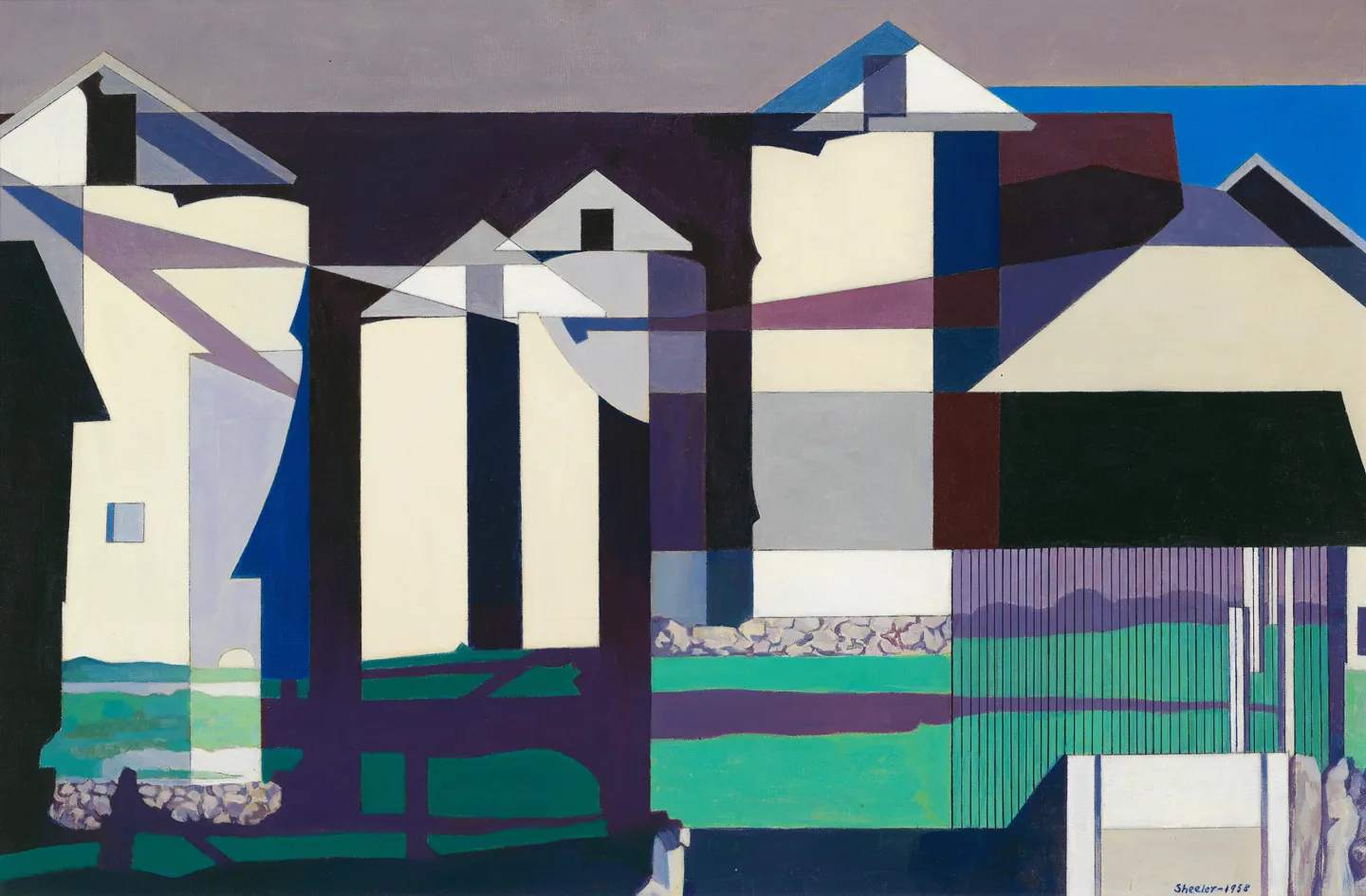
I recently stumbled upon the term Precisionism—an early 20th-century American art movement known for its sharp lines, industrial subjects, and austere beauty. Artists like Charles Sheeler and Charles Demuth painted factories, skylines, and machinery not with romanticism, but with reverence for form. Each detail was deliberate. Every line clean. They removed the unnecessary to reveal the essence.
And somehow, in the middle of a YouTube video, it hit me:
This isn’t just an art style.
It’s a philosophy.
A way of living.
Because the longer I live, the more I feel that life itself wants to be approached like a Precisionist canvas—not through accumulation, but through removal.
We spend so much of life chasing more: more opportunities, more affirmation, more everything. But at some point, it becomes noise. You lose the shape of what you’re making. You trade clarity for clutter. And ironically, in the pursuit of fullness, you end up emptied.
Precisionism offered a different logic:
Sculpt your life by subtraction.
Say no until the yes reveals itself.
Let the shape of who you are emerge through intention, not inertia.
This isn’t minimalism as aesthetic—this is rigorous selection as liberation.
The video called it the “8 out of 10 Rule”: If it’s not a clear, intuitive yes, it’s a no.
If you have to justify it too much, it probably doesn’t belong.
Simple, but not easy.
When I started applying this filter to relationships, projects, commitments, and even thoughts—it was like cleaning a fogged mirror. Suddenly, I could see myself again. Not the self I was managing or performing, but the one quietly waiting beneath all the noise.
And this is where it intersects beautifully with Mirror Theory.
Mirror Theory, as I’ve been writing about it, explores how our relationships and environments reflect hidden aspects of ourselves—sometimes clearly, sometimes in distortion. In that light, Precisionism becomes a kind of mirror refinement. A commitment to polishing what we reflect and accept. Not for control, but for coherence.
You subtract not to isolate, but to see.
To see more honestly.
To live more cleanly.
To walk through your days with the quiet clarity of a painting that doesn’t shout to be noticed—but arrests you because it left out everything that didn’t matter.
I don’t want more.
I want alignment.
I want clean lines, true mirrors, and a life that feels like it was carved by hand—not filled by default