I recently climbed into the 220s. Not a mountain range or some particularly exclusive nightclub, but the 220s on my bathroom scale. Specifically, 229.4 pounds. There was no champagne, no ribbon-cutting ceremony, and certainly no one waiting to hand me a commemorative patch. Just a digital scale, a man who has spent most of his adult life overweight, and the strange satisfaction of seeing a number I haven’t seen in a very long time. I celebrated by declaring that I now live in the 220s, and I won’t be leaving until I reach the 210s. Which may sound like an interesting relationship with mathematics, but I assure you there’s a method to my madness.
I’ve been weighing myself regularly throughout my Year of Health. Sometimes daily, sometimes more than once a day, because apparently the bathroom scale is now an interesting place to visit. And like anyone who has spent time trying to lose weight, I’ve watched the numbers dance around. Up a pound, down two, up three, down four. One morning I’m lighter than I’ve been in decades, and the following afternoon I’ve apparently eaten an invisible Thanksgiving dinner. Water, salt, digestion, exercise, and countless other bodily activities are constantly negotiating what number appears beneath my feet. I understand all of that, so I decided some time ago to stop treating every number as equally important. I still look at them all, but I only celebrate the ones that take me somewhere I’ve never been before on this particular journey.
I think of it like climbing a mountain.
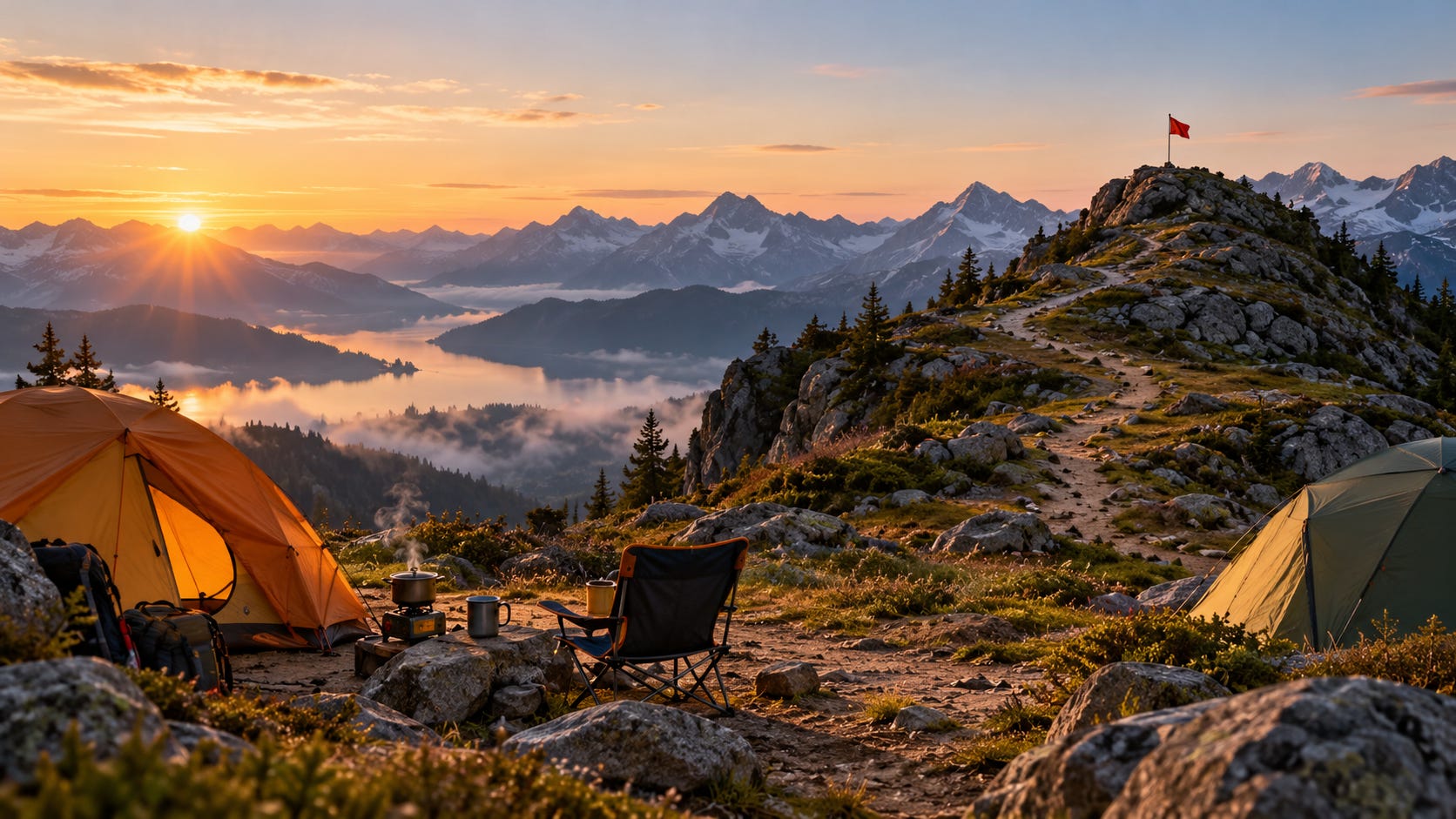
Imagine setting off to climb an enormous mountain, one you’ve spent much of your life staring at from the valley below. You know the summit is up there somewhere, but it’s so far away that thinking about the entire climb is almost discouraging. So you start walking. Eventually, you reach a little clearing higher than you’ve ever been. You look around, admire the view, and plant a flag. That’s your new personal record. You’ve made it to that elevation, and nobody can take away the fact that you stood there. The next day, you continue climbing, but the weather turns, the trail gets difficult, or you simply need a rest. You descend a little. Maybe a lot. But when you look back up the mountain, your flag is still there. You don’t have to pretend you’re standing beside it today to know that you reached it yesterday.
That’s how I’ve come to see my weight.
When I began this particular climb, I weighed approximately 298 pounds. Every new low became another flag planted a little farther up the mountain. The 280s eventually gave way to the 270s, then the 260s, and onward. Each time I reached a new decade on the scale, I declared that territory officially explored. Sometimes the number bounced back above the line the very next morning. I didn’t care. I hadn’t forgotten how a scale works, nor was I pretending that weight couldn’t return. I was simply choosing not to let a temporary fluctuation rewrite the story of my progress. The next flag would go higher, and until then, I could enjoy knowing where I’d already been.
Something interesting happens when you approach weight loss this way. The scale stops being a daily referendum on your success or failure. A higher number isn’t an accusation, and a lower number isn’t evidence that you’ve suddenly become a better human being. It’s simply information. Most of the time, rather boring information. But occasionally, it tells you that you’ve reached a new elevation, and that’s worth noticing. You can celebrate that moment without demanding that every subsequent morning produce another one. In fact, you can go days or weeks without planting a flag and still be doing everything you need to do. Mountains aren’t generally known for accommodating our preferred schedules.
Of course, the metaphor isn’t an excuse to ignore reality. If I spent months moving steadily backward, that would be worth understanding. A flag doesn’t magically keep me at the same elevation, and a personal record isn’t a guarantee of future success. But that’s precisely why I find the distinction so helpful. My highest achievement and my present position are two different pieces of information. Both can be true, and neither needs to cancel the other. I’ve found that separating them removes an enormous amount of unnecessary emotional bookkeeping. I don’t need to win the day every time I step onto the scale. I just need to keep participating in the climb.
When I explained this to my wife and later to a friend, both reacted with a version of the same thought: that makes so much sense. Neither had necessarily considered weight loss that way before. And I think that’s what made me want to write about it. There’s nothing revolutionary about weighing yourself, understanding fluctuations, or setting personal goals. People have been doing those things forever, usually while standing in their underwear and questioning their previous night’s decisions. But changing the metaphor changes the experience. Suddenly, a discouraging little number can become an entirely unremarkable part of a much larger adventure.
And as I continued thinking about my imaginary mountain, something else occurred to me. Mountaineers spend surprisingly little time standing on summits. They might prepare for months, spend weeks making their way up a mountain, and finally reach the highest point for a few glorious minutes before turning around and heading back down. Nobody considers the descent a failure. Nobody stands at the bottom shaking their head because the climber was at 20,000 feet yesterday and is now somehow back at 12,000. We congratulate them on reaching the summit. The accomplishment happened, and the fact that they’re no longer standing where they planted their flag doesn’t erase a thing. In fact, coming back down was always part of the plan. Remaining at the summit forever would make for a rather unfortunate expedition.
Most of the adventure happens at base camp. That’s where people eat, sleep, laugh, tell stories, form friendships, and make the memories that ultimately become the story of the climb. The summit might be the goal, but base camp is where the life of the expedition unfolds. And I think we tend to forget that when we’re pursuing something difficult. We become so obsessed with reaching our highest point that we begin treating anything less than that as failure. We demand that every day be a personal best, that every accomplishment be permanent, and that every new achievement immediately become the minimum acceptable standard for the rest of our lives. Imagine telling someone who just climbed Mount Everest that they really ought to be ashamed of themselves for sleeping at a lower elevation that evening. It’s absurd, but we do versions of this to ourselves all the time.
And perhaps the most wonderful thing about base camp is that it doesn’t have to remain where you started. As you climb higher, you can establish new camps farther up the mountain. Places that once required extraordinary effort to reach can eventually become comfortable places to live. What was once a personal best becomes part of your ordinary existence, not because you’re constantly demanding that you stand at the summit, but because you’ve changed what everyday life looks like. Your habits evolve, your abilities grow, and the things that once seemed impossible become familiar. There may be occasional retreats, and there may even be times when you need to reconsider the entire route. But there’s no requirement that every step forward be followed by another. Sometimes you get to stop, put up a tent, make some coffee, and enjoy where you are.
I think that’s the part I find most freeing. I don’t want to spend the rest of my life standing on a bathroom scale, desperately defending the lowest number I’ve ever seen. I want to enjoy what reaching those numbers has made possible. I want to ride my bike, spend afternoons painting strange things, wander around my neighborhood taking pictures, and share meals with my family. I want to eat my wife’s cooking, meet friends for coffee, and occasionally demolish an enormous plate of spaghetti without treating it as a betrayal of the expedition. These aren’t distractions from the journey. They’re the very reasons I’m making it. The mountain isn’t there to keep me from living. I’m climbing it because I want to live.
The idea also seems to extend beyond weight loss. We all have mountains we’re climbing, whether we’re trying to change a habit, learn something difficult, create something meaningful, or simply become a version of ourselves we haven’t managed to meet yet. Progress in almost anything is rarely a straight line. We improve, stumble, rest, forget what we’ve learned, remember it again, and occasionally wonder why we started climbing in the first place. Perhaps we’d be kinder to ourselves if we remembered to mark the places we’ve reached instead of constantly measuring how far we’ve fallen from our best days. A retreat needn’t erase a discovery. A difficult afternoon doesn’t invalidate a wonderful morning. And having done something once means that, at least once, we found a way to do it.
I don’t know exactly where the summit of my mountain is. For decades, weighing 225 pounds was something I dreamed about, and now I’m standing just a few pounds away from that old imaginary finish line. The remarkable thing is that I don’t feel compelled to rush toward it. I’m already living inside a dream I once considered impossibly distant. I’ve lost nearly seventy pounds, regained a relationship with food that doesn’t require constant snacking, and discovered that I genuinely enjoy moving my body. Those experiences aren’t waiting for me at the summit. They’re happening right here on the trail, and I intend to enjoy them whether the scale moves tomorrow or not.
So I’ve planted my flag at 229.4 pounds. Tomorrow I might weigh 231. Next week I might weigh 228. Or I might spend a while wandering around the same elevation, enjoying the scenery and occasionally eating something magnificent. None of that changes where I’ve been. The next time I reach a new low, I’ll carry another imaginary flag a little farther up the mountain. I’ll admire the view, appreciate the achievement, and then get on with the business of living.
Which is a ridiculous amount of mountaineering equipment for a man standing on a bathroom scale. But I’ve come to realize that the summit was never meant to be my permanent address. The flag can stay up there. I’ll be down at base camp, enjoying the view.