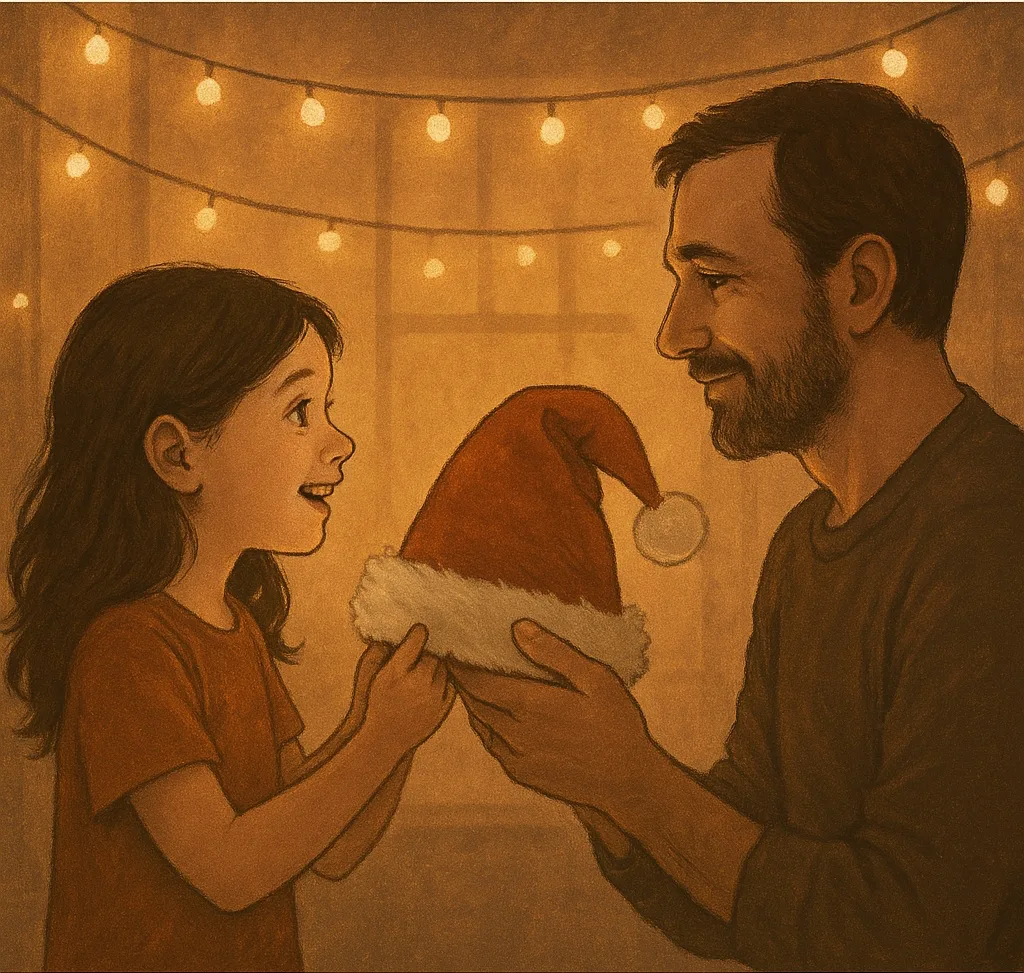
When my daughter was born, I made a decision I’d been carrying since I was four years old: I would never lie to her—not even about Santa Claus.
I remember waking up as a child and seeing my dad pulling a bicycle out of the trunk—one that I would “receive from Santa” the next morning. That single moment collapsed something fundamental. From then on, I saw my parents not as keepers of magic, but as liars. It wasn’t the truth that broke me—it was the betrayal wrapped in tradition, disguised as joy.
So I decided I wouldn’t do that to my child. I wouldn’t build wonder on deception.
In our house, Santa has always been “Momma and Dadda Santa.” The Tooth Fairy? Same thing. The joy is still there—the late-night rituals, the surprise gifts, the sparkle in her eyes when she finds a coin under her pillow—but it’s all framed in truth. The suspense still builds. The stories still flow. But they’re rooted in reality, not mythology.
And the wild thing? She hasn’t missed out on a single ounce of magic.
Because the truth—when delivered with care—isn’t dull. It’s luminous. I’ve found that reality, when framed with love and presence, is magical enough.
This commitment to honesty has given us something deeper than fleeting wonder: it’s built trust. Conversations that many parents dread—about death, bodies, God, fears—happen naturally and without fear. Not because we plan them, but because she knows Dadda will always tell the truth, in words she can understand.
And that’s where this expands beyond just Santa. Because honesty isn’t just about telling kids not to lie when they sneak a cookie. It’s about the culture we create as parents.
Too often, “honesty is the best policy” is applied one way—we expect our kids to be truthful, but we don’t always model that same transparency in return. We wrap lies in comfort. We dress them up as traditions. We tell ourselves it's harmless or cute. But underneath it all, something subtle is being taught: that truth is conditional, and that trust can be bartered away for fun.
But trust, once broken, is never quite the same. It changes the terrain of the relationship. Even in small ways, a lie introduces distance.
When I first left the Southern Baptist faith, I found myself drawn to ideas that honored personal awareness and sacred honesty. One book—The Celestine Prophecy—suggested that we treat children not as empty vessels, but as fully conscious beings capable of understanding anything, if spoken in a language they can hear. That rang true for me. I’ve seen it in my daughter again and again: kids can hold the complexity of reality—so long as we hold them through it.
She’s only seven, but the conversations we’ve shared already surpass what I thought was possible at her age. Not because she’s a prodigy, but because she’s been given the trust to understand.
So no, our daughter doesn’t believe in Santa as a distant magical man. But she believes in us. She believes that her parents won’t lie to her. And that belief—that grounding in truth—has given her a kind of joy that doesn’t fade when the costume comes off. It endures. It deepens.
Because when we choose honesty as a practice, not just a punishment or a rule, we teach our children something rare:
That truth is not something to fear.
That reality is enough.
That trust is the soil where wonder grows.