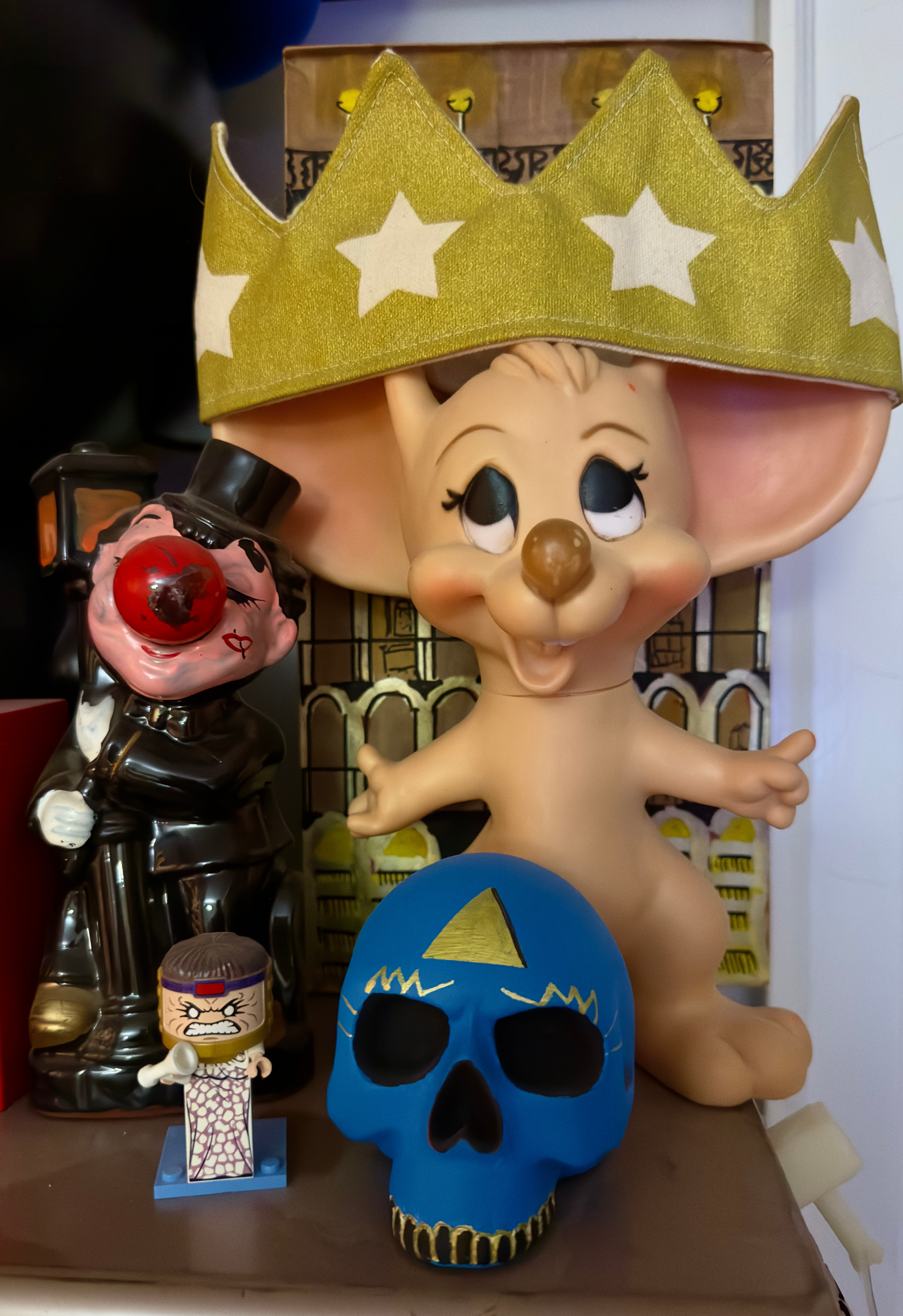
In a metaphysical system I once spent time around, laughter was considered uniquely powerful. Most energies had an opposite. Most forces had a pair. Every spell had some kind of counterspell, every movement had its reflection, and every serious little ritual seemed to exist inside a larger system of balance and opposition. But laughter was different.
Laughter, as I understood it then, had no opposite. It could dispel magic. It could scatter darkness. It could break evil’s concentration. I don’t believe that literally anymore, at least not in the way I did then.
I no longer think of laughter as some supernatural force floating through the universe, waiting to explode a curse like a glitter bomb of divine nonsense. But I also don’t think that old idea was entirely wrong. Maybe the magic was psychological. Maybe the evil was fear. Maybe the spell was the story we had become trapped inside.
Because laughter does have power. Not the power to erase pain, fix grief, undo trauma, or make hard conversations unnecessary. That would be avoidance. That would be using laughter as a door out of the room. But there is another kind of laughter, the kind that does not leave the room. The kind that stays present, looks directly at the absurdity, and refuses to kneel.
That kind of laughter is not avoidance. It is resistance. It is not a refusal to care. It is a refusal to let fear, shame, or pain become the only thing in control.
Sometimes seriousness becomes its own kind of trap. We start to believe that if something matters, we must approach it with a heavy face and a clenched jaw. We confuse solemnity with depth. We assume that the person who laughs must not understand the weight of the moment.
But I don’t think that’s true. Some of the funniest people I know are funny because they understand the weight. They have seen enough of life to know that reality is often ridiculous, heartbreaking, beautiful, unfair, and poorly organized. They laugh not because they are untouched, but because they are still here.
Laughter does not always mean, “This doesn’t matter.” Sometimes laughter means, “This matters deeply, but I will not let it become my god.” That distinction feels important to me.
Avoidant laughter changes the subject. Liberating laughter changes the atmosphere. Avoidant laughter protects us from feeling. Liberating laughter helps us feel without being swallowed whole. It gives the pain a little less authority. It reminds fear that it is not the only voice in the room.
Maybe that is why laughter can feel spell-breaking. A cult needs seriousness. Shame needs seriousness. Fear needs seriousness. False authority needs seriousness. Not the honest kind of seriousness that helps us care for one another, but the brittle kind that says, “Do not question this. Do not look too closely. Do not make fun of the costume.”
And then someone laughs. Not cruelly. Not dismissively. Not to wound. Just enough to reveal the frame. Just enough to remind everyone that the emperor may, in fact, be wearing a very dramatic hat.
That kind of laughter can bring us back to ourselves. It interrupts the trance. It loosens the grip of whatever story had started pretending to be absolute. It lets us breathe again.
I think that is why laughter has always felt sacred to me, even now. Not sacred in a precious or religious way. Sacred in the way a kitchen table can be sacred when everyone is exhausted and someone says the one stupid thing that makes the whole room crack open. Sacred in the way grief and laughter sometimes sit beside each other, not as enemies, but as old friends who know they are both telling the truth.
The opposite of laughter is not sadness. Sadness can laugh. Grief can laugh. Anger can laugh. Love can laugh. Fear can even laugh, once it realizes it does not have to run the whole show.
Maybe the real opposite of laughter is possession. Being possessed by fear. Possessed by shame. Possessed by certainty. Possessed by the seriousness of the story we are telling ourselves.
Laughter breaks that possession. It does not save us from being human. Nothing does. But it can save us from forgetting that being human is also strange, temporary, tender, and completely absurd.
So no, laughing is not avoidance. Not always. Sometimes laughter is the most honest thing we have left. Sometimes it is the spellbreaker. Sometimes it is how we stay.