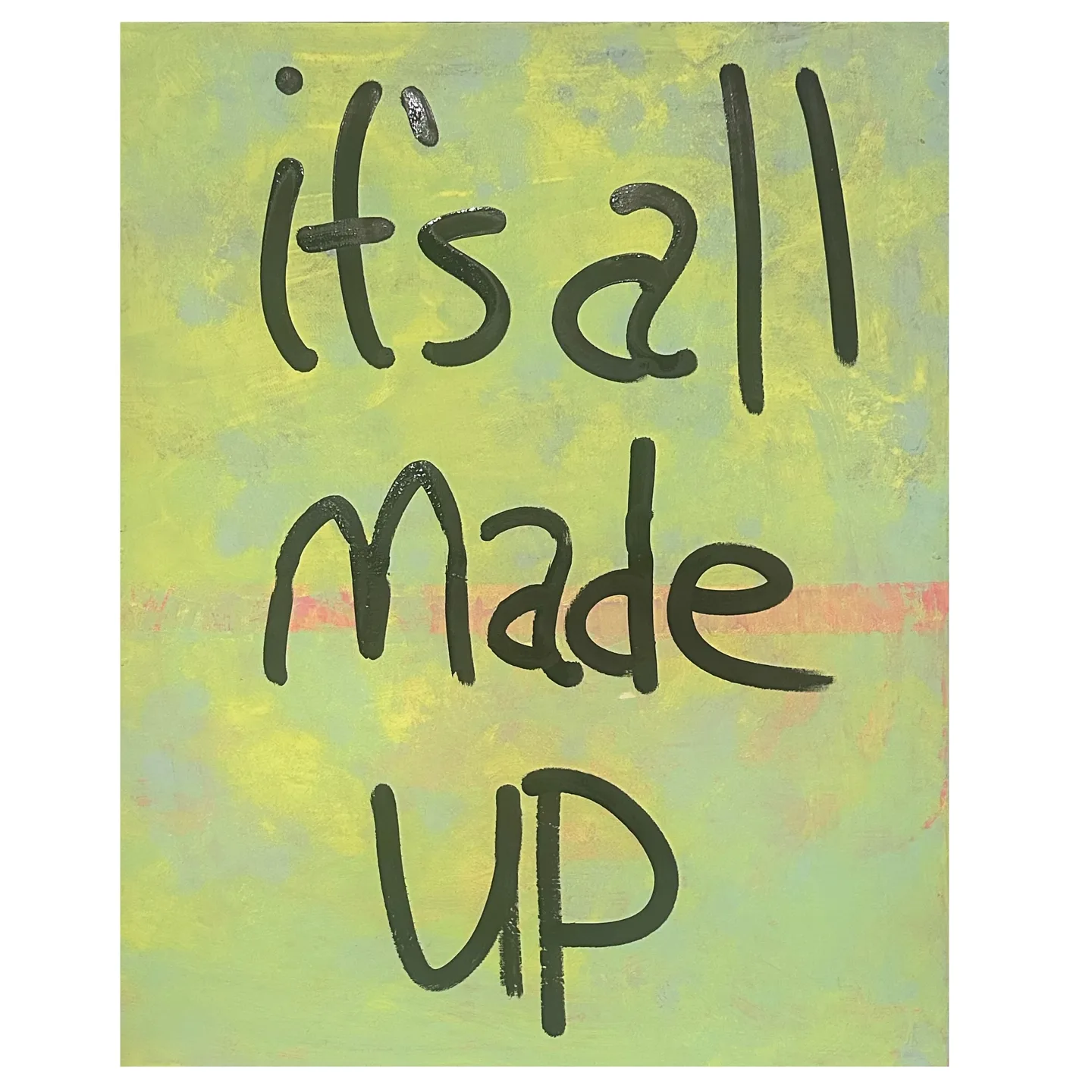
I was lying in a dentist chair with my mouth propped open, sharp tools scraping away at my gums, and the thought hit me:
We kill each other over ideas someone made up.
Not just in an abstract way. I mean, we fight wars, build borders, pass laws, and destroy lives because someone—somewhere—told a story long ago that we’re still acting out like it’s scripture.
Countries. Religions. Flags. Races. Economies. Even the idea of “me” and “you.”
Every one of them—a fiction.
But not just any fiction: a collective hallucination we’ve come to treat as reality itself. So much so that when someone challenges the hallucination, we don’t just feel discomfort—we feel rage. Threat. Justification for violence.
And all I could do while that hygienist scraped beneath my gumline was wonder:
How did we let pretend become sacred?
We’re not just living in a made-up world.
We’re dying in one.
A flag is just a colorful rectangle. A religion is a set of metaphors wrapped in moral codes. A border is a line on a map pretending to be a wall.
But we inject them with meaning. Then treat that meaning like physics.
And when people try to cross those lines, question those metaphors, or be a kind of human the myth didn’t account for—we treat it like heresy. Or invasion. Or war.
Somewhere along the way, we forgot we were the authors.
We started acting like characters trapped in someone else’s script—and anyone who didn’t stick to the story became the villain.
That’s where Mirror Theory comes in.
Through my Mirror Theory lens, we’re always encountering ourselves in others—their beliefs, behaviors, even their existence reflect something back at us.
But what happens when that reflection doesn’t match the image we’ve constructed?
When it shows a truth we don’t want to see?
We don’t adjust. We attack.
We try to shatter the mirror instead of update our identity.
This is how people end up defending a “self” that doesn’t even exist anymore—just to avoid the discomfort of being changed by what they see in others.
We’re not fighting over land or truth.
We’re fighting over the right to keep pretending.
If it’s all made up—then there’s liberation in the absurd.
Because once you realize the scaffolding of reality is narrative, you can stop clinging.
You can play. You can choose stories worth living in.
Not perfect ones. Not dogmas. But useful fictions. Healing myths. Invented meanings that invite expansion instead of fear.
What if a nation wasn’t a border, but a song?
What if identity wasn’t a costume, but a dance?
What if religion wasn’t a courthouse, but a conversation?
Of course, letting go of sacred stories isn’t easy. Even when they hurt us, they feel like home. Unmaking them—rewriting them—takes real courage.
But we don’t need to kill for our made-up truths.
We can laugh for them.
We can build with them.
We can rewrite them as we go.