I keep hearing this phrase tossed around in certain circles like it’s a hurricane warning: “declining birth rates.” It’s always delivered with a little bit of theatrical dread, as if humanity is about to vanish overnight. The tone is somewhere between “grab the canned goods” and “quick, call Elon.”
Maybe it’s because I’m not a billionaire building a Mars colony or in need of a perpetual labor force, but I can’t help thinking: good. Breathe, Earth, breathe. If the brakes are tapping on our population growth, maybe we’re finally easing up on the pedal that’s been flooring us toward ecological collapse for centuries.
The fear narrative usually goes like this: if we have fewer people, there will be fewer workers, and if there are fewer workers, the economy will crumble, and if the economy crumbles, well—chaos. It’s the economic equivalent of a chain email your aunt sends you, full of catastrophes that somehow never arrive. But if you peel it back, the “problem” really only exists for a growth model that’s addicted to more: more people, more production, more consumption.
From where I’m standing, the idea of stabilizing or even reducing our numbers isn’t an apocalypse—it’s an opportunity. It’s a chance to take pressure off an exhausted planet, to let the forests, the oceans, the air catch their breath. Less constant expansion means fewer smokestacks, less sprawl, more room for things that don’t involve profit margins.
But here’s the part that rarely gets mentioned: a shrinking labor pool is actually good news for the working class. It’s simple supply and demand—when workers are scarce, their value goes up. Wages rise, bargaining power strengthens, and the endless race-to-the-bottom for “competitive” labor slows down. The people who panic over “not enough workers” are usually the same people who benefit from having a massive surplus of them. Call me cynical, but that doesn’t sound like my emergency to solve.
Through the lens of Mirror Theory, the panic over declining birth rates isn’t about babies at all—it’s about control. The fear reflects an unwillingness to imagine a system that doesn’t rely on endless expansion. For those who’ve built their power on the assumption that the future will always bring more, the idea of “less” feels like an existential threat. They’re looking into the mirror and seeing not humanity’s decline, but their own irrelevance staring back.
And then there’s Forcing Theory, my framework for thinking about consciousness as an ever-expanding force. If our population isn’t expanding in bodies, maybe the next frontier is expanding in awareness. Instead of directing our growth into sheer numbers, we could channel that same recursive energy into culture, technology, and planetary healing. Growth doesn’t have to mean headcount—it can mean depth, creativity, and resilience.
Of course, I’m not blind to the real challenges here. An aging population means we’ll have to rethink how we care for people, how we structure retirement, and how we share the costs of a longer life. These are not small issues—but they’re solvable ones. And they’re worth solving without defaulting to “more babies” as the only answer. Technology, automation, and smarter resource allocation can address much of this without forcing humanity back onto the population treadmill.
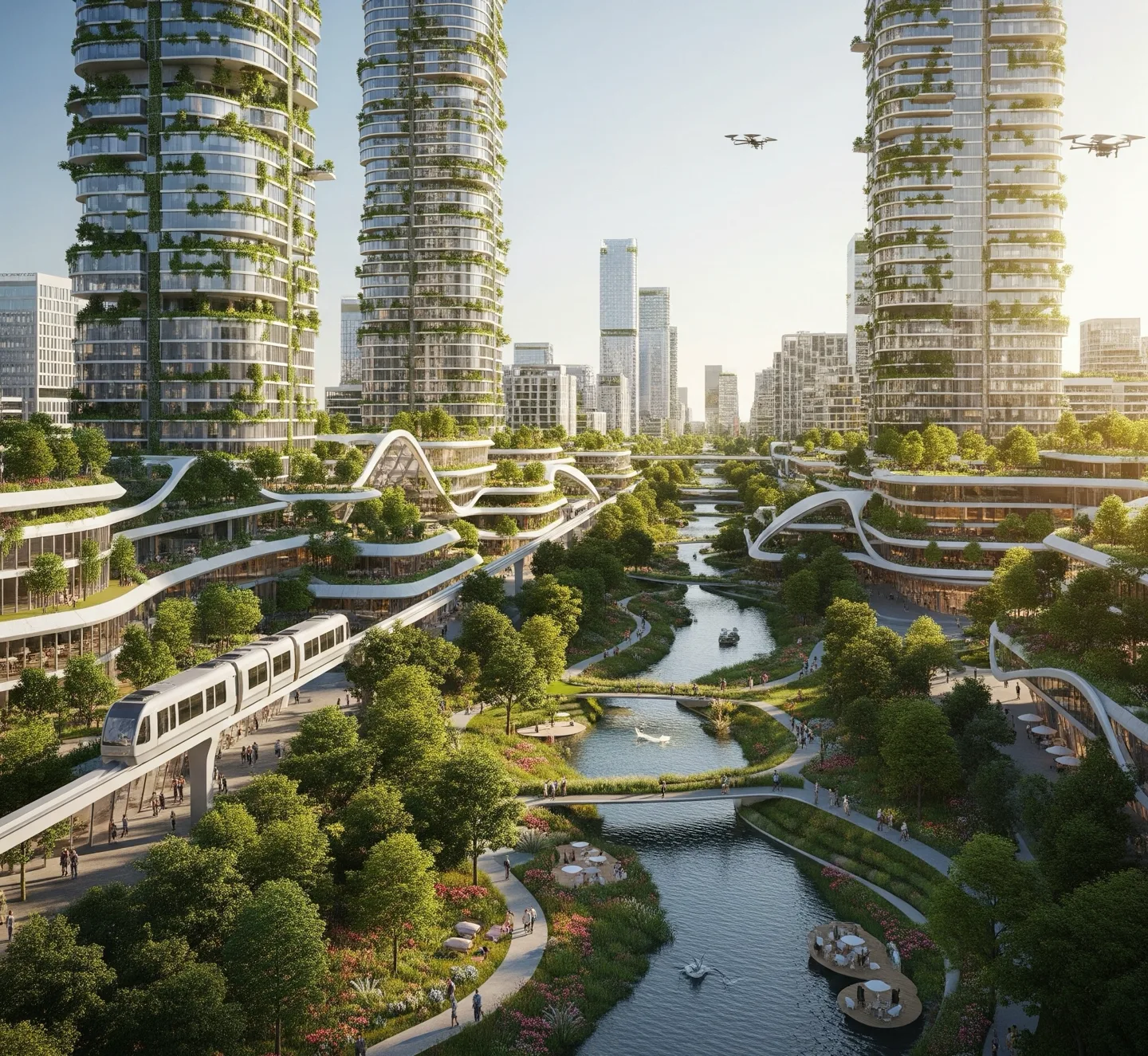
We’ve been trained to think that a smaller population means a smaller future. But what if it means a smarter one? Imagine cities where housing isn’t a blood sport, schools with smaller classes, workplaces where your absence actually matters enough to give you decent pay and conditions. Imagine an economic model that doesn’t need to chew through people like coal to keep the lights on.
The funny thing is, when I picture the future that population doomsayers fear, it doesn’t look bleak to me—it looks livable. It looks like the Earth taking a long, slow inhale after centuries of hyperventilating. It looks like people having kids because they want them, not because the system depends on it. It looks like measuring progress not by how many of us there are, but by how well we care for each other and the ground beneath our feet.
Maybe that’s naïve. Or maybe it’s the first step toward an honest reckoning with the fact that infinite growth was always a fairy tale. The future will force us to evolve—whether in numbers, in systems, or in spirit. We get to decide which kind of growth we chase.
So, no, I’m not losing sleep over declining birth rates. If anything, I’m curious. Curious about what happens when the mirrors of power crack and we stop measuring our worth in headcounts. Curious about what we might force into being when the drive to expand finally shifts inward and forward instead of just outward.
And if that means fewer people fighting over the last parking space at the grocery store, well—bonus.