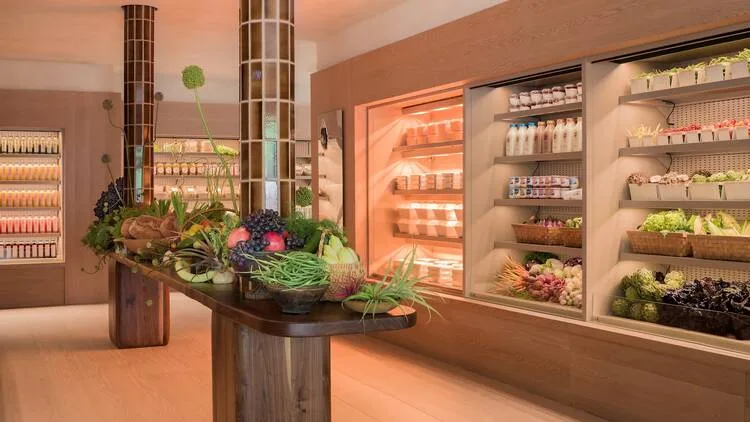
Welcome to Meadow Lane—where enlightenment is sold by the ounce, virtue comes with a barcode, and the produce has a higher credit score than most Americans. This is the Erewhon of the East, the cathedral of curated delusion, the luxury temple where the gospel of scarcity is preached with fluorescent lighting and soft jazz.
Don’t let the reclaimed wood and hand-lettered chalkboards fool you—this isn’t about health, or taste, or even aesthetics. It’s about separation. This is a shrine to the holy act of overpayment, a marketplace where the soul is purified by how much you’re willing to spend on things your neighbor can get for $2.99. Meadow Lane doesn’t sell groceries. It sells absolution through exclusivity, redemption through overpayment, salvation via artisanal markup. You aren’t buying better food; you’re buying permission to look down on anyone who shops at a normal grocery store.
Here, a $19 watermelon is a badge of spiritual superiority, and the kombucha is brewed not for flavor but for class signaling. The miracle isn’t that people fall for it. The miracle is that they believe they’re being elevated. That by paying $28 for coconut yogurt, they have transcended the pedestrian world of average consumers. That a $17 smoothie contains not just adaptogens, but moral superiority. This is capitalism in its final Pokémon evolution: a wellness golem sculpted from privilege and polished with organic sesame oil.
Here, identity is curated by purchase history. Self-worth is indexed by how unnecessary your spending is. To buy the common at uncommon prices is the ritual. To participate in this absurdity with dead seriousness is the sacrament. And to scoff at those who question it is the closing of the circle. It isn’t just late-stage capitalism. It’s late-stage meaning. And you too can sip from its hollow cup—so long as you can afford the $14 glass bottle it comes in.
They’ve turned groceries into a caste system—one where enlightenment is paywalled and morality is measured by your receipt length. It’s not evil because it’s expensive. It’s evil because it tells you your value increases the more you remove yourself from others. That the poor are unhealthy because they lack virtue. That wellness is a privilege of the worthy. That worth can be bought, and it’s priced by exclusion.
Meadow Lane is not a grocery store. It’s a theatre of the absurd where the audience has forgotten they’re in a comedy. It’s what happens when capitalism runs out of new things to sell and starts selling the meaning of things already owned. The tragedy isn’t that they charge so much. The tragedy is that people walk out feeling holy—when all they bought was groceries wrapped in a delusion.