We used to joke that the future would look like a sci-fi dystopia.
Turns out we were right—except it’s sleeker, more seamless, and available for 20% off with a subscription.
The phrase “Late Stage Capitalism” has become a kind of cultural shorthand, a meme muttered half in despair, half in resignation. It’s what we say when we see billionaires launching themselves into space while teachers buy their own pencils. It’s the nervous chuckle we offer when the Uber Eats driver brings us dinner from a restaurant that’s just a rented kitchen in a warehouse, optimized for branding, not cooking.
The joke is that it’s not a joke anymore.
This is it. The system is still running, but only by eating its own logic.
What Is Late Stage Capitalism?
Let’s move beyond vibes and define the beast.
1. Economically, it’s the stage where:
Monopolies replace competition (Amazon sells everything, so nobody else really has to).
Financial speculation makes more money than actual labor (your landlord earns more by waiting than you do by working).
Gig work replaces stable employment—people juggling four jobs without benefits are called “entrepreneurial,” not exploited.
It’s an economy where value is no longer created—it’s extracted.
2. Culturally, it’s a snake eating its tail:
Dissent is commodified. Protest signs become ad slogans. Rage gets licensed by Nike.
Individuality is a product category. Your identity is something you subscribe to.
Nostalgia cycles have replaced innovation. We keep rebooting the past because the present can’t imagine itself.
We’re not building new futures. We’re just remixing old ones with better filters.
3. Psychologically, it’s exhaustion dressed up as empowerment:
Burnout is reframed as a lack of discipline.
Therapy becomes a luxury. Rest becomes a flex.
“Do what you love” becomes the moral justification for underpaying you.
It’s a system that breaks your spirit, then sells you courses to reclaim it.
Collapse Isn’t Coming—It’s Here (But Pretty)
This is the part where people ask:
Is the system going to collapse?
But that assumes we’re still in a “before.”
Collapse isn’t some future event. It’s a condition. And we’re in it.
The signs are everywhere, but they look like updates:
Infrastructure decays, but the apps get smoother.
Healthcare fails, but AI therapy gets an upgrade.
Climate unravels, but the weather app adds more emojis.
The bones are cracking, but the skin is moisturized.
The absurdity of our condition isn’t on the horizon—it’s on the menu. And if you look closely, you’ll notice something strange:
Every meal starts to taste the same.
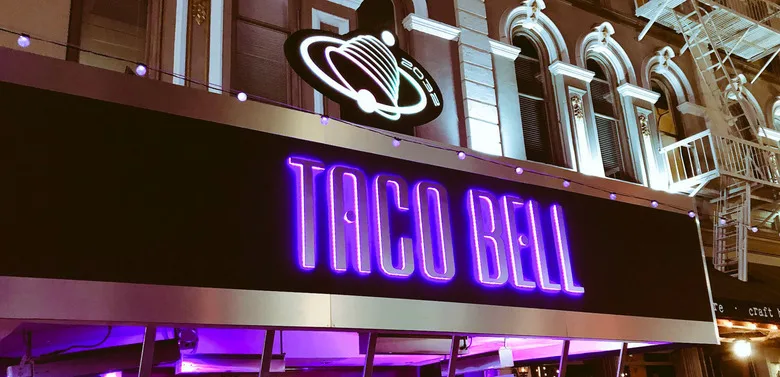
Maybe the best metaphor for where we are comes not from Marx, but from Demolition Man:
Every restaurant is a Taco Bell.
This was a joke. A throwaway dystopian detail.
But like most satire, it turned out to be prophecy.
We live in a world where:
Every product is a brand.
Every meal is a menu engineered by data.
Every algorithm feeds you the same content, slightly tweaked for your profile.
Choice becomes illusion.
Diversity becomes aesthetic.
Capitalism offers you a thousand colors of the same beige.
Everything is Taco Bell.
The Mirror Is Warped
In Mirror Theory, every person, institution, and event reflects something back to us—about who we are, what we value, what we’re willing to tolerate.
But under Late Stage Capitalism, the mirrors are warped. They distort us. They reflect back a version of humanity that’s always hustling, always consuming, never enough.
We don’t just see ourselves in the funhouse mirror—
we start adjusting our posture to match the distortion.
Capitalism has become a cathedral of reflections built on fear. And we wander through it thinking the distortion is real.
Where We Are Now
We are not waiting for collapse.
We are already inside it.
We’re just scrolling through it in high resolution.
This is the phase where the machine still moves, but without purpose—grinding through people, planet, and meaning alike, not out of malice but out of inertia.
Late Stage Capitalism doesn’t need to win. It just needs to persist.
And right now, it’s doing that by rebranding its own decay as innovation.
So no, the system won’t end with a bang.
It will end with a frictionless checkout page—optimized for user retention.
But beneath the branded noise, something older is stirring.
A kind of refusal. A kind of remembering.
We’ll go there next.