Jettie has only been back in school a few days and the parenting opportunities are already arriving at full speed.
After her second day, she came home and told Mary Ann and me that another student had gotten in serious trouble for using inappropriate language. Our house has never really had rules about “bad words.” We’ve always taught Jettie that words have different amounts of power, and that some should be used more carefully than others. If a situation genuinely requires a “fuck,” I’m not going to pretend the English language has provided us with something better.
Despite this extremely liberal household policy, Jettie is almost comically vigilant about profanity. She doesn’t like accidentally saying curse words and will sometimes worry about watching or listening to something that contains them. It’s adorable, especially considering her parents.
So when she told us another student had gotten in trouble for cursing, Mary Ann and I immediately started reminding her that different families and schools have different rules about language.
Jett interrupted us.
This was different.
The girl had said a word Jettie had never heard before, and the teacher’s reaction made it obvious that this wasn’t just someone accidentally saying “shit” in second grade.
After asking a few questions and trying to figure out what she had heard, Mary Ann and I began to suspect it was the N-word.
That changed the conversation.
I knew I wanted to talk with Jettie about it myself, but I didn’t want to casually introduce the word into her vocabulary based on a guess. So the next morning I told her there was something serious I wanted to discuss. We decided we’d talk about it on the drive to get donuts before school.
I asked her to tell me again what had happened. Then I explained that I was going to say a word one time and only one time, because I needed to know whether it was the word she had heard.
I was surprised by how difficult it was to make myself say it.
I grew up in rural Oklahoma before the turn of the century, and I have heard that word plenty of times. I’ve been in arguments over it. I’ve been in fights over it. But as far as I can remember, I had never actually spoken it myself. It is simply a word I do not believe a white man like me has any business using.
I said it once. Jettie immediately told me that was the word.
And then we talked.
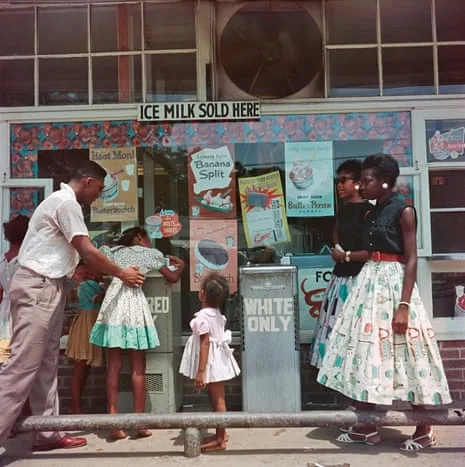
We talked about slavery. We talked about how human beings were treated as property and subjected to cruelty that is difficult for an eight-year-old to fully comprehend because, frankly, it should be difficult for anyone to comprehend. We talked about how racism didn’t disappear when slavery ended, and how systems and attitudes built over generations have continued making life harder and more dangerous for people because of the color of their skin.
I tried to explain that this word carries all of that history with it.
I also wanted her to understand something she was eventually going to notice anyway: she may hear Black people use versions of that word with one another, including in plenty of the music we listen to. So I tried to explain reclamation in a way that made sense to an eight-year-old.
I asked her what would happen if she looked at me and said, “Dada, you’re so stupid.” She laughed. In our family, we talk like that sometimes. We know the relationship underneath the words. We know when we’re teasing. Then I asked what would happen if someone else walked up to her and said, “Your Dada is stupid.”
Her entire demeanor changed. Jettie is extremely protective of her Dada.
Exactly, I told her. Sometimes people inside a family or community can use language with one another because there is a shared relationship and history underneath it. That doesn’t automatically give someone outside that relationship permission to use the same language. In parts of the Black community, a word that was used for generations to degrade and dehumanize people has been reclaimed and used differently among themselves. That doesn’t erase its history, and it doesn’t mean every Black person likes or uses it. It means context, relationship, and history matter.
She understood immediately.
That example probably did more work than anything else I said.
I explained that when someone who looks like us uses that word to describe another person, it reaches backward into a long history of people who looked like us declaring that other human beings were somehow less human.
And that is the opposite of what our family believes.
I don’t believe Jettie inherited guilt for anything people did before she existed. I don’t believe I inherited it either. I wasn’t sitting inside the minds of people two hundred years ago, or one hundred years ago, making their decisions for them. But history doesn’t require personal guilt in order to require understanding. We don’t have to feel responsible for creating the past to be responsible for seeing it clearly.
That distinction matters to me.
There is a temptation when teaching children about racism to simplify everything into heroes and villains. Good people would never do these things. Bad people did them a long time ago. We know better now. But history is more uncomfortable than that.
Ordinary people participated in horrific systems. People who loved their children, went to church, worked jobs, laughed with friends, and probably believed themselves to be decent people also participated in or benefited from cruelty toward other human beings.
People who looked like us.
I want Jettie to understand that, not because I want her carrying shame for something she didn’t do, but because I don’t want her imagining injustice as something committed only by cartoon monsters. Human beings create these systems, often while convincing themselves that what they are doing is normal, justified, or simply the way the world works.
That seems like an important thing to know early. We also talked about what she should do if she hears language like that again.
My instinct as an adult may be to let someone know very clearly that they won’t be using that word around me. But Jettie is eight. It is not her job to police the language of everyone around her. It is not her responsibility to confront every person who says something hateful. I don’t want to turn moral awareness into a burden she feels obligated to carry into every room.
Her responsibility is simpler: know what you believe, know what you will participate in, and know that if people are using the language of hate, you are always allowed to leave. By the time we finished talking, we had arrived at the donut shop. The timing felt almost perfect.
One moment we were talking about slavery, racism, hatred, history, and the terrifying capacity human beings have to convince themselves that other human beings matter less. A few minutes later, she was deciding what kind of donut she wanted. Which is probably exactly how conversations like this should end when you’re eight.
I don’t want to protect my daughter from the truth about the world. I also don’t want the truth about the world to steal her childhood before it has to.
My job, as best I can tell, is to give her enough truth to understand what she encounters, enough context to recognize hatred when she sees it, and enough freedom to put down what isn’t hers to carry.
Then, whenever possible, we go get donuts.