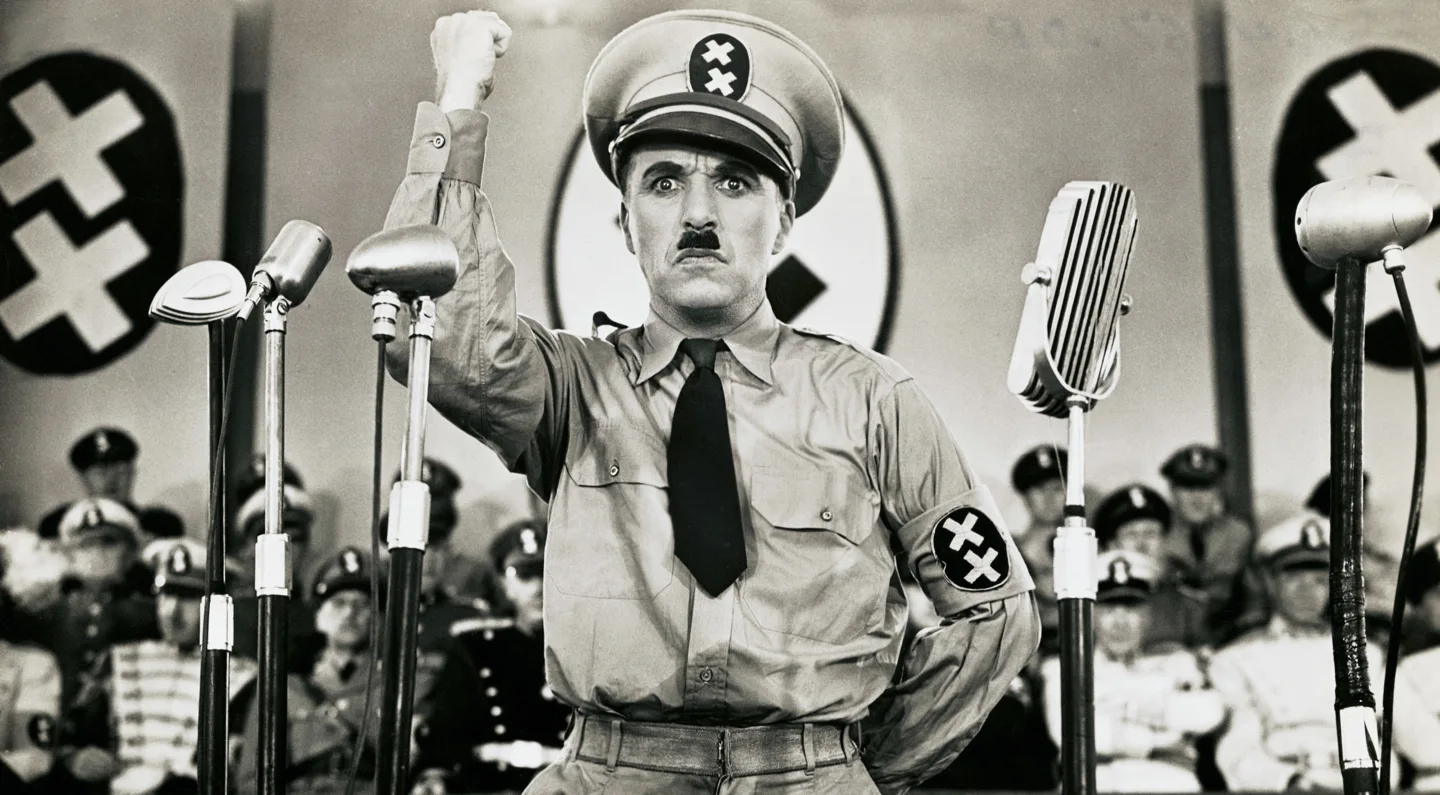
There’s a complaint that resurfaces every few months like a political groundhog: “All art is liberal.” It’s usually delivered as if someone has uncovered a secret cabal of watercolorists meeting in a candlelit basement to destabilize the republic through interpretive dance.
It’s an odd accusation. Paintings do not caucus. Jazz does not lobby Congress. A sculpture has never once knocked on a suburban door to discuss zoning policy. Art does not care about your party affiliation. What art does—dangerously, persistently—is ask, “What if?”
And “what if” is a destabilizing sentence.
Great art requires a set of psychological conditions that make authoritarian systems twitch. It requires the ability to say, “I might be wrong.” It demands experimentation without guaranteed outcomes. It thrives on ambiguity. It tolerates contradiction. It invites public failure. It assumes that meaning is discovered, not dictated. In other words, great art is structurally allergic to certainty.
Authoritarianism, meanwhile, runs on certainty the way engines run on fuel. It prefers fixed narratives, clean hierarchies, and heroes with granite jawlines and suspiciously symmetrical cheekbones. It does not enjoy ambiguity; it classifies ambiguity as weakness. Where art opens space, authoritarian systems install guardrails. Where art lingers in questions, authoritarianism provides laminated answers.
This is where the tribal paradox creeps in.
People who complain about “liberal art” often consume enormous amounts of art—music, film, architecture, fashion—so long as it flatters their identity. If the story reinforces the tribe, it’s called culture. If it questions the tribe, it’s called propaganda.
But here’s the uncomfortable question: if art exists only to confirm that “we are right,” is it still art? Or has it crossed the border into reinforcement?
Art that only says “we are correct” stops exploring. It becomes a mirror for the ego instead of a mirror for reality. It ceases to ask “what if?” and starts chanting “of course.” At that point, it isn’t discovering anything. It’s rehearsing certainty.
And rehearsal is not the same thing as creation.
This is why state-sponsored art under rigid regimes drifts so predictably toward propaganda. The aesthetics may be grand—colossal statues, heroic murals, buildings that look like they were designed by a geometry teacher who just discovered dominance—but the outcome is predetermined. The function is reinforcement. Affirm the myth. Glorify the leader. Freeze the narrative in bronze and call it culture.
Even architectural styles I personally adore, like brutalism, were often absorbed into this monumental aesthetic of permanence. Yet the best brutalism feels less like obedience and more like confrontation. It shows you the concrete. It refuses to disguise itself as marble. It exposes its structure instead of hiding it. That exposure is the shrug. It says: this is what I am made of. Propaganda, by contrast, hides its scaffolding because it needs you to believe in inevitability, not construction.
The difference is subtle but decisive. Art reveals the process. Propaganda conceals it.
When critics say “all art is liberal,” what they are really reacting to is art’s refusal to close the loop. Art destabilizes identity. It refuses to salute on command. It does not politely reinforce the pre-written story. Instead, it wanders off script and asks whether the script makes sense in the first place.
That small question mark is radioactive in systems that depend on exclamation points.
The irony is thick enough to sculpt. Many of the same people who claim to defend culture love art—but only once it has been domesticated. Once it stops questioning and starts affirming, it becomes safe. Once it echoes certainty, it becomes acceptable.
But safety is not the soil in which great art grows. Great art grows in oxygen-rich environments of doubt, risk, revision, and the terrifying possibility that you might be wrong in public.
Remove that oxygen, and you do not get stronger art.
You get marble statues with very confident jawlines and absolutely no sense of humor.