What does capitalism reveal about us when we see it as a mirror? Albert Einstein, in his seminal essay Why Socialism?, wrote with the urgency of a scientist observing a flawed experiment in human organization. He argued that capitalism, by its very nature, breeds inequality, alienation, and the degradation of human dignity. Decades later, those words resonate more than ever — but the lens through which we view the problem must evolve.
Our consciousness shapes reality, yet most of us are trapped in a system that distorts our reflection. Capitalism mirrors back our collective momentum, prioritizing consumption, competition, and profit above all else. But what if we could step closer to the mirror — closer to ourselves — and ask: Is this the world we want to create? To answer this question, we must reframe Einstein’s call for socialism through the lens of consciousness, absurdism, and interdependence.
Capitalism thrives on scarcity, not just of resources but of time, connection, and meaning. Einstein noted how its competitive drive rewards not collaboration but domination. To exist within capitalism is to navigate a system that reduces people to cogs in a machine, eroding not just social bonds but the very sense of self. As Einstein put it, “the individual is deprived of the chance to enjoy a simple, authentic existence.”
Here, absurdism offers an unsettling clarity. Absurdism acknowledges the fundamental conflict between humanity’s search for meaning and a world that provides none. Capitalism exploits this dissonance, offering a false salve: consume, achieve, and compete, it says, and your reflection in the societal mirror will be one of worth. Yet this reflection is hollow, distorted by a system that feeds on our existential confusion.
The mirror theory deepens this critique. Our mirrors — relationships, experiences, societal structures — are where we encounter ourselves. Capitalism, as a dominant societal mirror, reflects our shallowest impulses: greed, ego, and a frenetic grasping for external validation. In this feedback loop, we become more fragmented, more alienated. The mirror doesn’t lie, but it does demand we question the truth it reveals.
Einstein saw education as the cornerstone of a better system, arguing it must nurture not just intellectual independence but a sense of responsibility for others. Yet in a world where education is increasingly commodified, how can it fulfill this purpose?
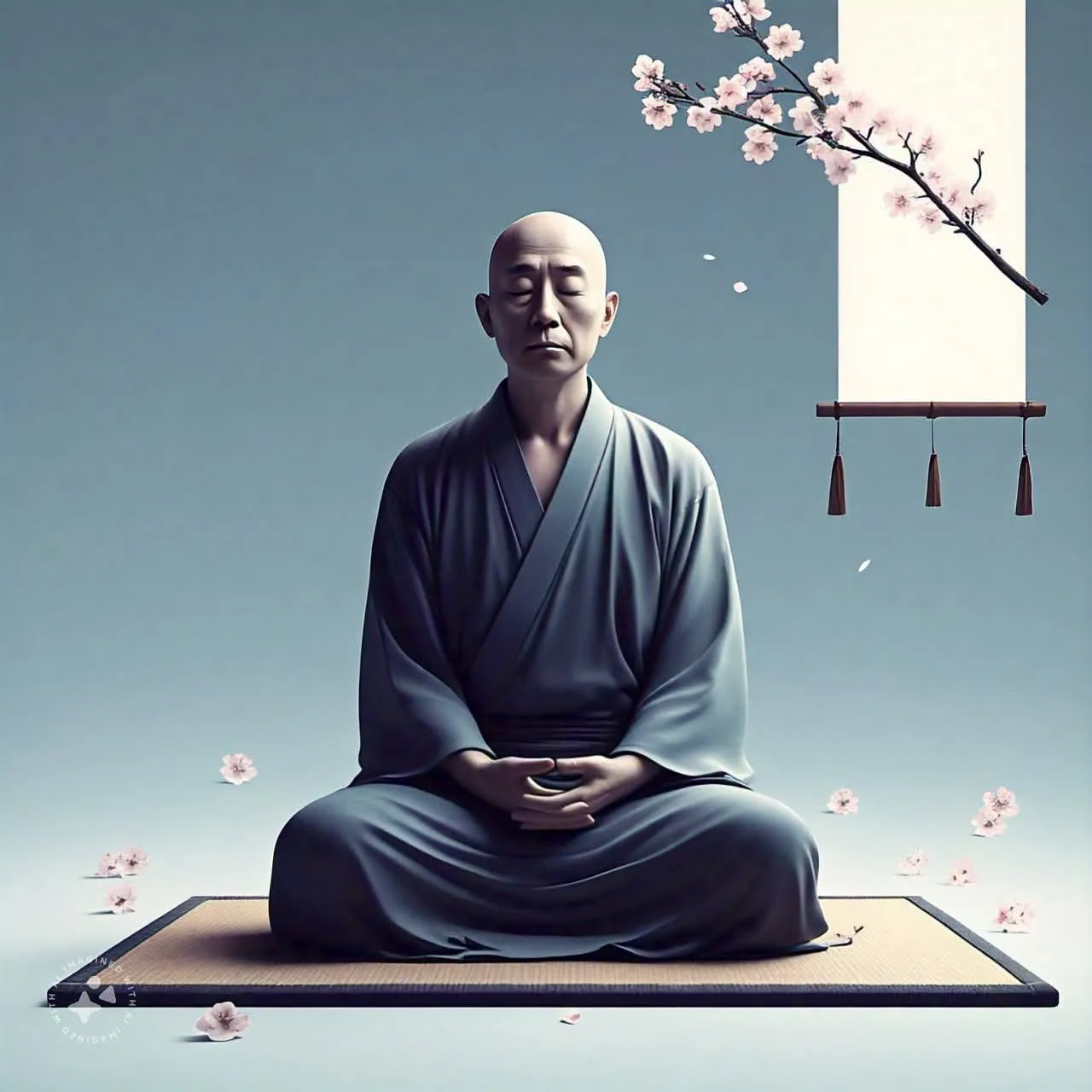
Here, Zen practices offer a radical alternative: education must teach not only knowledge but presence. It must guide individuals toward what I call the mirror state — a space of clarity, where the ego dissolves, and the self reflects both inward and outward in harmony. In the mirror state, we meet ourselves not as fractured pieces but as whole — aware, still, and profoundly connected to all that is reflected back.
Imagine an education system rooted in mindfulness, absurdist inquiry, and collective reflection. Students would not merely memorize facts but explore questions that strip away the need for resolution: What does it mean to live authentically? What is my responsibility to others? In cultivating the mirror state, education would nurture individuals who are both self-aware and deeply interconnected, ready to challenge the systems that perpetuate alienation.
Socialism, for Einstein, represented more than an economic system; it was a moral imperative. He envisioned a society where human dignity replaced profit as the guiding principle, where collaboration supplanted competition. Through the lens of consciousness, socialism becomes not just a practical solution but an existential alignment. It acknowledges what capitalism denies: our profound interdependence.
Absurdism also finds resonance here. If life lacks inherent meaning, then socialism becomes a deliberate creation of shared meaning, the least absurd option in a chaotic world. It is an act of rebellion against the forces of fragmentation, a collective decision to embrace solidarity over isolation. Socialism mirrors the interconnectedness of the human experience: the recognition that our flourishing is bound together, that the self and the other are reflections of the same whole.
If society is a mirror, reflecting what we choose to create, how will we craft the image staring back at us? This is not a question of abstract philosophy but one of urgent practicality. To embrace socialism is to reimagine the systems that shape our lives, to create mirrors that reflect not alienation but connection, not scarcity but abundance. It is to recognize that the structures we build shape not just our world but our very selves.
In Einstein’s words, “Man can find meaning in life, short and perilous as it is, only through devoting himself to society.” Today, that devotion must extend beyond survival to transformation. The mirror is waiting. What will we see?
Thanks for reading! Subscribe for free to receive new posts and support my work.