My daughter had a meltdown the other day.
Nothing extraordinary—just the kind of emotional flood that seems to arrive without warning when you’re eight. Big feelings. Sharp words. The kind that land harder than they’re meant to. We did what parents do. We held space. We stayed steady. We waited for the storm to pass. And afterward, in the quiet that follows emotional weather, we talked.
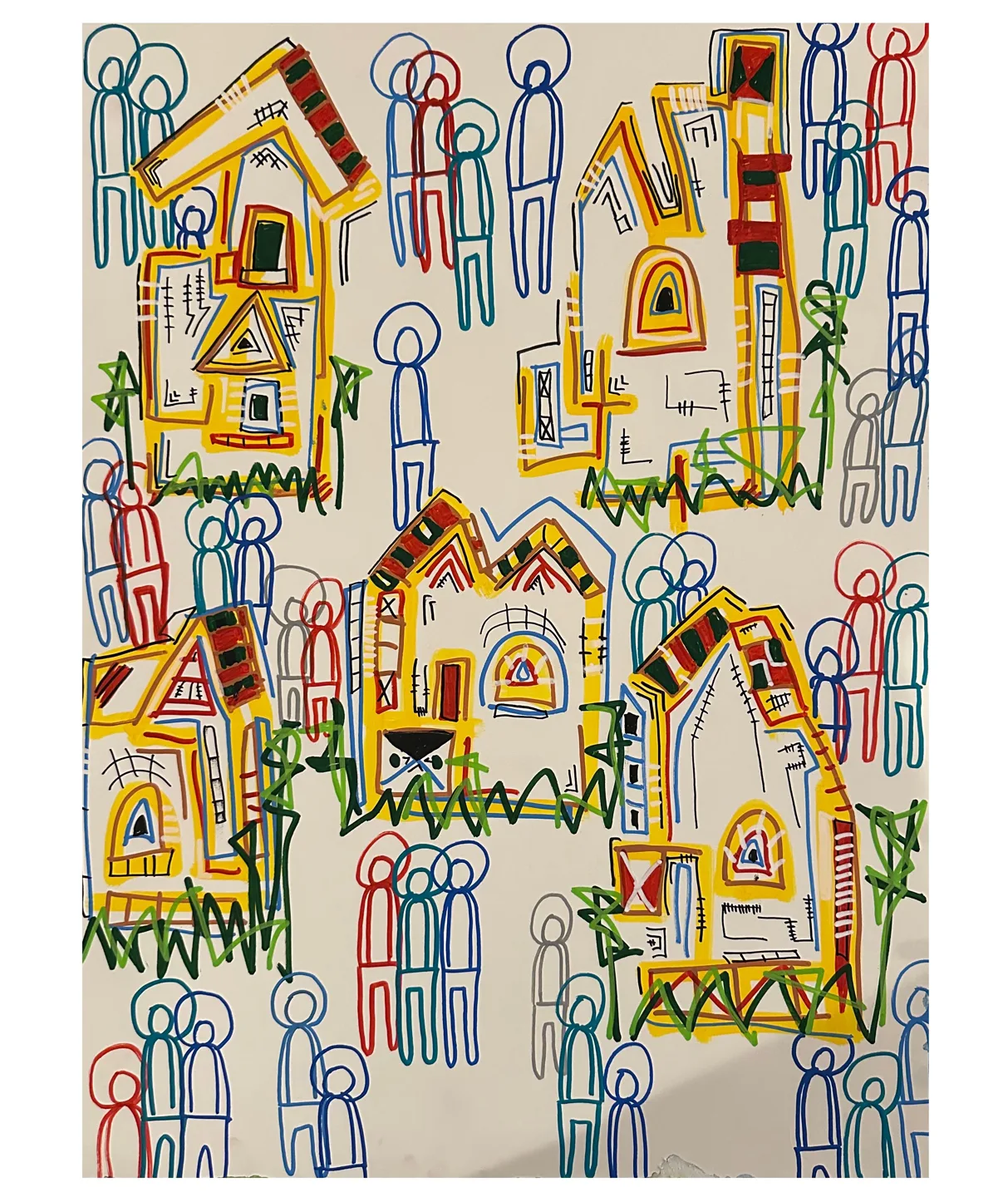
Somewhere in that conversation, I told her something I wish someone had told me when I was her age: Mama and Dada are just little kids inside older bodies. I watched her face shift—not fully understanding, but recognizing something in it.
Because it’s true.
We like to pretend that age grants us some kind of emotional authority. That growing up means growing out of things—fear, hurt, insecurity, confusion. But that’s not really what happens.
What happens is we learn. We learn how to regulate (sometimes), how to hide (often), how to carry things without dropping them in public.
But underneath all of that, we are still the same person we were at eight.
We still feel things just as deeply. Our feelings still get hurt. We still get scared in ways we don’t always admit. We still want to be seen, understood, and loved without conditions.
The only real difference is time.
Time has given us context, patterns, and language—a slightly wider gap between feeling and reaction, if we’ve practiced. But the core is unchanged.
And when we forget that, something subtle breaks in our relationships with our children. Because from their perspective, we become something else entirely—something distant, something unrelatable, something that “doesn’t feel like this anymore.”
But we do. We absolutely do.
And the moment we admit that—not as a tactic, but as truth—something opens.
A bridge.
Because now it’s not us versus them—the regulated versus the chaotic, the adult versus the child. It’s just two humans at different stages, feeling the same fundamental things. One with less experience navigating them, one with more responsibility in how they respond.
That’s it.
And from that place, understanding becomes possible in a way that control never achieves.
When a child realizes, “You feel this too…” they don’t feel corrected. They feel seen. And maybe more importantly, they begin to understand that what they’re feeling isn’t wrong or broken—it’s human.
The work then shifts. It’s no longer about suppressing emotion or “behaving better.” It becomes about learning how to be with what arises—something most of us were never taught, and something many of us are still learning in real time, alongside them.
So maybe the invitation isn’t to become some perfected version of adulthood that children can’t relate to.
Maybe it’s to become more honest. More transparent. More willing to say, “I feel this too. I just have more practice carrying it.”
Because that’s the truth.
We are not finished products guiding unfinished ones. We are the same being—just further down the path, holding a flashlight instead of standing in the dark.
Still human. Still feeling. Still, in many ways—eight years old.