A couple of weeks ago, we went to Boulder for a short vacation and stayed with one of my oldest friends, Jacey. When I say oldest, I mean that literally. We became friends in the fifth grade, and she is the only person from high school or earlier who is still actively part of my life. Our lives have been tangled together for so long that the relationships stopped belonging exclusively to us decades ago. I introduced her to Mary Ann when Mary Ann and I started dating in high school, and later the two of them became roommates in college and developed a friendship of their own that has lasted ever since. We love Jacey’s husband, and we love their daughter, who is only about a year older than Jettie. At this point, they are less friends than one of those strange little branches of chosen family that forms simply because enough life has been lived together.
Jacey is also a physician assistant and one of the smartest people I know. There are very few people whose judgment I trust almost instinctively, but she is one of them. Not because I assume she is always right, but because I know how seriously she thinks and how much experience sits behind her observations. When Jacey tells me she has noticed something, I listen. Which makes it funny that the conversation that has been bouncing around in my head for the past two weeks was not some great philosophical discussion. It happened almost in passing.
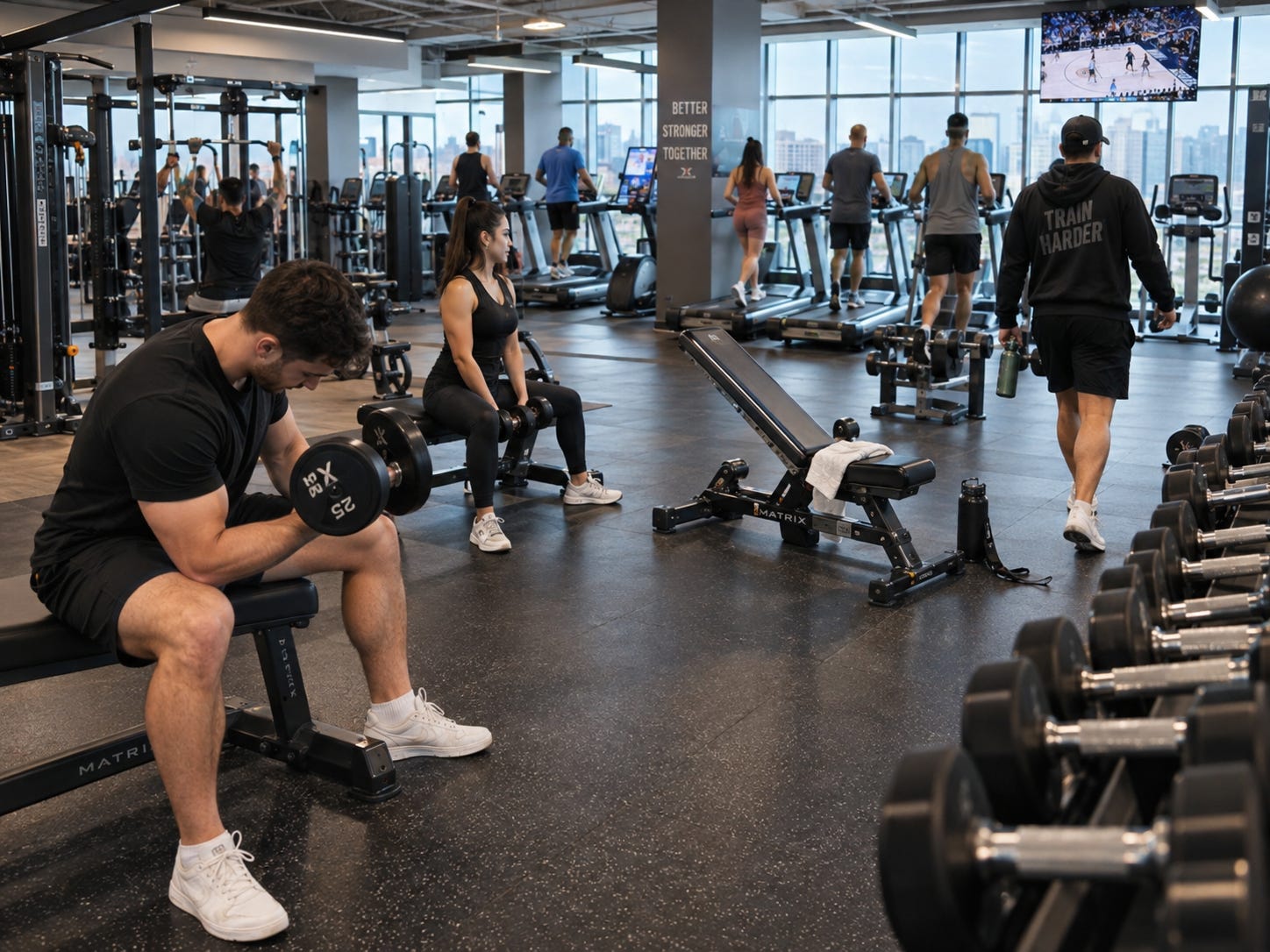
One morning while we were staying with them, I went to the gym in their neighborhood. I have been exercising consistently as part of what I have been calling my Year of Health, and travel no longer feels like a particularly good excuse to stop. When I got back, Jacey and I were talking about exercise and aging, and she mentioned something she had noticed over years of working with older patients. Eventually, she said, everybody gets hit. Maybe it happens at seventy. Maybe seventy-five. Maybe earlier or later. There is a fall, an illness, a surgery, an injury—something that interrupts the relatively stable story we have been telling ourselves about our bodies.
What she sees afterward, though, can be dramatically different depending on what someone was doing in the decades before that first serious interruption. The people who had remained active, who exercised, maintained strength and kept moving, were often able to recover. The event might be frightening and difficult, but eventually they returned to something resembling the life they had before it. For others, a similar event became the first domino. A fall led to less movement. Less movement led to less strength. Less strength made another fall more likely. An illness that might once have been temporary became the beginning of a rapid decline in independence.
I had heard every possible reason to exercise before. Heart health. Weight. Blood pressure. Longevity. Mental health. Energy. Looking better naked. All compelling arguments. But somehow I had never thought about exercise the way Jacey described it. I had always imagined staying healthy as an attempt to postpone the consequences of aging. She reframed it as preparation for them.
You are not training so the fall never comes. You are training for the bounce.
That idea lodged itself somewhere in me. I am forty-seven years old as I write this, and I turn forty-eight on October 17. Earlier this year, I decided I wanted to be in the best physical shape of my life by the time I turn fifty. It is an objectively ridiculous goal in at least one sense. Twenty-five-year-old me had certain biological advantages that forty-seven-year-old me would very much like to speak to management about. But I do not mean that I want to somehow become twenty-five again. I mean that I want to find out what the strongest, healthiest version of this body can be now.
Since beginning my Year of Health in February, I have lost fifty pounds. I am proud of that, but Jacey’s observation changed what the project means to me. I am not just doing this for forty-eight-year-old me. I may be building muscle that seventy-five-year-old me desperately needs. I may be developing balance that keeps a stumble from becoming a broken hip. I may be building cardiovascular capacity that helps me through some future surgery I cannot currently imagine. More than anything, I may be creating enough physical reserve that someday, when life knocks me down, my body has somewhere to return to.
There is something strangely comforting about accepting that the hit is coming. Not some specific catastrophe waiting with my name written on it, but something. That is part of having a body. Bodies are wonderfully resilient machines that slowly become less resilient machines. Eventually, something goes wrong. The fantasy is believing we can prevent that forever. The more useful question may be what condition we want to be in when it happens.
A few days after we returned home, I was talking with my best friend Sam and told him about the conversation. I watched the idea land in him the same way it had landed in me, and that was when I began thinking there might be something here worth sharing. Sam already knows exercise is good for him. We all know. There may be no piece of health advice more thoroughly communicated and more impressively ignored than “exercise regularly.” The information is not the problem. Sometimes what we need is a different frame.
“Get healthy” is abstract. “Lose twenty pounds” is a goal. “Live longer” is so distant that the mind can barely comprehend it. But train now so that the first serious disruption of old age remains an interruption rather than becoming the beginning of the end? That feels different. It turns exercise from punishment for what I ate yesterday into preparation for someone I have not met yet: my future self.
For the first time, I find myself thinking about physical fitness almost like retirement savings. You contribute while you have the resources. Small deposits made consistently over decades accumulate into something meaningful. Except instead of money, the account holds muscle, bone density, mobility, cardiovascular capacity, coordination and balance. Someday you may need to make a withdrawal. I hope mine sits untouched for a very long time, but hoping is not a plan.
There is an odd peace in that realization. I cannot know what happens to me at seventy-three. I cannot prevent every illness or accident. I cannot negotiate with entropy. What I can do is go to the gym this morning. I can walk. I can lift something heavy. I can eat a little better. I can sleep. I can continue becoming the strongest version of the body I happen to inhabit while it is still relatively willing to cooperate.
Not because strength will save me from aging. Aging remains undefeated. But maybe the objective was never to avoid getting knocked down. Maybe the objective is to make sure that, for as long as possible, getting knocked down does not mean staying there.
So I will keep working toward fifty. Not because I am trying to become young again, but because I am training for the old man I hope to become. And when his first real hiccup comes, I would like to give him the best possible chance to bounce.