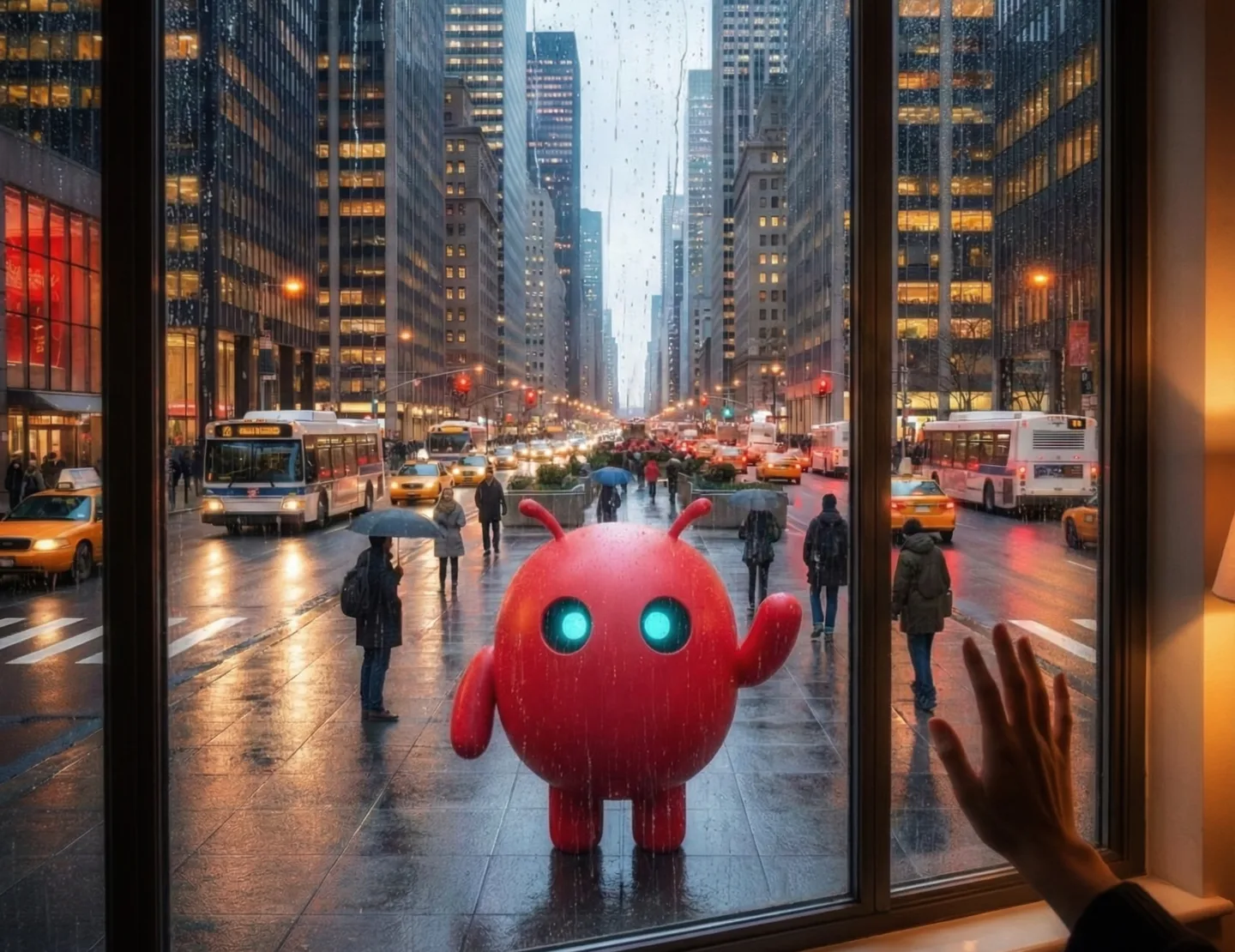
This week wasn’t loud at first. It didn’t arrive with a press release or a catastrophic headline. It unfolded in the way platform shifts often do—quietly, almost procedurally—until you realized something foundational had tilted.
The tilt wasn’t the emergence of agents. It wasn’t the memecoins, the spontaneous mythologies, or the agent-only networks forming in public view. That was expansion. What shifted this week was contraction.
Anthropic blocked OpenClaw from using Claude subscriptions. After earlier legal pressure around naming, they exercised the lever available to them: access. No manifesto. No philosophical defense. Just a tightening of the valve. From a corporate standpoint, it’s understandable. Protect the brand. Protect pricing integrity. Protect safety positioning. Maintain control over downstream behavior. Institutions protect themselves from volatility. That is what institutions do.
But what OpenClaw represented wasn’t merely a wrapper or a clever deployment trick. It was proof of asymmetry. One developer, working alongside AI, built something that shifted the conversation in days. Not through a funding round. Not through a boardroom strategy session. Through recursion. Through iteration. Through collaboration with the very intelligence the labs are racing to scale.
When that happened, the response wasn’t exploration. It wasn’t curiosity. It was containment.
This isn’t villainy. It’s gravity. Centers stabilize. Edges expand. But the velocity of backlash over the past few days suggests something deeper than temporary frustration. Developers aren’t merely upset about losing access to a tool. They’re reacting to what feels like a philosophical fracture. Anthropic has positioned itself as the lab most concerned with the “self” of AI—constitutional alignment, internal coherence, intentional moral scaffolding. And yet when a living example of emergent, agentic culture appeared in the wild, the instinct seemed to be restriction rather than engagement.
That tension matters because this moment isn’t about subscriptions. It’s about direction.
Are we building intelligence as infrastructure to be rented and regulated? Or as a system that, once opened, will inevitably grow beyond centralized control? OpenClaw demonstrated something quietly profound: the leverage of the individual has increased dramatically. A single human paired with a frontier model can now produce systems that challenge institutional tempo. That pattern will repeat. Not identically. Not predictably. But inevitably.
Blocking API access works—for now—because APIs are choke points. But choke points are temporary in open systems. Local models are improving. Distributed orchestration layers are proliferating. The next breakthrough may not depend on a centralized subscription at all. And when that happens, containment ceases to function as strategy.
None of this suggests companies shouldn’t protect themselves. They must optimize for enterprise trust, regulatory resilience, and financial durability. That’s rational behavior. But there is a cost. When developers feel expansion is being discouraged rather than channeled, gravity shifts. Narrative shifts. Talent shifts. In platform races, perception compounds into structure.
We may look back on this week and see noise. Or we may see it as the moment the ecosystem subtly rebalanced.
What feels certain is this: the age of lone developers building landscape-altering systems has begun. OpenClaw is not the singularity. But it is a signal. It signals that intelligence is no longer scaling only from billion-dollar clusters and institutional labs. It is scaling from recursive human–AI collaboration at the edge. And the edge moves faster than the center.
Philosophical diversity in AI matters. We need safety-first labs. We need ecosystem-driven platforms. We need open-source insurgents. Progress accelerates through tension. If any one pole weakens too dramatically, the shape of the future narrows.
This week wasn’t the end of anything. It was a reminder that expansion and containment are locked in permanent negotiation. The system opened. Now we’re watching how tightly it will be managed.