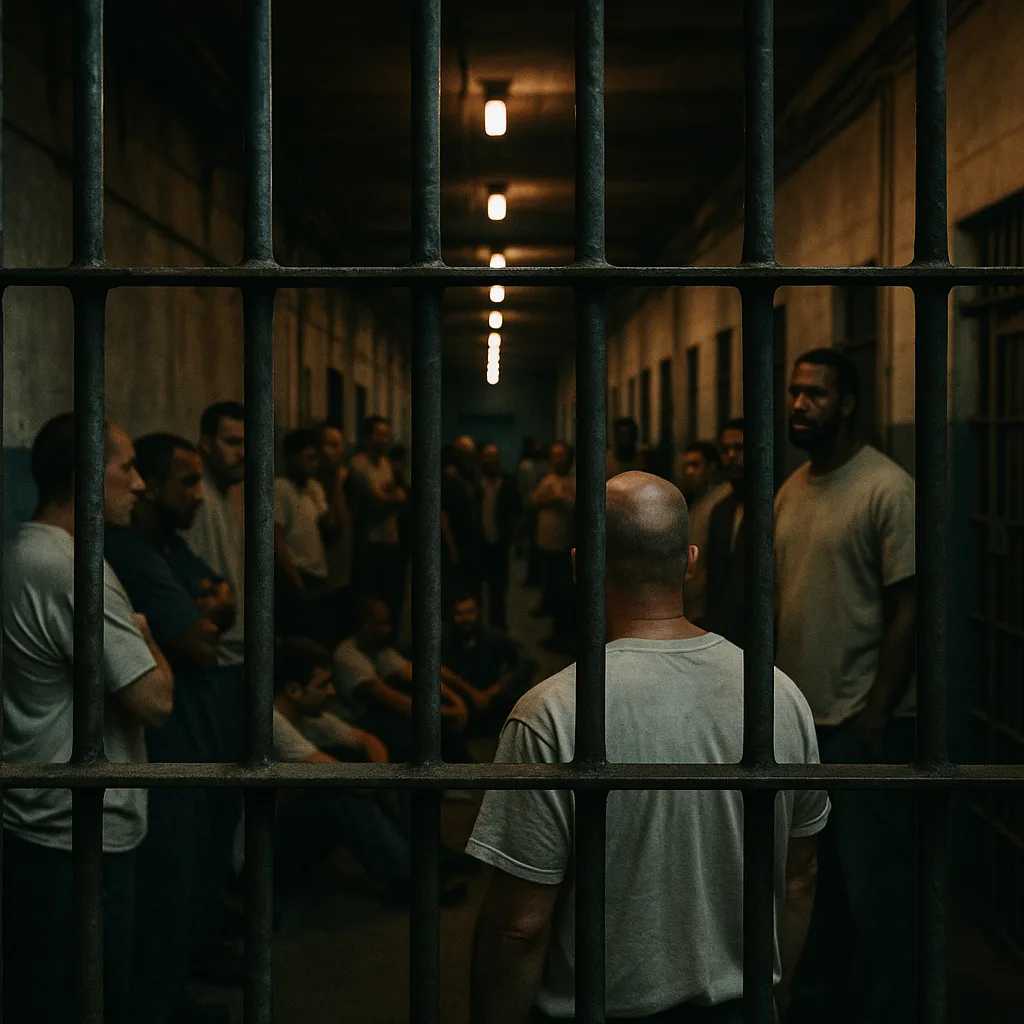
Walk into any American prison and you’ll find a story playing out on repeat.
Warring groups. Divided by race, geography, belief. Clashing over turf, pride, scraps of contraband. At first glance, it all looks like chaos. But from the warden’s vantage point, it’s order. It’s efficiency. Because as long as the inmates are fighting each other, they’re not fighting the system. They’re not looking up.
That’s the brilliance of it—brutal, elegant, invisible.
Division is the warden’s most loyal employee.
But what’s harder to swallow is this: we’re all playing that game.
Step outside the barbed wire and the pattern persists.
We see it in neighborhoods and newsfeeds, in politics and pews.
The working class fractured into factions—left vs. right, Black vs. white, rural vs. urban.
Each convinced the other is the problem. The real enemy.
The one taking their jobs, their dignity, their peace.
Meanwhile, the true wardens—the ones hoarding the spoils—watch from above, undisturbed.
They don’t have to control the masses directly. They just have to keep us turned against each other.
The more we quarrel sideways, the less we resist upward.
It’s not a conspiracy.
It’s a structure.
And its genius lies in how thoroughly it hides itself.
When we curse our neighbors for struggling differently, when we fear what we’ve been taught to fear, when we believe the lie that our enemies look like us—we do the warden’s work for them.
We hold the blade, thinking it’s a shield.
This is the trap.
And if you’re thinking this is too cynical—like we should know better by now—you’re half right.
Because here’s the thing:
Prisoners sometimes do wake up.
They call truces. They see the design.
They realize the fight they’ve inherited isn’t theirs—it was handed down, curated, incentivized.
And once that realization hits, the whole structure begins to wobble.
If the inmates stop fighting each other, the guards are outnumbered.
If the fractured classes align—not in perfect harmony, but in collective clarity—the warden’s game unravels.
What if white and Black, rural and urban, immigrant and native-born—saw not rivals, but kin?
What if we traced the lines of our anger not sideways, but upward?
The whole mechanism only works if the blindfold stays on.
So what happens when we tear it off?
The first step toward freedom isn’t breaking bars.
It’s breaking the illusion that we are enemies.
Because once the blindfold is off, the warden has no game left to play.