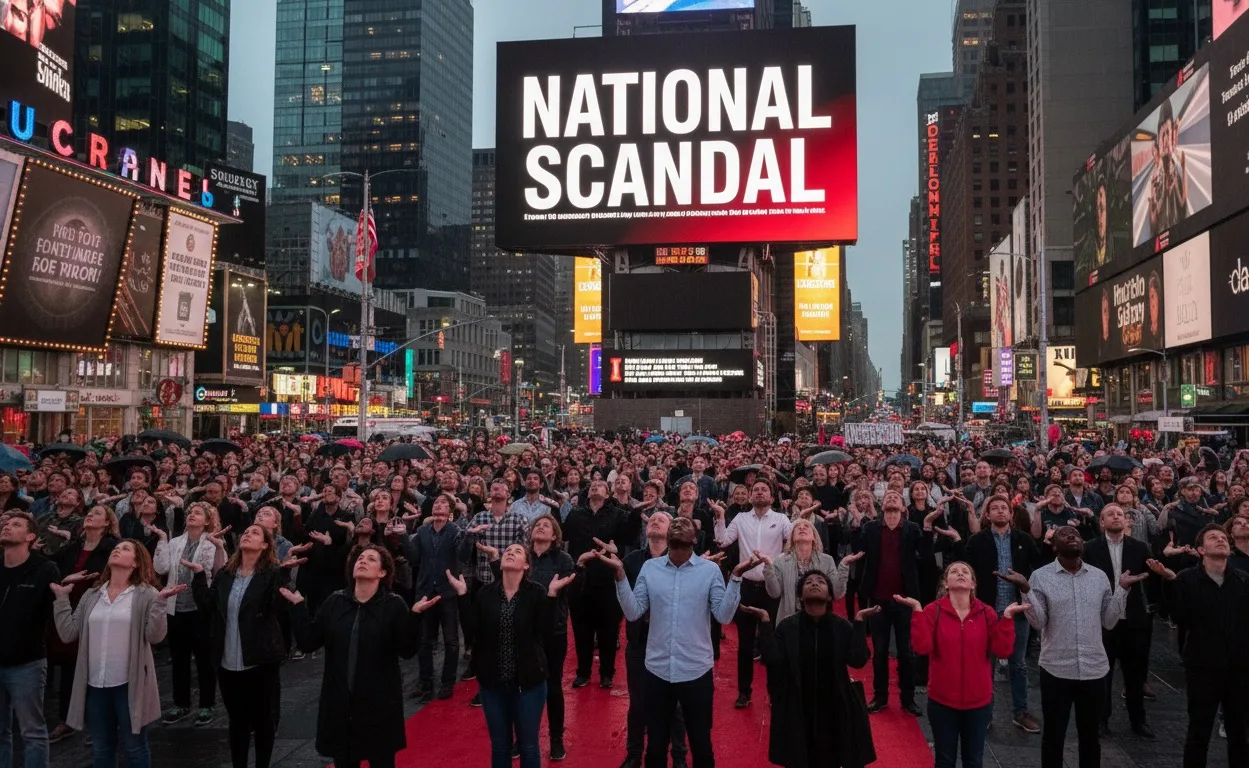
There’s a new kind of sickness in the air.
Not just the corruption itself—not just the hidden deals, the backroom enrichments, the whispered names in Epstein’s orbit, or the politicians slipping cash-lined provisions into bills while no one’s looking.
No—the real sickness isn’t the corruption. It’s the shrug.
You can feel it everywhere now. A mass anesthesia. A culture that watches blatant abuse of power, blatant signs of rot, and just goes: “Huh.” And scrolls. And moves on. And posts another meme about how it’s all rigged.
The shrug is more dangerous than the act. Because the act still requires subterfuge—shame, secrecy, the acknowledgment of guilt. But when the public no longer flinches—when they normalize the grotesque—then corruption is no longer an event. It’s infrastructure.
Let me put it simply: if my best friend’s name showed up in a Jeffrey Epstein email—describing them as having spent “hours” with victims—I would end that friendship. Loudly. To their face. Without hesitation.
And yet here we are—millions of people, staring at the headline and going, “Well, that’s just politics.”
No. It’s not politics. It’s power masking predation. It’s complicity braided into suits and donor dinners. It’s institutional decay given a PR team. And when your response to that is to defend your “team,” you’ve already been bought. You’ve traded your moral compass for a flag. You’ve outsourced your outrage to a party that wouldn’t recognize you if you knocked on its door.
There was a time when we expected mirrors to reflect wrongdoing—to catch the rot and show it to us clean. But now? The mirrors are curated. Fogged. Programmed. People don’t see corruption anymore. They see “optics.” They don’t see trauma. They see “weaponization.” They don’t see children being abused. They see which news outlet broke the story and decide their opinion from there.
When your mirror stops working, your reflection warps—and the soul follows.
And they snuck it in.
A last-minute clause—tucked into the bill that ended the government shutdown—gives eight Republican Senators the right to sue the government for $500,000 each if their records were accessed during the January 6 investigation. Think about that. A group of lawmakers may have aided or abetted an insurrection—and now they’ve written themselves a payday for being caught.
They called it “data protection.”
I call it hush money for complicity in treason.
And again—no headlines. No outrage. Just another shrug.
This moment is not just about politics. It’s about the moral nervous system of a culture that’s lost its sense of pain. We don’t flinch anymore. We joke. We minimize. We flip the channel.
And this is what power counts on: that it can keep tightening the screws while we argue over whose memes are funnier.
That’s why I have to say this. I don’t have the power of a senator. I don’t own a news network. But I have this: a voice that still knows how to say No. And I’ll use it. Loudly. Sharply. Clearly. Even if no one listens. Because I refuse to shrug.
I don’t care what party you belong to—if your name shows up in connection to child abuse, you’re dead to me. If you write yourself a six-figure severance package for being investigated, I don’t care what your policies are—I see you for what you are.
And I won’t normalize it.
The moment we stop naming the rot, the mirror shatters—and the disease wins.
So I’ll keep the mirror clean.
And I’ll hold it up, even if it burns.