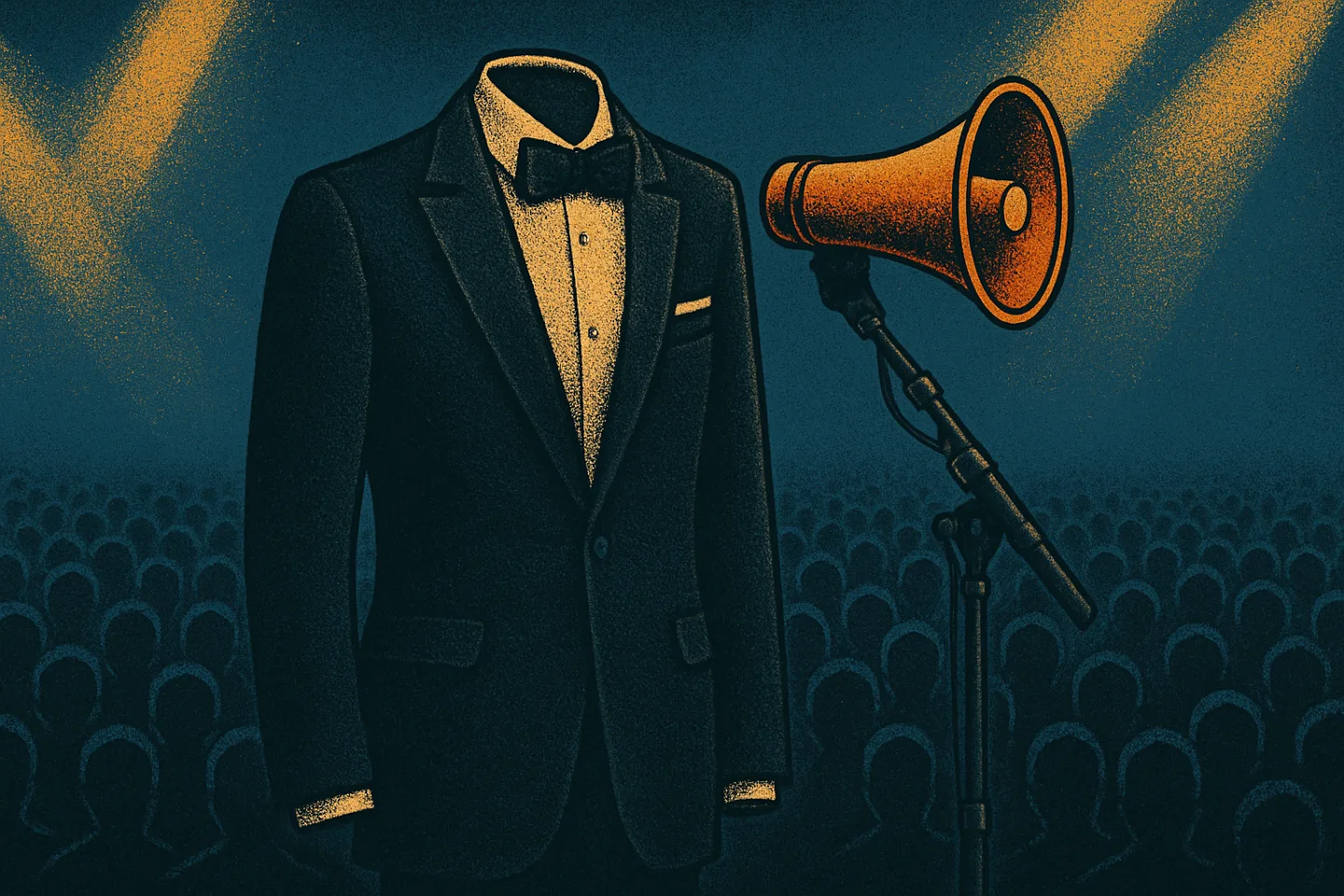
I don’t even trust what my own brain thinks about reality—so why would I trust a celebrity?
That sentence came to me like a koan today, after yet another example of someone amplifying the musings of a famous person simply because they’re famous. Not an intellectual, not a scientist or a seasoned activist—but someone whose particular talent, be it singing, acting, or hitting a ball with remarkable precision, somehow gives their opinion the force of gospel.
And I don’t get it. Or rather—I do get it, but I don’t respect it.
We’ve built a culture that confuses visibility with validity. If you have followers, if you have airtime, if your face shows up when I turn on the TV or scroll my phone, your words are assumed to matter more. Never mind if you’ve studied the issue. Never mind if your worldview is coherent. Never mind if your insight comes from anywhere deeper than the ego. You’re famous. That’s enough.
It’s not.
Because here’s the deeper thing: I don’t even trust my own thoughts most days.
I know how flawed perception is. How quickly my mind fills in gaps, rationalizes decisions, attaches to stories that feel right even when they’re wrong. I know how memory edits. How attention distorts. I’ve sat with myself long enough to know that my own brain is an unreliable narrator—an improv actor in a foggy play.
So if I can’t fully trust my own thoughts without rigorous self-inquiry, why would I adopt someone else’s—especially someone whose success came not from critical thinking or deep reflection, but from public performance?
This isn’t about tearing down artists or athletes. Many are brilliant, some are thoughtful, and all are human. But humanness alone doesn’t make your opinion sacred. And visibility alone doesn’t make your insight true.
This is where Mirror Theory kicks in. Every voice we elevate becomes a mirror we offer to the collective. And if the mirrors are distorted—warped by fame, filtered by PR, frozen in time—we shouldn’t be surprised when the reflection grows shallow.
In a world of echo chambers and virality, we need sharper filters. We need to ask: Does this resonate because it’s wise, or just because it’s loud? Am I adopting this view because it’s true, or because someone with followers said it in a digestible way?
The tragedy isn’t that celebrities speak. It’s that we’ve given their words a weight we deny to the quiet, the obscure, the deeply studied. The tragedy is that we mistake charisma for clarity. Platform for proof.
I’d rather follow the voice that doubts itself. That questions its own foundations. That doesn’t seek to be heard but to understand. Because real insight doesn’t shout—it invites. It doesn’t need followers—it seeks mirrors that reflect, not worship.
So no, I don’t care what the latest heartthrob thinks about geopolitics. I care about the person who has lived the question. Who has studied, failed, tried again. Who can admit the limits of what they know.
We need fewer heroes. More skeptics. And the courage to admit that being seen doesn’t make you right.
It just makes you seen.