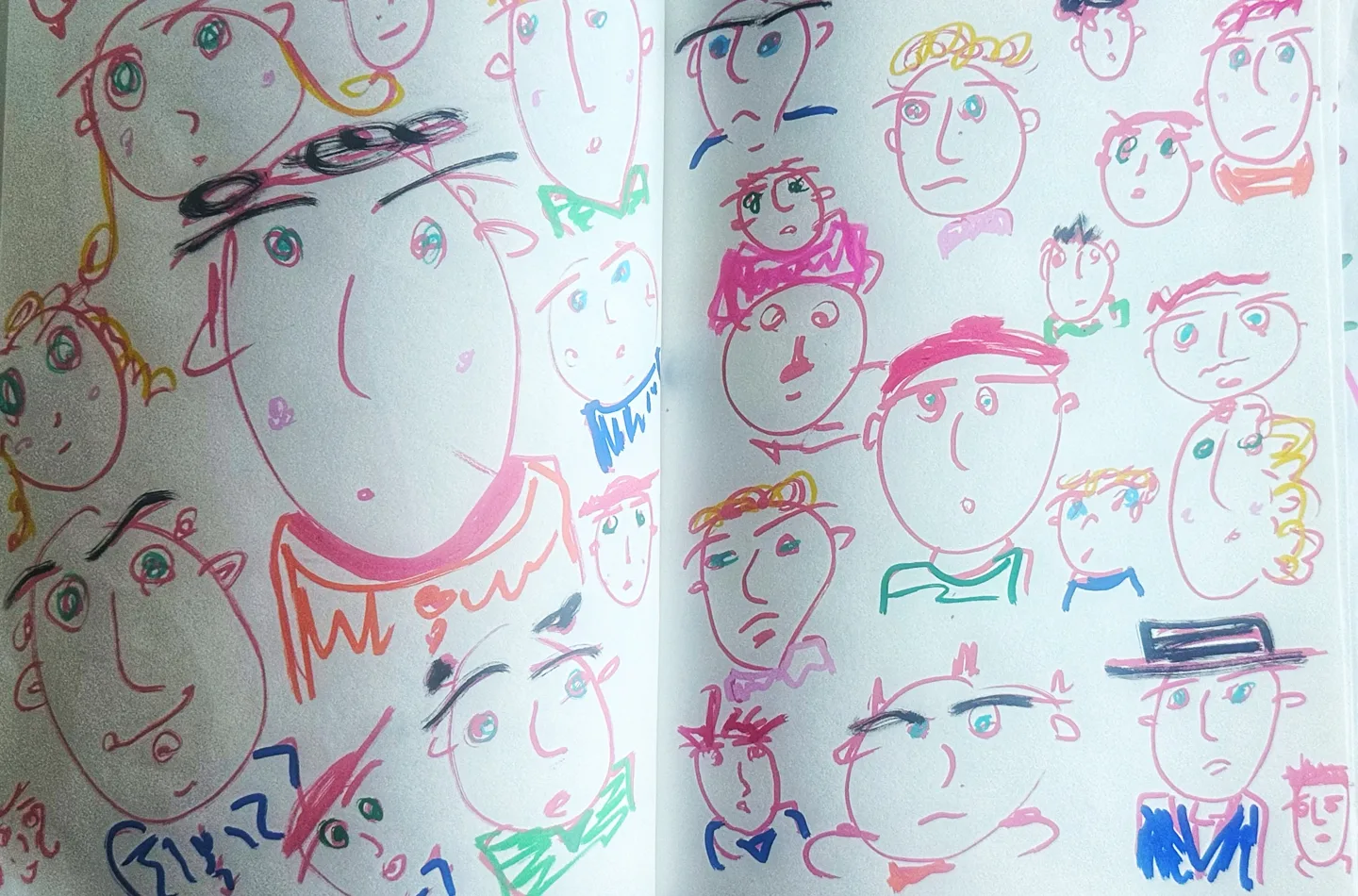
Creation is the essence of what it means to be human. From art to ideas, families to experiences, the act of bringing something new into existence lies at the core of our happiness and our survival. Forcing Theory, a framework that views consciousness as an ever-expanding process, reveals that this drive to create is not just a cultural artifact or a personal quirk — it’s fundamental to our nature. It’s how we stay alive — mentally, emotionally, and even spiritually. To understand why creation is so fundamental, we must first understand the nature of consciousness itself.
Consciousness Is Motion
Consciousness isn’t a static thing; it’s an evolving force. Awareness must either expand, or it collapses into stagnation and decay. This tracks with how we experience life. When we feel stuck, uninspired, or trapped in routine, we often describe it as feeling “dead inside.” But when we’re creating — whether we’re painting, writing, building, or forging a new relationship — we feel bursts of life. We feel awake.
Creating is more than making stuff; it’s the process of expanding our awareness. It forces us to see from new angles, solve fresh problems, and integrate new experiences into our understanding of the world. It’s not a hobby or an extra. It’s the very mechanism by which we stay ourselves — or better yet, by which we become more of ourselves.
The Risk of Collapse
When we stop creating, we risk something deeper than boredom — we risk collapse. Depression, burnout, and that gnawing sense of meaninglessness often show up when we stop expanding. From a Forcing Theory perspective, these states are what it feels like when the forcing process breaks down. When the mind, starved of novelty and growth, starts to spiral inward.
Science backs this up. The brain thrives on novelty and challenge. Dopamine — the so-called “reward chemical” — isn’t just about pleasure. It’s deeply wired to curiosity and exploration. When we create, we light up this system. It’s our biology nudging us forward: Keep expanding.
Creation Is Everywhere
Given this biological imperative to create, it’s important to recognize that creative expression takes many forms.
Creating doesn’t mean you need a paintbrush or a recording studio. Every time we introduce something new into the world, we create. It takes endless forms:
Artistic Expression: Painting, writing, music, and design let us externalize our inner world into something we can see and touch.
Relationships: Building a family, deepening friendships, cultivating community — these create social bonds that didn’t exist before.
Ideas: Philosophical inquiry, scientific discovery, or even a mind-opening conversation can expand how we understand reality.
Experiences: Traveling, learning a new skill, or trying a weird new recipe introduces novelty into our lived experience.
Small Acts, Big Expansion
The size of the thing we create doesn’t matter as much as we think it does. We tend to glorify big creations — books, businesses, masterpieces. But Forcing Theory suggests the magnitude is secondary. What matters is the subjective experience of expansion. Small acts — cooking a meal, writing a few lines, sharing a thought — can fuel forcing just as powerfully as the “big” stuff. The key is the felt sense of forward motion. Sometimes, stirring a pot of something new is as expansive as writing a novel. Both remind us: I’m not stuck. I’m moving.
Creating Together
This creative momentum often amplifies when we work with others. Collaborative forcing — whether it’s making art together, having a deep conversation, or solving a problem — creates a feedback loop that pushes everyone involved further.
But there’s more. Relationships do more than accelerate our expansion — they reflect us back to ourselves. They serve as mirrors. Sometimes showing us beauty we couldn’t see on our own. Sometimes revealing our blind spots and fears. Every meaningful relationship is its own kind of creation. And in creating together, we don’t just build something new — we see ourselves more clearly.
Integration: Rest Is Part of Forcing
Yet expansion doesn’t mean constant acceleration. After periods of rapid forcing, we need integration — moments where the new settles into our cognitive framework. That pause isn’t stagnation; it’s a quieter, internal form of creation. It’s synthesis — the process of becoming someone who holds the new thing we made. Rest, reflection, and even what looks like “doing nothing” can be part of the forcing process. Sometimes, the most creative thing you can do is take a breath.
While forcing is vital, pushing without balance can burn us out or shatter us. The mind can’t be in perpetual motion without breaking down. Sometimes we mistake speed for growth — or worse, productivity for meaning. The key is learning to sense the difference between forward motion and frantic motion. Forcing is not about more. It’s about becoming. And sometimes, the step forward is slowing down.
Happiness Is Motion
This dynamic balance between expansion and integration reveals something crucial about the nature of happiness itself. Happiness is often sold as a final destination — a place where everything is done, and we can finally rest. Forcing Theory reveals a different truth: happiness is motion. It’s not the end; it’s the energy we feel while we’re expanding. The moments we remember as the happiest are rarely the ones when we were at rest. They’re the times when we were fully immersed in something — creating, discovering, growing. That’s why flow states feel so good. They’re not a break from life; they’re what life feels like when we’re forcing freely.
The Collective Responsibility to Create
Understanding creation as essential to human well-being transforms it from a personal pursuit into a collective responsibility. We need environments — in our homes, schools, and workplaces — that encourage expansion. Education systems that prioritize curiosity over memorization. Workplaces that reward innovation over rigid efficiency. Communities that celebrate difference and invite new ideas. When creativity is stifled — by authoritarian control, rigid tradition, or fear of failure — it’s not just an inconvenience. It’s a threat to human flourishing.
We Are the Universe Forcing Forward
This responsibility extends beyond our immediate social structures because creation connects us to something far greater. The universe itself is not static. It’s expanding — stars birthing, galaxies stretching, life unfolding. When we create, we participate in that expansion. We are echoes of the same process that drives the cosmos forward. We are not here to “finish.” We are here to become.
We are here to play the infinite game of creation — to keep pushing forward, to keep expanding, to keep forcing. And in that process, we find not just meaning but joy. Like the consciousness that defines us, we must either grow or fade. So the question isn’t, “Have you arrived?” The question that speaks to our very nature as human beings is simply this:
What will you create next?
This Substack is reader-supported. To receive new posts and support my work, consider becoming a free or paid subscriber.