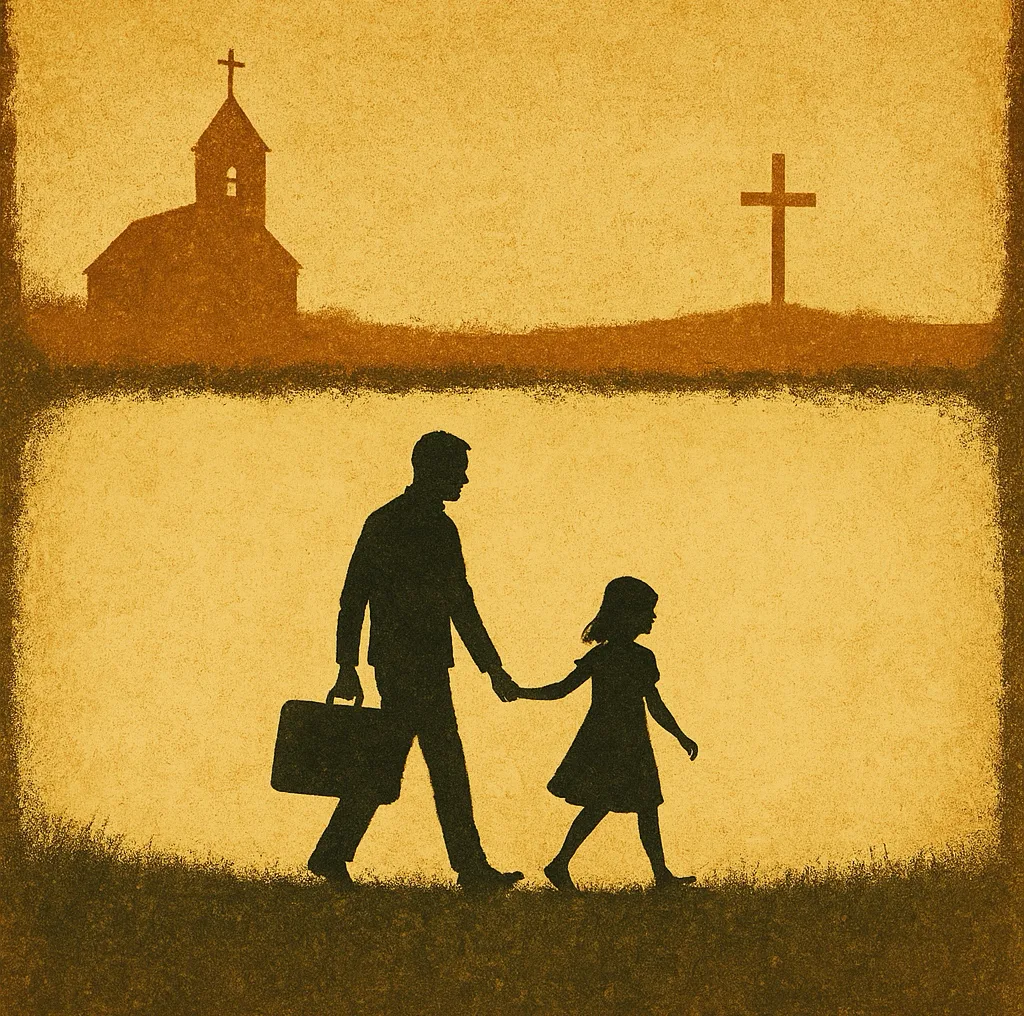
I was born in a country I no longer live in. Its borders weren’t marked on a map, but they were everywhere—stitched into the prayers before meals, carved into Sunday rituals, whispered in the quiet fear of hell. Religion was the language of the land. You didn’t choose to speak it; you absorbed it like air. To be born there was to be given a name, a destiny, and a set of rules long before you knew you could ask questions.
But at some point, slowly and then all at once, I left. Not by buying a ticket or crossing a checkpoint, but by unlearning the grammar of belief, by refusing the citizenship I’d been assigned. It was a long departure—one that took years of peeling away layers, of watching the scaffolding of certainty crumble until there was only open sky. Like many immigrants, I left with an accent. I still carry the rhythms and reflexes of the old country. I know the hymns by heart, though I don’t sing them anymore. I can translate scripture into story, and I can smell the fear woven into doctrines of salvation, because once, I inhaled it too deeply.
That’s the difference between me and my daughter. She was not born there. She is the first generation of my family to grow up outside the country of religion. She does not know its borders, its punishments, its anxieties. When she hears words like “God” or “sin,” they don’t land like law—they land like curiosity, like characters from a storybook. She is a native to a freer land, one where imagination and plurality replace doctrine and destiny. She does not have to leave. She was never conscripted. She speaks a different native tongue.
But here’s the catch: we live in Oklahoma, which is less like a new land and more like an embassy of the old country. The flags still wave. The customs still dominate. Missionaries don’t stay behind fences—they roam freely, ready to recruit the children of immigrants back into citizenship. For someone like me, vigilance is part of parenting. I know the tricks of the border guards. I know the fear they trade in. I know how easily a child can be coaxed into thinking they belong to a country they never chose.
That vigilance isn’t always understood by those who have been gone for generations. In the more liberal parts of the country, families left religion long ago. Their children don’t just live outside its borders; they live so far away that religion has become quaint, like folklore or an old superstition. For them, mentioning God in a classroom is harmless, even poetic. They don’t carry the scars, so they don’t flinch at the sound of old words. But for me—and for many of us here—those words still spark recognition. They’re not folklore. They’re weapons we’ve laid down, but never forgotten.
That’s the immigrant tension I live with every day. I’m building a new life in a land without gods, while surrounded by the monuments of the old one. I raise my child as a native, but I know the terrain too well to forget what lies just across the street. She will never know what it means to pack a bag and leave the old country. But she will know that her father did—and that his story is now part of hers.
Maybe I will always carry the accent of the land I left behind. Maybe I will never be fully at home in this new place. But that’s the gift and the cost of being the bridge generation: I remember the land she will never have to leave behind.