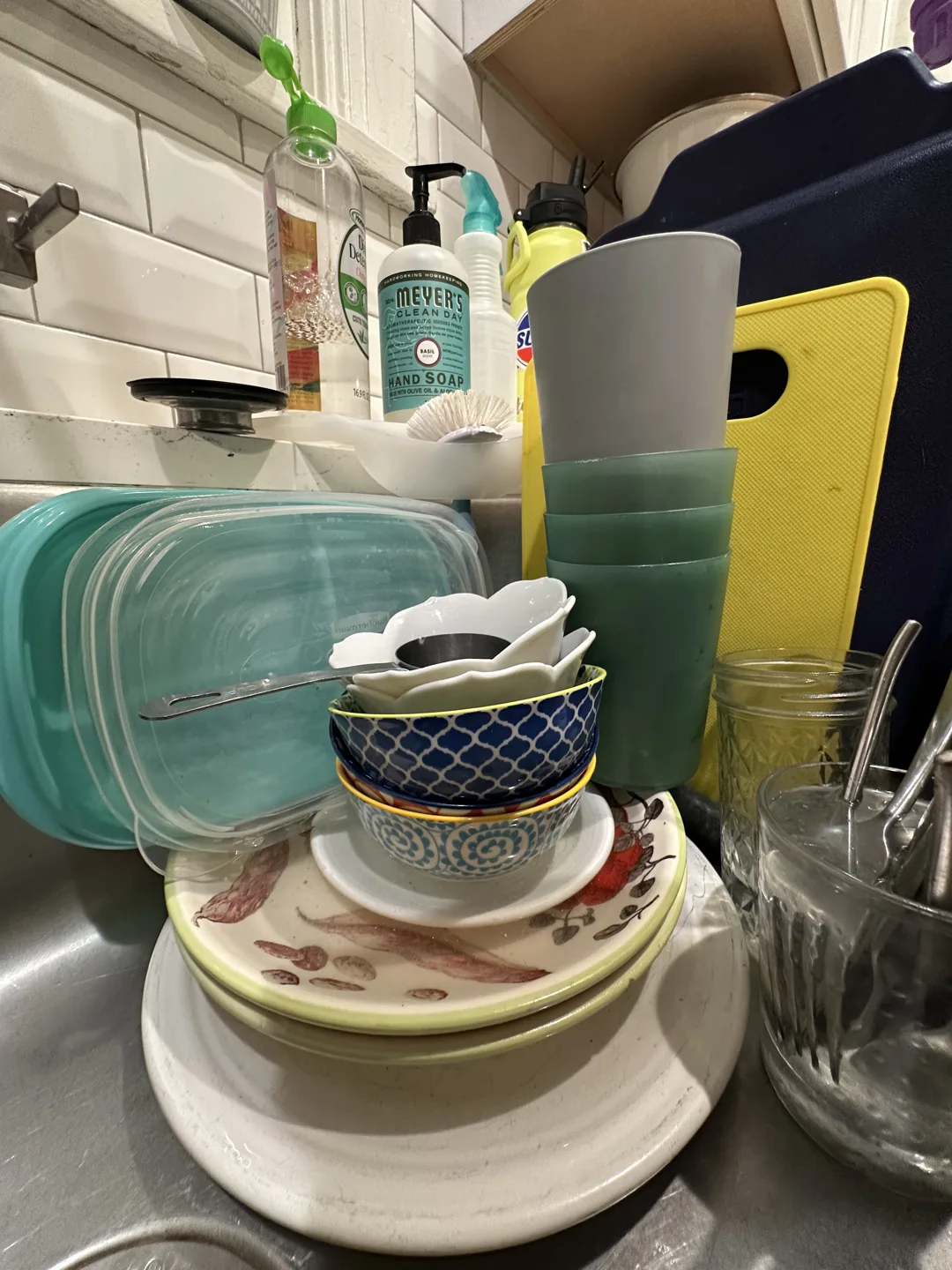
As a kid, the idea that chores could somehow lead to enlightenment would have sounded ridiculous. You’re telling me that folding laundry, washing dishes, and picking up the same toys for the thousandth time is somehow a path to wisdom? It felt like the sort of thing an adult would say when they wanted free labor.
Then I became a stay-at-home dad.
Life has a funny way of turning jokes into lessons.
These days, my life contains a seemingly infinite cycle of dishes, laundry, and cleaning up after the beautiful tornado that is my eight-year-old daughter. There are moments when I can hear my mother’s voice echoing through time as I stare at a mess that looks suspiciously similar to one I created decades ago. It’s one of those strange moments where you realize you have somehow become the adult. The cosmic joke writes itself.
What’s surprised me isn’t that I’ve learned to tolerate these tasks. It’s that I’ve come to enjoy them.
Not every time, of course. I’m not claiming some transcendent state where I grin ecstatically while scrubbing a casserole dish. Sometimes a chore is just a chore. But over the years, something subtle shifted. These activities stopped feeling like interruptions to my life and started feeling like part of it. They became rituals.
The dishes are never done. The laundry is never finished. The toys will not remain organized.
At first glance, this sounds depressing. The work has no final victory condition. There is no boss battle. No achievement unlocked. No moment where the universe announces, “Congratulations. You have completed cleaning.” Tomorrow’s dishes are already waiting.
But hidden inside that realization is a strange freedom.
The problem isn’t that the work never ends. The problem is believing it should.
Once I stopped treating chores as obstacles standing between me and life, they became life itself. Warm water on my hands. The rhythm of folding shirts. The small act of restoring order to a room that will inevitably become chaos again. Presence hides in repetitive things.
Zen monks sit facing walls. Parents wipe down counters. Both are essentially practicing the same thing.
When we stop demanding that reality be different than it is, something opens. The ordinary reveals itself as extraordinary—not because it changes, but because we finally pay attention.
There’s also something beautifully selfless about these acts. Most of them disappear almost immediately. Nobody applauds a clean kitchen three days later. The laundry you folded today will be dirty again next week. The floor you swept this morning will collect crumbs by dinner. The work leaves almost no monument, and yet it matters.
Maybe that’s the real lesson.
Much of what makes a life meaningful isn’t the grand achievement that survives us. It’s the quiet maintenance of the people and spaces we love. It’s showing up again and again for things that don’t generate status, recognition, or permanence. It’s doing the dishes because someone has to. It’s picking up toys because a little girl had a wonderful day making a mess.
It’s laughing at the absurdity of repeating the same tasks thousands of times while somehow finding peace in the repetition.
The cosmic joke of the chore is that the thing I once thought was keeping me from life turned out to be life itself. And somehow, that’s more than enough.